

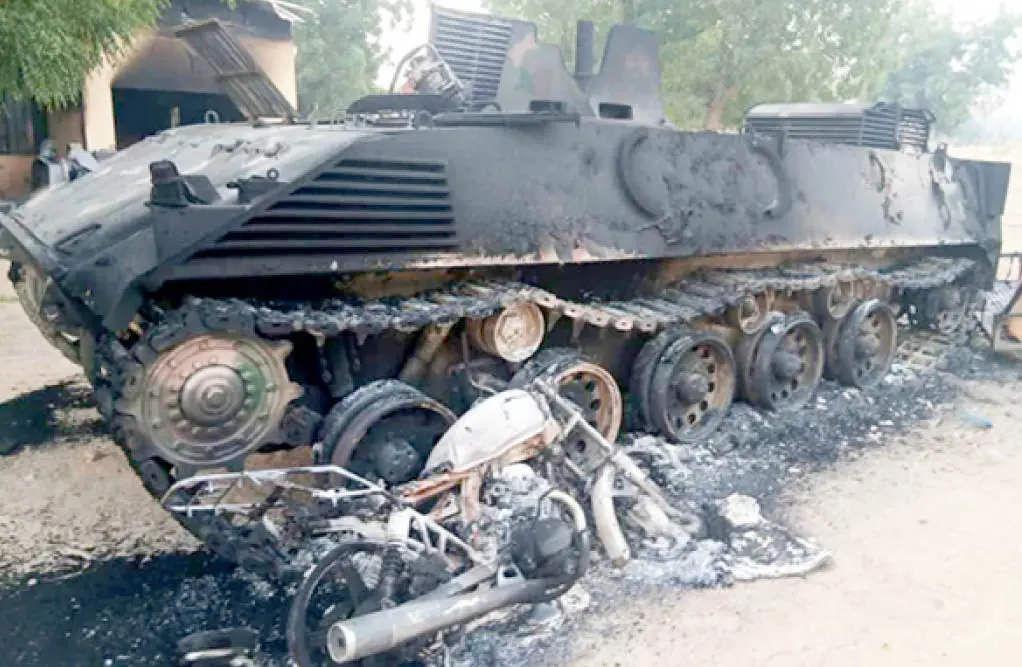
Boko Haram insurgents remain in control of Ngoshe town in Gwoza Local Government Area, Borno State, five days after a violent attack that claimed both civilian and military lives.
During the assault, the group abducted over 100 women and children and killed several soldiers, the town’s chief imam, and multiple community elders. The attack occurred shortly after Muslims broke their fast on Wednesday.

Security sources reported that the militants initially targeted a military base of the 82 Division Task Force Battalion before moving into the community and an Internally Displaced Persons (IDPs) camp. They overpowered troops due to their superior numbers, carrying out mass abductions and widespread killings.
The Nigerian military responded by killing more than 50 of the attackers during the strike on the base. Surveillance aircraft tracked the militants along escape routes, executing precision strikes that reportedly eliminated additional insurgents.

Displaced residents from Ngoshe, now in Pulka, confirmed that the town is still under Boko Haram control, though military efforts to reclaim it are ongoing. A security source said, “Plans are underway to retake Ngoshe very soon.”
The militants later claimed responsibility for the attack, boasting about beheading soldiers and declaring their intention to observe Eid al-Fitr prayers in the town. A video circulating online shows five men claiming affiliation with Jama’atu Ahlis Sunna lidda’awati wal-Jihad under Imam Abu Umaima, stating they renamed Ngoshe to “Daula Islamia” (Caliphate).

One of the insurgents said in Hausa: “With God’s help, we have conquered Ngoshe and will remain here. Women and children we abducted are our lawful property as ordained by God. We will continue our fight from here to Maiduguri and even Abuja.”
A soldier who narrowly escaped the attack recounted witnessing the beheading of colleagues at close range. He described the overwhelming force of the attackers, the loss of operational vehicles, and the chaos as soldiers and civilians fled into the bush. Only 36 of the 214 soldiers remained at the base when senior commanders arrived.

The soldier criticized the lack of adequate equipment and reinforcements, expressing concerns about the ongoing safety of the abducted women and children. He described the mission as exhausting and expressed doubt about the feasibility of retaking the town with the limited forces remaining.




