

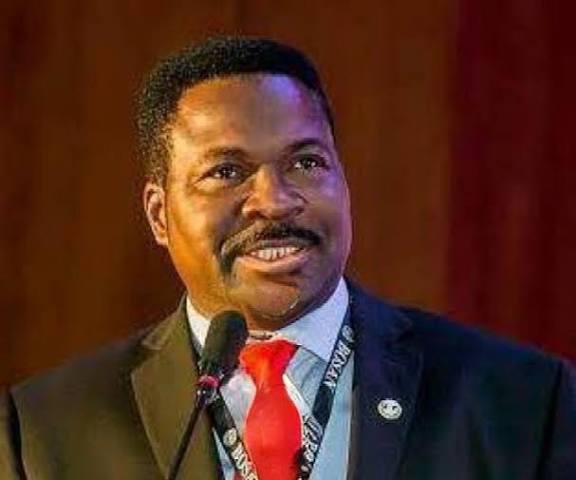
A major legal controversy is unfolding around Chief Mike Ozekhome, SAN, following the decision of Nigeria’s Attorney-General of the Federation to take over his prosecution in connection with a disputed London property linked to the late General Jeremiah Timbut Useni.
At least 15 Senior Advocates of Nigeria have reportedly appeared in court as the Federal Government escalates proceedings tied to a property at 79 Randall Avenue, Neasden, North London — a case that has attracted national attention because of its cross-border implications and the unusually severe findings already delivered by a British judicial tribunal.

Unlike many transnational asset disputes that remain speculative or unresolved, the London proceedings reached a definitive judicial conclusion in September 2025.
In a published ruling issued by the UK First-tier Tribunal (Property Chamber), presided over by Judge Ewan Paton, the court examined the documentation and identity claims underpinning the attempt to transfer the property.
The tribunal stated bluntly:
“The entire case was built on forgery and deception.”
That line has since become central to the dispute, reflecting the tribunal’s conclusion that fabricated documentation and fictitious identity structures were deployed in the ownership claim.

An Extraordinary Web of Forgery Allegations.
What began as a routine application relating to property registration rapidly escalated into proceedings the tribunal itself described as extraordinary, involving allegations of identity fraud, forged signatures, conspiracy, and abuse of legal process.
The tribunal observed that the case was marked by “multiple allegations of forgery of documents” and claims of fraudulent manipulation within the ownership chain.
Central to the attempted transfer was the name “Tali Shani,” presented within documents as the party through whom the property was purportedly gifted.
But Judge Paton found that both “Mr” and “Ms” Tali Shani were fictitious persons, undermining the legal credibility of the transaction and effectively collapsing the chain of title relied upon.

The tribunal’s ruling prevented the validation of the transfer into Ozekhome’s name and affirmed that the property remained traceable to General Useni’s estate, subject to probate and lawful inheritance processes.
From UK Findings to Nigerian Criminal Proceedings.
Following the tribunal’s determination, Nigeria’s anti-corruption authorities initiated domestic criminal proceedings.
The Independent Corrupt Practices and Other Related Offences Commission (ICPC) filed charges alleging that Chief Ozekhome received the London property through corrupt means and supported the claim with forged identity documents.

Among the allegations are assertions that false documentation, including passport-related material, was used to legitimise the ownership position advanced before the UK tribunal.
While criminal liability remains a matter for the Nigerian courts to determine under domestic standards of proof, the UK tribunal’s findings provide an unusually weighty backdrop: a foreign judicial body has already concluded that the ownership claim was founded on forgery and deception.
AGF Takes Over Under Section 174.
In January 2026, Nigeria’s Attorney-General formally assumed control of the prosecution under Section 174 of the Constitution of the Federal Republic of Nigeria, 1999 (as amended).
Section 174(1) provides that the Attorney-General shall have power:
“to institute and undertake criminal proceedings against any person before any court of law in Nigeria… and to take over and continue any such criminal proceedings.”

This constitutional authority, among the most significant prosecutorial powers in the Nigerian system, is typically exercised where the state considers a matter to be of overriding public interest, institutional importance, or national consequence.
Legal analysts note that the Federal Government’s intervention reflects the seriousness with which the case is being treated, particularly given its implications for asset integrity, professional ethics, and Nigeria’s international reputation in corruption-linked property disputes.
The appearance of multiple Senior Advocates in defence of Ozekhome further demonstrates the high stakes involved, not only for the accused but for the broader legal establishment.
Forfeiture, Asset Recovery and the Global Context.

Beyond criminal prosecution, the matter touches on the expanding global arena of overseas asset scrutiny.
London property has increasingly served as the epicentre of transnational disputes involving politically exposed persons, contested estates, forged documentation, and efforts by states to reclaim questionable assets abroad.
From oligarch seizures to African estate controversies, British property tribunals have become key battlegrounds in determining whether ownership claims rest on lawful transfers or fraudulent fabrication.
For Nigeria, this case now sits at the intersection of international asset accountability and domestic prosecutorial responsibility.
Implications for the Nigerian Bar and Public Confidence.
The controversy raises significant questions for legal ethics and professional credibility.
Where foreign judicial findings directly implicate forged documentation, the Nigerian justice system faces pressure to ensure that proceedings are transparent, rigorous, and free from institutional hesitation.

For citizens, the case underscores that elite offshore disputes are no longer insulated from judicial exposure, especially where foreign courts have already issued stark conclusions.
Ultimately, the Nigerian courts will determine the domestic criminal outcome. But the UK tribunal has already delivered its own firm judgment on the integrity of the ownership claim, stating in plain terms that:
“The entire case was built on forgery and deception.”
As the matter returns to the Abuja courts under the direct authority of the Attorney-General, it is shaping into one of Nigeria’s most consequential legal ethics and cross-border asset cases in recent memory.
The National Patriots Movement notes that where foreign judicial bodies have already issued grave findings of forgery and deception, Nigeria must respond with transparent and professional justice processes. No rank or reputation should weaken the rule of law. This case highlights the urgent need to strengthen legal ethics, asset integrity systems, and institutional credibility in cross-border disputes.
Dr. G. Fraser. MFR
The National Patriots.




