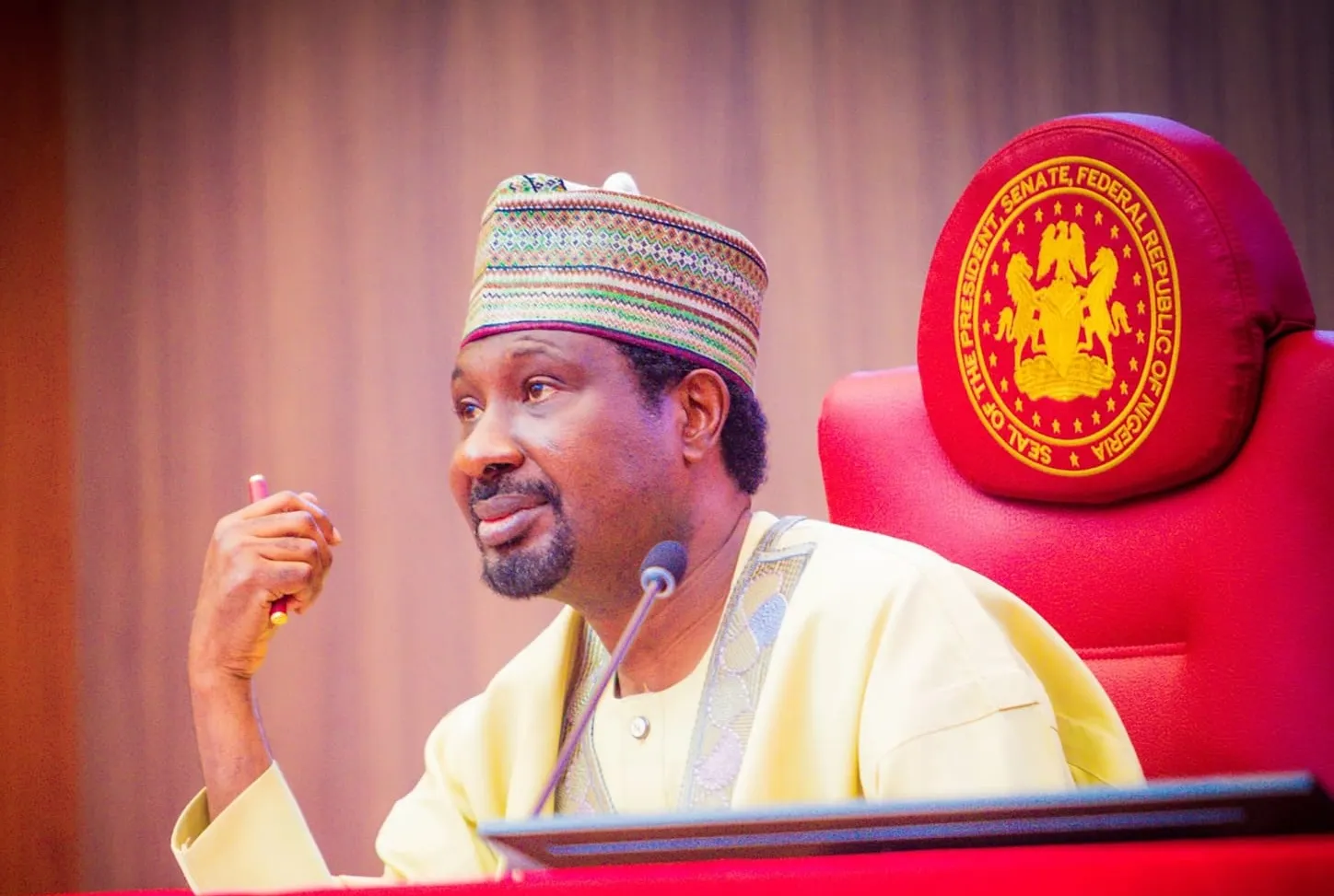
The Deputy Senate President, Senator Barau Jibrin, has dismissed claims that the National Assembly is subservient to the executive arm of government, describing the current relationship as a strategic partnership aimed at delivering good governance.
Jibrin made the remarks on Wednesday in Ilorin while delivering the 15th convocation lecture of Al-Hikmah University, titled “Managing Executive-Legislative Relations Towards Democratic Consolidation in Nigeria’s Fourth Republic.”

He explained that the cooperation between the legislature and the executive was intentional and rooted in President Bola Tinubu’s deep understanding of governance, having previously served as both a governor and a senator.
According to him, the President’s legislative background has strengthened mutual respect and understanding between both arms of government, encouraging effective communication and consultation. He noted that many executive bills are discussed with lawmakers before being formally presented, allowing for necessary adjustments and faster passage.
“This healthy collaboration has been misconstrued by some as the legislature acting as a rubber stamp for the executive. But when cooperation delivers results for the nation, why resort to unnecessary conflict?” he asked.


The Deputy Senate President recalled that executive-legislative tensions were more common at the early stages of the Fourth Republic, largely due to the lingering influence of military rule. He said earlier administrations often adopted a command-style approach, unlike the consultative and inclusive governance style of the current administration.
Jibrin stressed that the sustainability of democracy depends on wisdom, restraint, and strict adherence to constitutional principles, adding that Nigeria’s democratic continuity must be matched with deeper democratic values and practices.
Addressing the graduating students, he urged them to uphold democratic ideals, demand accountability from leaders, and actively contribute to national development. He emphasized that democracy thrives not only through institutions, but also through informed citizens and principled leadership.

At the convocation ceremony, 76 students graduated with first-class degrees out of a total of 2,883 graduands. The Vice-Chancellor, Prof. Lateef Oladimeji, disclosed that 1,008 students earned second class upper degrees, 996 obtained second class lower, and 112 graduated with third-class degrees.
In addition, 77 graduands received postgraduate diplomas, while 485 were awarded Master’s degrees and 79 earned PhDs.
Prof. Oladimeji urged the graduands to remain worthy ambassadors of the university and uphold integrity in their personal and professional lives. He also commended the university’s founder, Alhaji AbdulRaheem Oladimeji, for his continued support, and praised Kwara State Governor AbdulRahman AbdulRazaq for providing an enabling environment for the institution’s growth.