

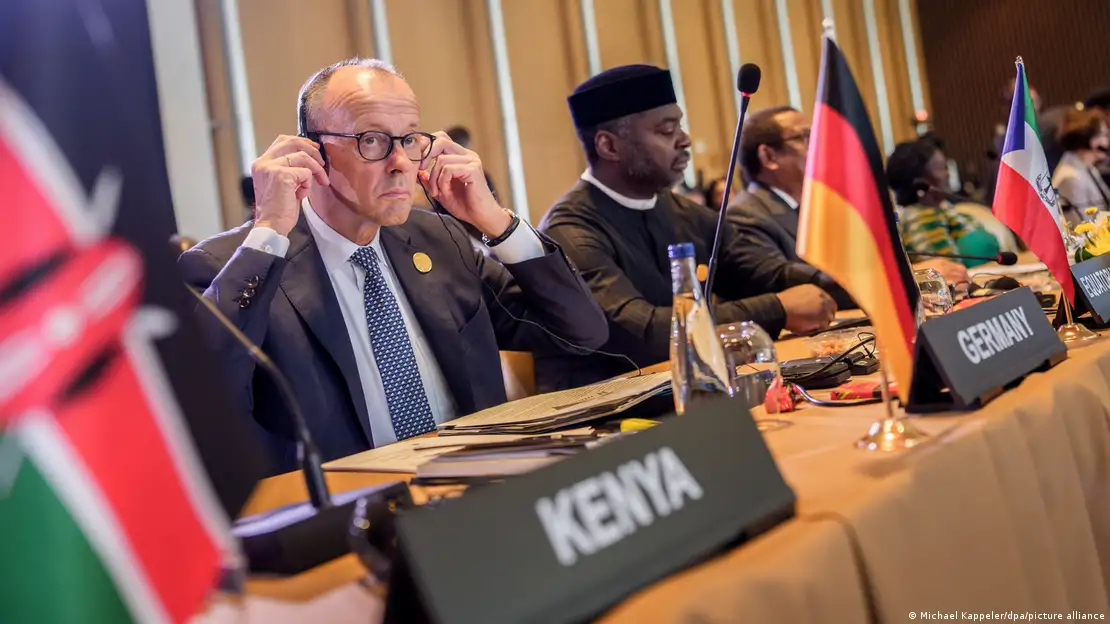
European and African leaders met in Angola to discuss trade, security, and the EU’s Global Gateway initiative, aiming to strengthen ties and challenge China’s growing presence on the continent.
At the seventh AU-EU summit in Luanda, Europe emphasized expanding cooperation with African nations in areas such as raw materials, infrastructure, and sustainable development.
Maria Magdalena, a mother of four, lives in a small wooden hut on the Ilha do Cabo peninsula. From her home, she watches cargo ships lined up to enter Luanda’s harbor, but she is far removed from the summit in the city’s government district. “I urgently need work. Without work, I cannot feed my children,” she said, reflecting the daily struggles faced by many Angolans despite the country’s resource wealth.

Africa and Europe Facing Global Challenges
The summit, themed “Promoting Peace and Prosperity through Effective Multilateralism,” brought together leaders from 82 countries representing nearly 2 billion people. AU Commission Chair Mahmoud Youssouf highlighted the international instability affecting Africa and Europe, noting challenges such as Russia’s war in Ukraine, US trade protectionism, China’s global expansion, and conflicts in Sudan and the Sahel.
Climate change also adds pressure. German Chancellor Friedrich Merz warned that droughts destroy livelihoods, forcing many Africans to risk dangerous migration routes across the Atlantic and Mediterranean. For European leaders, the summit represented a chance to strengthen ties with Africa amid global crises and reinforce a rules-based international order.

Africa’s Strategic Importance
The EU remains Africa’s largest trading partner and investor. According to European Commission President Ursula von der Leyen, Europe receives one-third of Africa’s exports, which include critical raw materials like cobalt, copper, lithium, and rare earths—essential for Europe’s energy transition.
However, African leaders, including AU Chair and Angolan President João Lourenço, emphasize diversifying partnerships. “We work with everyone who is open to us,” he said. Europe is particularly concerned about China, which has invested heavily in African infrastructure through its Belt and Road Initiative, including building Angola’s new airport and financing major road and port projects.

Focusing on Local Value Creation
Experts stress that future EU-Africa cooperation should go beyond resource extraction. Hermine Sam from the German Marshall Fund advocates for knowledge transfer and local value creation, warning that without it, Africa risks repeating the cycle of exporting raw materials cheaply and importing finished goods at high costs. Olaf Wientzek of the Konrad Adenauer Foundation noted that strengthening local processing capacity is where Europe could gain an advantage over China.
Global Gateway Initiative
The EU’s Global Gateway program, often seen as its response to China, funds infrastructure projects with EU financing and private investors. In Angola, one flagship project is the Lobito Corridor railway, linking Angola, the DRC, and Zambia to the Atlantic coast, creating opportunities for agriculture, logistics, and local businesses. Von der Leyen highlighted that the project aims to connect African markets internally while preparing businesses for global competition.

Yet critics argue that Global Gateway often overlooks African priorities, with insufficient consultation of local stakeholders, making Europe appear less agile than China in delivering tangible results.
Looking Ahead
Africa is a young continent: 40% of its population is under 15, compared with just 16% in Europe. Meeting the needs of youth for education, jobs, and housing is critical for future stability and prosperity. European Council President Antonio Costa emphasized the importance of Africa’s creative and dynamic young population for shared global development.

Meanwhile, for Maria Magdalena and millions like her, hope remains grounded in everyday survival. “I’m young. I really need work urgently,” she said, echoing the pressing economic realities that African leaders and their European partners must address.




