
By Princess Gloria Adebajo-Fraser MFR
When Nigeria returned to democratic rule in 1999, the country stood at a very different economic and demographic moment in its history.
The population was estimated at about 122 million people, the economy was smaller but less strained by the sheer scale of public demand, and government revenues — though modest — were relatively more manageable within the context of the national population.
Nigeria’s federally collected revenue at the time hovered around $11 billion annually, according to historical fiscal records from the late 1990s.
Two and a half decades later, the picture has changed dramatically.
Nigeria’s population has surged to well over 220 million people, making it the most populous country in Africa and one of the fastest-growing populations in the world.
The country now ranks as the sixth most populous nation globally.
Yet while the population has nearly doubled, the growth in government revenue has not kept pace with the expanding demands of governance.
This demographic and fiscal imbalance forms the core context within which the current administration of President Bola Ahmed Tinubu is attempting to implement sweeping economic reforms.
The Population Explosion and Revenue Reality
Between 1999 and 2022, Nigeria’s population increased by more than 100 million people.
In practical terms, this means that the Nigerian government today must provide infrastructure, education, healthcare, security, and economic opportunities for nearly twice as many citizens as it did when democratic governance was restored.
However, government revenue has not expanded at a comparable pace.
When adjusted for inflation and global economic shifts, analysts estimate that $11 billion in government revenue in 1999 would be equivalent to roughly $30 billion in today’s terms.
Yet Nigeria’s total federally generated revenue in 2022 stood at approximately $18 billion, significantly below the inflation-adjusted value of revenue from the early years of the Fourth Republic.
In simple terms, Nigeria today is governing a far larger population with proportionally weaker fiscal capacity.
This widening gap between population growth and government revenue has quietly built up over the last two decades, creating structural pressures that are now impossible to ignore.
A Household Analogy
To understand the challenge more clearly, economists often use a simple household analogy.
Imagine a father who earned ₦11,000 in 1999 while supporting 10 children.
Over the next two decades, his family expands to 24 children, but his income falls to ₦6,500 in real terms.
Yet the expectations of the larger household remain high. The children expect better education, healthcare, housing, and living standards than before.
Without structural reforms to increase income or reduce waste, such a household would inevitably face severe financial strain.
Nigeria’s fiscal situation reflects a similar challenge.
Successive administrations expanded public spending commitments while postponing difficult economic reforms that could have strengthened national revenue generation.
Subsidies, inefficiencies in public finance management, weak tax compliance, and structural leakages in the economy compounded the problem.
By the time the current administration assumed office, Nigeria was confronting one of the most complex fiscal challenges in its democratic history.
Tinubu’s Reform Gamble
President Bola Ahmed Tinubu entered office in 2023 with a reputation as a political strategist and economic reformer.
His administration quickly moved to implement policies that previous governments had long debated but ultimately avoided.
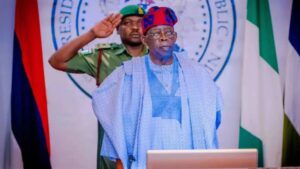
Among the most consequential of these reforms was the removal of the decades-old fuel subsidy, a policy that had cost the Nigerian government billions of dollars annually.
For years, economists and international financial institutions warned that the subsidy regime was financially unsustainable.
At its peak, fuel subsidies were estimated to consume over ₦4 trillion annually, equivalent to a substantial portion of Nigeria’s national budget.
Critics argued that the subsidy disproportionately benefited fuel importers and smugglers rather than ordinary citizens.
However, political sensitivity and fear of public backlash had prevented earlier administrations from fully addressing the issue.
Tinubu’s decision to remove the subsidy in his inaugural address signaled a willingness to confront Nigeria’s structural economic challenges head-on.
Exchange Rate Reforms
Another major reform introduced by the administration was the unification of Nigeria’s foreign exchange market.
For years, Nigeria operated multiple exchange rates, creating distortions that discouraged foreign investment and encouraged currency arbitrage.
By moving toward a more transparent and unified exchange rate system, the government aims to restore investor confidence and improve the efficiency of the foreign exchange market.
Though the transition has brought short-term economic pain — including inflationary pressures — economic analysts argue that such reforms are necessary to stabilize the economy in the long term.
The Political Cost of Reform
Economic reforms rarely produce immediate public approval.
In fact, the most difficult reforms often trigger resistance because they disrupt established systems and expose inefficiencies that had long been tolerated.
Tinubu’s policies have been no exception.
The removal of subsidies and currency adjustments have sparked criticism from opposition groups and segments of the public affected by rising living costs.
Yet supporters of the reform agenda argue that the political cost of inaction would have been far greater.
Without decisive intervention, Nigeria risked sliding deeper into fiscal instability, mounting public debt, and declining investor confidence.
Confronting Decades of Structural Weakness
Many policy analysts argue that the current reforms are not simply about short-term economic adjustments.
Rather, they represent an attempt to address structural weaknesses that have accumulated over decades.
Nigeria’s tax-to-GDP ratio remains one of the lowest in the world, estimated at around 10 percent, far below the global average of about 15–20 percent.

Improving tax compliance, broadening the revenue base, and strengthening economic productivity will be essential for sustaining long-term development.
Tinubu’s administration has indicated plans to expand tax reforms, digitalize revenue collection systems, and strengthen fiscal discipline across government institutions.

Nigeria’s Reform Moment
History shows that nations often face defining moments when difficult reforms become unavoidable.
In the 1980s, countries such as India and Brazil implemented sweeping economic changes that initially caused hardship but ultimately laid the foundation for long-term growth.

Nigeria now appears to be entering a similar period of structural adjustment.
With a population projected to exceed 400 million by 2050, the country must build an economy capable of supporting one of the largest populations in the world.
That task will require sustained investment in infrastructure, education, technology, and industrial development.
Leadership and Long-Term Vision
Supporters of the current administration argue that President Tinubu’s willingness to pursue politically risky reforms demonstrates a long-term vision for Nigeria’s economic transformation.
Rather than postponing difficult decisions, the government appears determined to confront structural challenges that have accumulated over decades.
The success of these reforms will ultimately depend on implementation, transparency, and the government’s ability to cushion vulnerable citizens during the transition.
However, many analysts agree on one point:
Nigeria’s demographic and economic realities mean that continuing with the old policy framework was no longer sustainable.
A Turning Point.
The reforms underway today may well be remembered as a turning point in Nigeria’s economic history.
For the first time in decades, the country is confronting the structural imbalance between population growth and fiscal capacity.
Whether these reforms succeed will shape Nigeria’s development trajectory for generations to come.
But one thing is increasingly clear.
Governing Nigeria in the 21st century is not the same task it was in 1999Governing Nigeria in the 21st century is not the same task it was in 1999.
The nation is larger, more complex, and facing far greater economic demands.
And the leadership challenge today is not simply about managing the present — it is about building the economic foundations capable of sustaining the Nigeria of the future.
Nigeria’s economic reality has changed dramatically since 1999. With the population nearly doubled but revenues failing to keep pace, structural reforms became inevitable. The National Patriots believe President Bola Ahmed Tinubu’s bold economic decisions are confronting decades of fiscal imbalance.
Though painful in the short term, these reforms are necessary steps toward building a stronger, more sustainable Nigerian economy.
Princess Gloria Adebajo-Fraser MFR
President, the National Patriots.
Governance & policy consultant.