

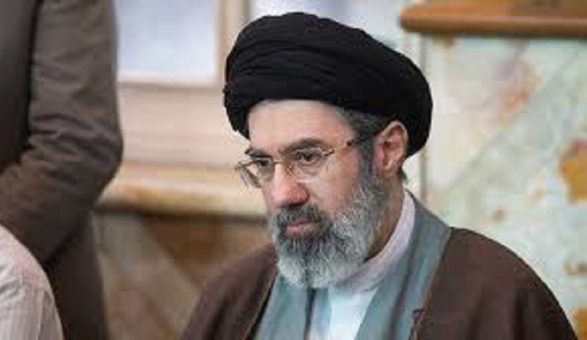
Iran’s appointment of Mojtaba Khamenei as the country’s new supreme leader has been interpreted by analysts as a strong signal of resistance toward pressure from the United States and Israel. Observers say the decision shows that attempts to weaken Iran’s leadership through external actions are unlikely to alter the direction of the Islamic Republic.

Mojtaba Khamenei, the second son of former leader Ali Khamenei, assumed the position after his father was killed in air strikes on February 28 during a conflict involving the United States and Israel. The Assembly of Experts, a powerful clerical body responsible for selecting the supreme leader, confirmed his appointment on March 8, signaling continuity in Iran’s leadership structure.

Political analysts say the move demonstrates defiance by Tehran. According to experts, the leadership transition suggests Iran intends to maintain its current political and ideological path despite mounting international pressure.
However, the selection has also revealed tensions within Iran’s political system. Some analysts believe the powerful Islamic Revolutionary Guard Corps (IRGC) played a significant role in shaping the decision, highlighting the growing influence of the military establishment in the country’s leadership dynamics.

The Assembly of Experts reportedly held its meetings remotely due to concerns that gathering in person could expose members to potential attacks. The announcement of the new leader was also delayed amid fears that revealing the successor too quickly could make him an immediate target.
Reports indicate that internal disagreements emerged during the selection process, with some delegates questioning the procedure before a final vote was held to confirm Mojtaba Khamenei.

Critics have also raised concerns about what they describe as the appearance of hereditary leadership. Some observers argue that appointing the son of the former supreme leader contradicts the revolutionary ideals that rejected monarchy during Iran’s 1979 Islamic Revolution.
Unlike previous leaders, Mojtaba Khamenei has never held elected political office. His clerical rank has also been debated, as he previously held the title of hojatoleslam rather than the more senior ayatollah designation traditionally associated with Iran’s supreme leadership.

Experts say his limited public political experience could mean he will rely heavily on powerful state institutions and security networks as he consolidates authority. Until then, analysts believe a group of senior officials, including government leaders and military representatives, may play a significant role in guiding state affairs.




