

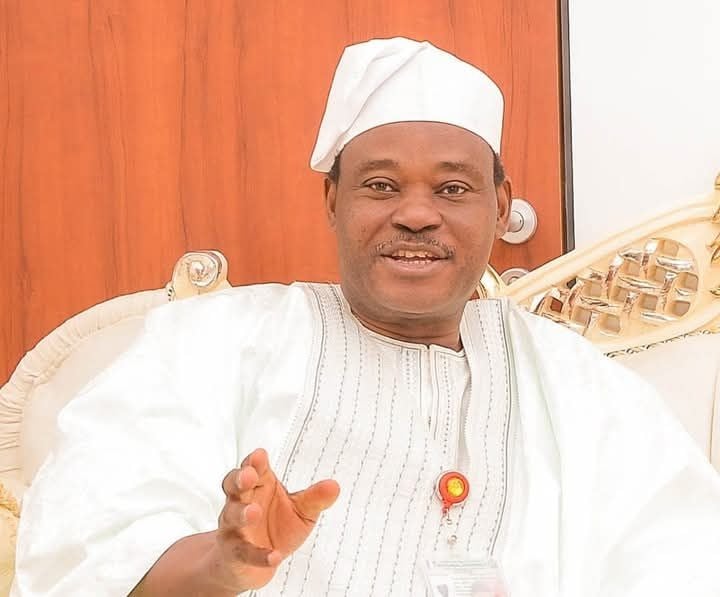
Nigeria’s Conscience at Stake: The Controversial Nomination of Jimoh Ibrahim
In a nation grappling with waning public trust and moral fatigue, few decisions wound the collective conscience as sharply as the elevation of individuals whose records demand scrutiny, not celebration. The reported nomination of Senator Jimoh Ibrahim — a businessman, politician, and central figure in some of Nigeria’s most disputed privatizations — as an ambassador is precisely such a moment.

Nigeria stands at a pivotal crossroads:
-
Will it reward accountability or canonize impunity?
-
Will it learn from past mistakes or repeat them?
The choice of Jimoh Ibrahim signals a troubling inclination toward the latter.
A Track Record of Controversy
Ibrahim’s business career is a catalogue of high-profile collapses, not accomplishments. Institutions once entrusted to him — often with public resources — have crumbled under his stewardship:
-
NICON Insurance — collapsed.
-
Air Nigeria/NICON Airways — collapsed.
-
Global Fleet Group — collapsed.
-
National Mirror and Daily Newswatch — defunct.

These failures are far from abstract. They represent public assets squandered, livelihoods destroyed, and pensions abandoned. Employees left destitute still await justice decades later.
The NICON Insurance privatization, in particular, remains one of Nigeria’s most controversial transactions. Once a thriving national institution with extensive local and offshore assets, it reportedly held more in its London account than Ibrahim paid to acquire it. Yet instead of accountability, the state seems poised to reward him with diplomatic prestige.

The Human Cost
Behind every collapsed business are lives torn apart. More than 300 former NICON Airways employees are still owed over ₦850 million in entitlements nearly 20 years after the airline’s closure.
One former employee, now a taxi driver in Abuja, lamented:
“We lost everything. Even our dignity. To now see the man responsible being nominated as ambassador — it feels like Nigeria despises its own people.”
These stories are not isolated. They form part of a nationwide chorus of disillusionment from citizens who see the very individuals responsible for failure being celebrated.

Allegations and Public Perception
Ibrahim’s reputation is defined less by innovation or corporate excellence than by allegations of:
-
Asset plundering
-
High-handed management and intimidation
-
Questionable wealth accumulation
-
Hostile treatment of employees
-
Chronic corporate mismanagement
-
Bragging about political influence
Within business and political circles, Ibrahim has long touted his ties to President Tinubu and his alleged contributions to the 2023 campaign. If political loyalty becomes the primary criterion for ambassadorial appointments, Nigeria risks reducing its foreign policy to a marketplace of campaign favors.
The Diplomatic Implications
An ambassador is more than a title; they are the face, voice, and moral representation of a nation. What message does Nigeria send to the world by nominating a figure whose legacy is marred by failure and controversy?
-
That integrity is optional?
-
That corruption is negotiable?
-
That public assets can be exploited without consequence?
-
That political allegiance outweighs public accountability?
Such a nomination threatens Nigeria’s credibility, undermines reform efforts, and erodes the trust of both citizens and international partners.

A Call for Reflection
This is not merely a political debate — it is a moral reckoning. President Tinubu must reconsider this nomination, not out of fear, but out of respect for the nation’s conscience. The Senate must exercise oversight, and Nigerians must hold leaders accountable for choices that shape the country’s image abroad.
Moments like this define a nation’s character. Silence now would be betrayal. Approving this nomination would signal that:
-
Failure is a credential
-
Disaster is a pathway to promotion
-
Integrity is optional
Nigeria is better than this. Its people deserve better. The world deserves a more honorable representation of the country.
History is watching. Nigerians are watching. The world is watching.
Alade, an international relations expert, writes from London.



