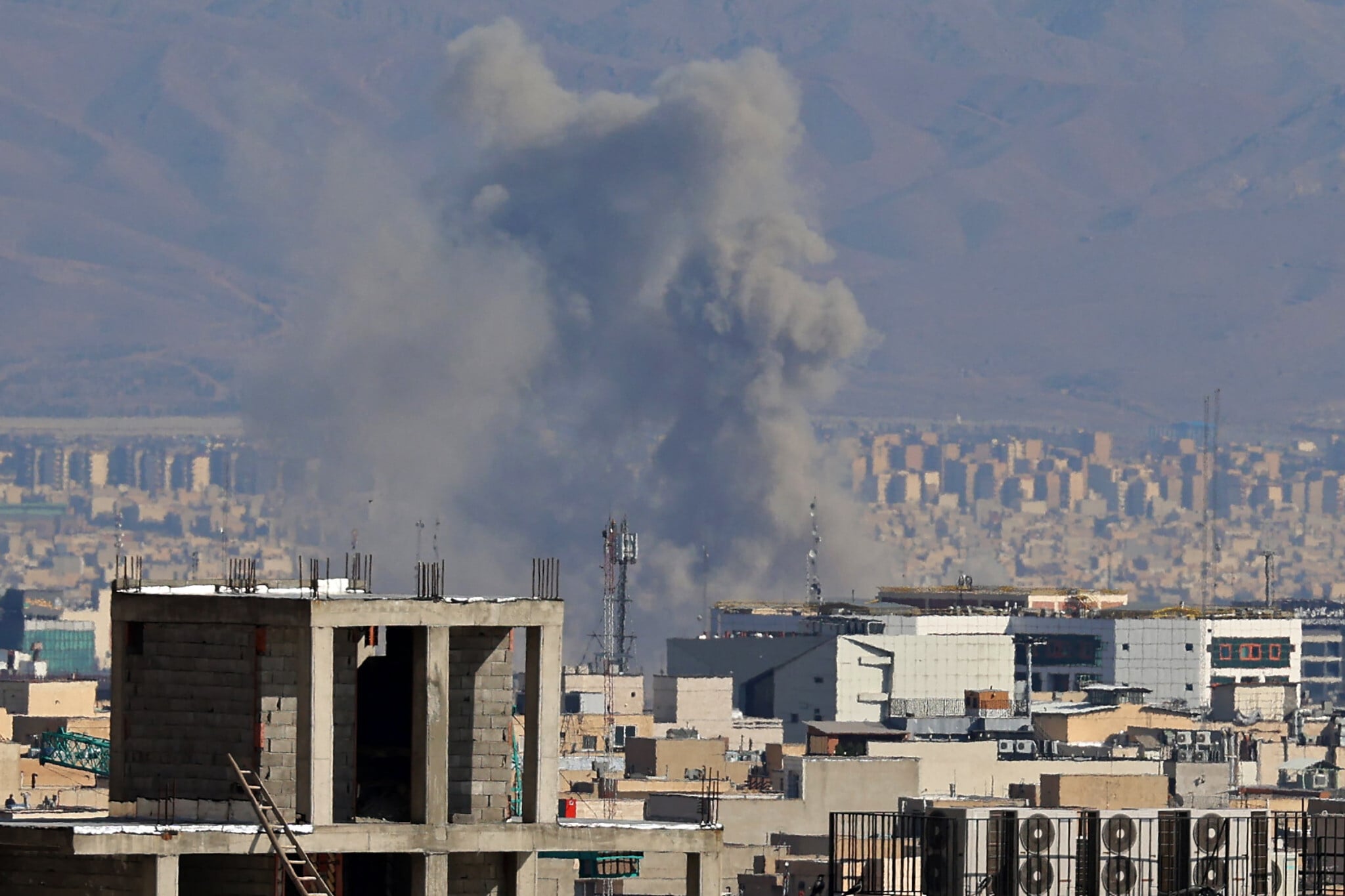
The United States Department of Defense has announced three major agreements with defence contractors aimed at ramping up the production of missiles and key components, as stockpiles come under pressure due to the ongoing conflict in the Middle East.
According to officials, the heavy use of interceptor missiles by the United States, Israel, and Gulf countries in response to Iranian attacks has raised concerns about declining reserves.
As part of the new deals, Lockheed Martin and BAE Systems will significantly increase the production of “seeker heads,” a critical component used in the THAAD missile defence system. The plan is to boost output by four times, effectively placing the defence manufacturing sector on what authorities described as a wartime footing.
Lockheed Martin had earlier indicated plans to scale up THAAD production from about 100 units annually to roughly 400 in the coming years.

In a separate agreement, the Pentagon also approved measures to speed up the production of Precision Strike Missiles (PrSM), a newer generation of tactical ballistic missiles recently deployed in the conflict. These missiles are designed to replace the older Army Tactical Missile System (ATACMS).
Lockheed Martin confirmed the move, noting that it builds on a multi-billion-dollar contract previously awarded by the US Army.
A third agreement involves Honeywell Aerospace, which will increase the supply of essential components used in US munitions, including advanced navigation systems.
Meanwhile, diplomatic efforts to end the war appear to be facing challenges. Reports from Iranian state media suggest that Tehran has rejected a US-backed peace proposal, insisting it will determine the terms for any ceasefire.
According to a senior Iranian official cited in the report, the war would only end when Iran decides, not based on external timelines.
Although there has been no formal response from Iran’s foreign ministry, local media outlets have echoed the position, indicating resistance to the proposal.
Pakistan has reportedly stepped in as a mediator, presenting a 15-point plan containing US suggestions for ending the conflict. However, Iran is said to have outlined its own conditions, including an end to military attacks, guarantees against future aggression, compensation for damages, and recognition of its control over strategic routes like the Strait of Hormuz.
With both sides holding firm positions, uncertainty remains over how soon a resolution to the conflict can be reached.