

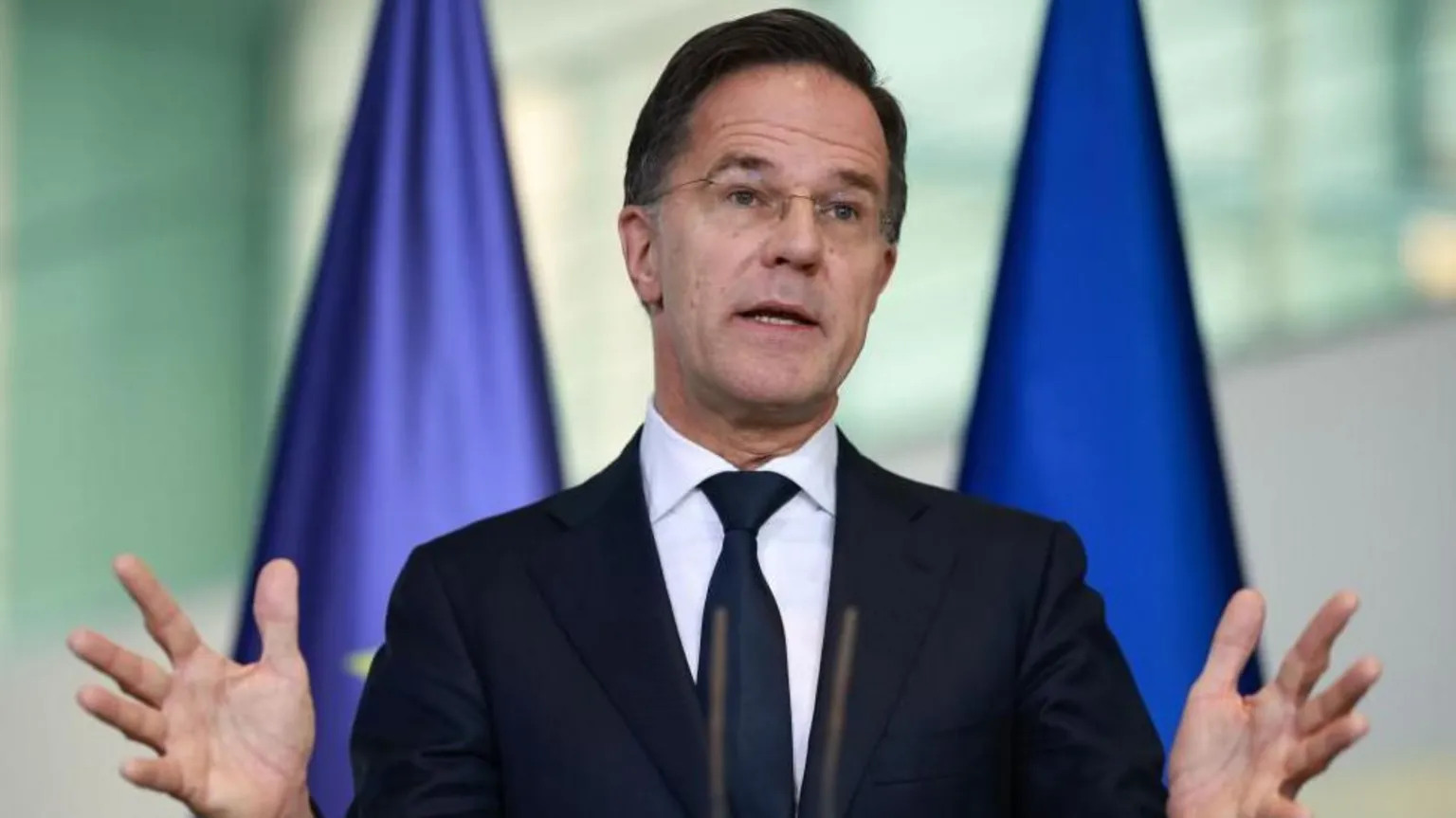
Nato’s secretary general, Mark Rutte, has described the alliance’s new commitment to sharply increase defence spending as Donald Trump’s most significant foreign policy achievement, saying it has helped make Nato stronger than ever.
Speaking to the BBC, Rutte said Trump’s long-standing pressure on European allies to spend more on defence had paid off, arguing that the US president’s approach has reinforced collective security across the alliance and strengthened support for Ukraine. Trump has repeatedly accused European countries of relying too heavily on US protection and has even threatened to withdraw support if they fail to raise military budgets.

Rutte also warned that Russia could pose a direct military threat to Nato countries within five years. The Kremlin dismissed the warning, with President Vladimir Putin calling such claims baseless and exaggerated.
Since launching its full-scale invasion of Ukraine in February 2022, Russia has claimed four Ukrainian regions in addition to Crimea, which it annexed in 2014. Moscow now controls most of Luhansk and is pressing Ukraine to withdraw entirely from Donetsk, despite Kyiv still holding parts of the region. Putin said Russia would achieve the objectives of what he calls its “special military operation,” preferably through diplomacy, but warned that military force would be used if talks fail.

Rutte criticised Putin’s ambition to reclaim what he sees as historic Russian territory, saying it has led to enormous human losses. He also welcomed Trump’s attempts to broker an end to the war, even as US-led peace talks have raised concerns in Kyiv and Europe that early proposals favour Moscow.
The proposed framework reportedly includes Russia retaining control of occupied eastern territories, alongside security guarantees for Ukraine designed to prevent future attacks. US officials say these guarantees could resemble Nato’s mutual defence clause, with Rutte insisting such measures would deter any renewed Russian aggression.

European leaders, meeting recently with Ukrainian President Volodymyr Zelensky in Berlin, discussed plans for a European-led force to help rebuild Ukraine’s military, protect its airspace and improve maritime security. Russia has firmly rejected these ideas, warning it is prepared for confrontation if Europe chooses conflict.
As the war approaches its fourth year, European governments are debating tougher economic measures against Moscow, including the possible use of frozen Russian assets to support Ukraine. Zelensky has urged EU leaders to act decisively, saying continued backing must convince Russia that prolonging the war is futile.

Russia has placed its economy on a wartime footing, significantly expanding weapons production. Analysts note that Western Europe is far behind and would need years to match Russia’s output. In response, countries such as France and Germany are moving to revive voluntary military service for young adults.
At a summit in The Hague, Nato members agreed to raise defence spending to 5% of GDP by 2035, citing long-term threats from Russia and terrorism. Rutte warned that failing to follow through on this pledge could leave the alliance dangerously weaker than Russia in the coming years.




