

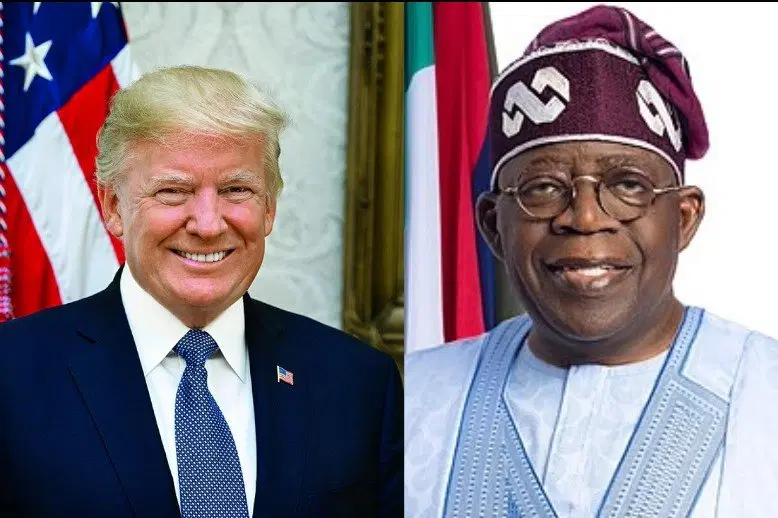
The Federal Government of Nigeria has announced intensified efforts to integrate intelligence capabilities across its security architecture to address evolving threats, including terrorism, violent extremism, and cross-border criminal networks.
According to Bayo Onanuga, Special Adviser to President Bola Tinubu on Information and Strategy, the Nigerian delegation held high-level discussions in Washington, D.C., with the U.S. Congress, State Department, National Security Council, White House Faith Office, and Department of Defense.

The meetings focused on enhancing joint operations, intelligence sharing, and rapid-response mechanisms. Nigeria also firmly rejected claims of genocide against Christians, insisting that violence in affected communities is neither targeted at any single religious or ethnic group nor one-sided.
The U.S. pledged to expand cooperation, expedite Nigeria’s requests for defense equipment, and provide surplus defense articles when available. Washington also expressed willingness to increase humanitarian support in the Middle Belt and assist in strengthening early-warning systems. Both nations agreed to establish a non-binding cooperation framework and a Joint Working Group to implement agreed priorities.

Strengthening National Security
Defence Minister Mohammed Badaru, speaking at the 2025 Chief of Defence Intelligence (CDI) Annual Conference in Abuja, emphasized that President Tinubu views security as the foundation for economic growth. The conference, themed “Multi-source intelligence innovation in a challenging national security ecosystem”, brought together senior defence intelligence officers, attachés, regional directors, and state intelligence coordinators.
Badaru noted that Nigeria’s security landscape has become complex, with threats including terrorism, banditry, cybercrime, violent extremism, and disinformation campaigns. He highlighted the government’s focus on interagency cooperation, modern equipment, personnel welfare, and intelligence integration to respond effectively to these challenges.

The Minister praised the Defence Intelligence Agency (DIA) for implementing the Joint Intelligence Mission Data and Analytics System (JIMDAS), which incorporates cognitive analytics and cyber-monitoring to improve operations.
Technology-Driven Intelligence
CDI Chief Lt-Gen. Emmanuel Parker Undiandeye said the agency is investing in advanced technologies, including AI, robotics, machine learning, and cybersecurity, to enhance intelligence capabilities. He stressed the importance of multi-source intelligence and interagency collaboration for anticipating and neutralizing emerging threats. The Defence Intelligence Agency Technology Centre (DIATC), launched last year, continues to drive innovation across these key areas.
Nigeria is also strengthening international partnerships, with defense attachés playing a critical role in intelligence diplomacy, joint training, and information sharing.
Counter-Terrorism Strategic Plan 2025–2030

Senate President Godswill Akpabio unveiled the Counter Terrorism Strategic Plan 2025–2030, developed by the National Counter Terrorism Centre under NSA Mallam Nuhu Ribadu. The plan provides a roadmap to modernize security institutions, strengthen national resilience, and expand partnerships across government, civil society, industry, and international partners.
Akpabio stressed that insecurity undermines development by deterring investors, closing schools, and affecting livelihoods. The Strategic Plan, he said, translates intent into action, ensuring long-term solutions to terrorism and violent extremism.
Major General Adamu Laka, Coordinator of the National Counter-Terrorism Centre, highlighted that the plan positions Nigeria as a regional center of excellence in countering terrorism and violent extremism in West Africa and the Sahel.



