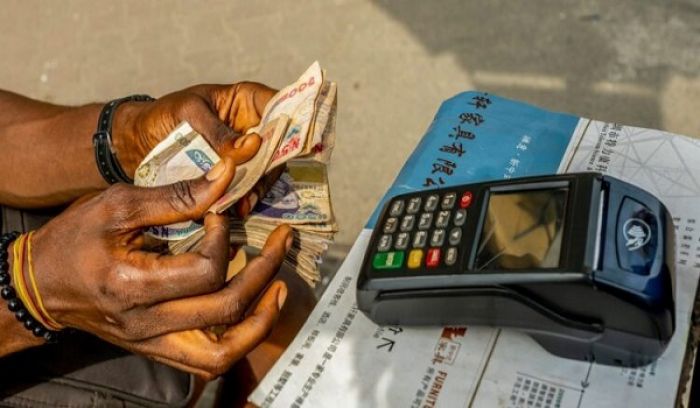
The National Counter Terrorism Centre (NCTC), under the Office of the National Security Adviser (ONSA), has revealed that point-of-sale (POS) operators are being used to facilitate ransom payments for terrorists and criminal networks.
The National Coordinator, Major General Adamu Laka, disclosed this during an end-of-year media briefing in Abuja. He noted that terrorist groups have recently intensified attacks in northern Nigeria, targeting vulnerable individuals including schoolchildren and worshippers. In November, separate school abductions occurred in Kebbi and Niger states, though the victims were later released.

Although the government discourages ransom payments, families of victims often pay to secure release. Allegations that the government pays ransoms have been denied.
Investigations show ransom payments are routed through POS terminals, allowing criminals to withdraw or transfer funds while evading detection. “In many cases, ransom payments are transferred directly to POS operators whose account details are provided by terrorists. The money is then collected by the criminals,” Mr. Laka said.

Nigeria’s POS network has expanded rapidly due to limited banking access and financial inclusion policies. Thousands of agents now provide cash withdrawals, transfers, and bill payments, often operating informally. While this improves access to financial services, it also presents security risks.

The Central Bank of Nigeria (CBN) has issued regulations requiring POS agents to maintain verifiable identities, adhere to transaction limits, and report suspicious activities to the Nigerian Financial Intelligence Unit (NFIU). Enforcement, however, remains inconsistent, especially in rural areas.

The NCTC also urged media organizations to handle sensitive security information cautiously, warning that premature disclosure could endanger lives or compromise investigations. Mr. Laka emphasized responsible reporting, noting that press freedom and national security must be balanced.
Terrorist and criminal networks continue to evolve, requiring improved intelligence coordination. Groups such as Lakurawa and Jama’at Nusrat al-Islam wal-Muslimin (JNIM) have infiltrated Nigeria’s North-west and North-central regions. Social media platforms are being monitored, with extremist content removed after engagement with TikTok, Instagram, Snapchat, Facebook, and X.

In closing, Mr. Laka stressed that the media is a vital ally in countering terrorism, urging journalists to deny extremists the publicity they seek while reassuring citizens of the government’s capacity to protect them.