

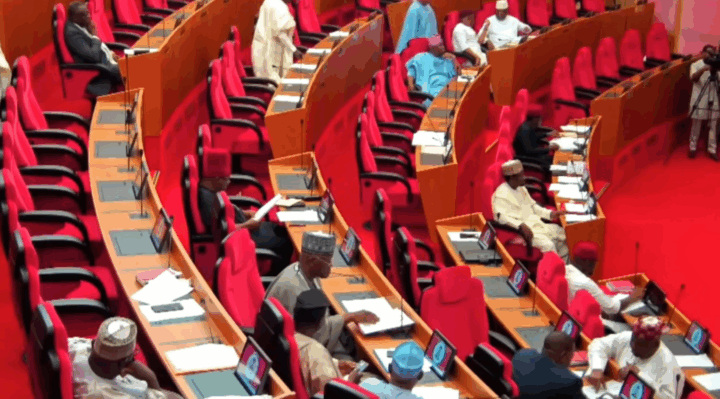
The Nigerian Senate has approved the Electoral Act Amendment Bill following an extensive five-hour clause-by-clause deliberation in the Committee of the Whole.
The bill was the sole item on the order paper for Wednesday’s plenary session, which came after a valedictory tribute to the late Senator Okey Ezea. All 155 clauses were considered, with lawmakers adopting some amendments while retaining the majority of the original provisions.

Among the key changes approved:
– The timeline for the Independent National Electoral Commission (INEC) to publish a notice of election was reduced from 360 days to 180 days before the election date.
The Senate explicitly rejected a proposal that would have made real-time electronic transmission of polling unit results compulsory. Instead, it retained the existing provision from the Electoral Act 2022, which allows for electronic transfer of results “in a manner as prescribed by the Commission.”

Senate President Godswill Akpabio clarified that the chamber did not remove or outlaw electronic transmission of results, countering widespread social media reports suggesting otherwise.
“Distinguished colleagues, the social media is already awash with reports that the Senate has literally rejected electronic transmission of results. That is not true,” Akpabio stated.

“What we did was to retain the electronic transmission which has been in the act and was used in 2022. So please, do not allow people to confuse you. If you are in doubt, we will make our final votes and proceedings available to you if you apply.”
He emphasized: “This Senate under my watch has not rejected the electronic transmission of results. It is in my interest as a participant in the next election for such to be done. So please don’t go with the crowd. We have retained what was in the previous provision by way of amendment. That was all we did. The previous has made allowance for electronic transmission. So, it is still there as part of our law. We cannot afford to be going backwards.”

A joint committee comprising members from both the Senate and House of Representatives will now harmonize the versions passed by the two chambers before transmitting the final bill to President Bola Ahmed Tinubu for assent.
The Senate delegation to the harmonization committee will be led by Senator Niyi Adegbonmire (Chairman, Senate Committee on Judiciary, Human Rights and Legal Matters). Other members include:

– Tahir Monguno
– Adamu Aliero
– Orji Kalu
– Abba Moro
– Asuquo Ekpeyong
– Aminu Abass
– Tokunbo Abiru
– Simon Lalong

The passage of the bill represents the latest step in ongoing efforts to refine Nigeria’s electoral framework ahead of future elections, including the 2027 general polls. The decision to maintain discretionary rather than mandatory real-time electronic transmission has reignited debate among stakeholders, civil society groups, and political observers on transparency, credibility, and technological readiness in the electoral process.




