

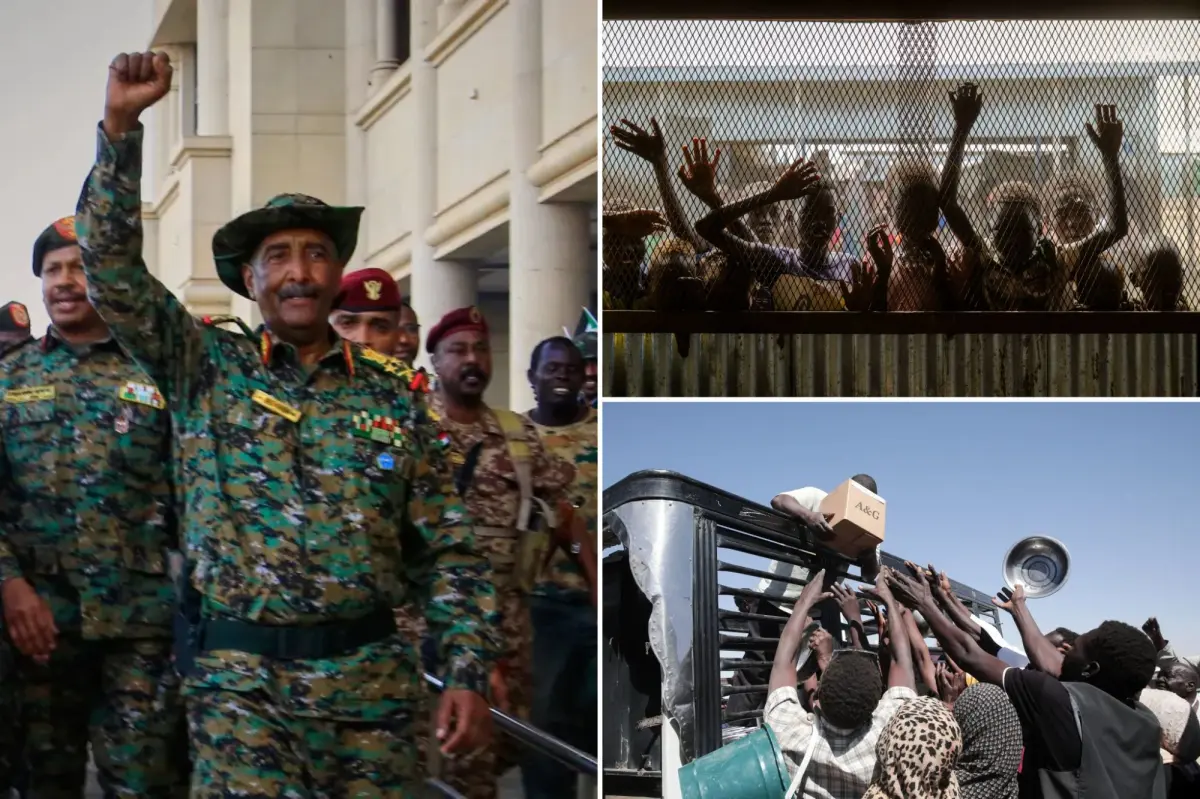
Sudan’s army chief, Gen. Abdel-Fattah Burhan, has dismissed the latest ceasefire plan put forward by US-led mediators, describing it as “the worst yet” and accusing the negotiators of bias. His rejection marks another setback in the ongoing international push to halt the brutal conflict that has devastated Sudan for more than two and a half years.
In a video message released late Sunday, Burhan criticized the mediators—known as the Quad (the US, Saudi Arabia, Egypt and the UAE)—for presenting terms he claims undermine Sudan’s national army while keeping the rival Rapid Support Forces (RSF) in place.

Sudan has been mired in conflict since April 2023, when tensions between the military and the RSF erupted into full-scale war in Khartoum and across several regions. The fighting has killed more than 40,000 people, though aid agencies believe the true toll is far higher. The war has also triggered the world’s largest humanitarian crisis, displacing over 14 million people, spreading disease and pushing parts of the country toward famine.
The Quad has been trying for over two years to negotiate a ceasefire and restore a path toward democratic transition, derailed after the 2021 military coup. Earlier this month, US President Donald Trump signaled renewed interest in resolving the conflict following discussions with Saudi Crown Prince Mohammed bin Salman at the White House.

UN Secretary-General António Guterres on Monday renewed his call for an immediate ceasefire and urged both the army and the RSF to engage in serious negotiations. He also demanded unrestricted humanitarian access and an end to the flow of weapons into Sudan.
US adviser for African affairs Massad Boulos previously disclosed that the proposed plan includes a three-month humanitarian pause followed by nine months of political dialogue. The RSF has reportedly accepted the truce amid global condemnation of atrocities committed in Darfur’s El-Fasher.

Burhan, however, rejected the document outright, claiming it “dissolves security institutions, weakens the Armed Forces and leaves the militia intact.” He warned that if mediators continue on this path, their efforts will be viewed as “biased.”
He further criticized Boulos, accusing him of attempting to impose unacceptable conditions on Sudan. Burhan also targeted the UAE, saying its role within the Quad raises concerns given allegations that the Gulf nation is supporting the RSF—a claim the UAE strongly denies.

Responding to Burhan’s statements, the UAE Foreign Ministry accused him of “obstructive behavior,” insisting that his stance threatens prospects for peace.
Burhan also rejected allegations that the Sudanese military is influenced by Islamist factions or that it used chemical weapons—an accusation the Trump administration raised earlier this year.

According to Burhan, the army will only agree to a ceasefire if the RSF withdraws fully from civilian areas so displaced people can safely return home, after which political talks can begin.
“We are not against peace,” he said, “but no one has the right to intimidate us or dictate terms.”



