

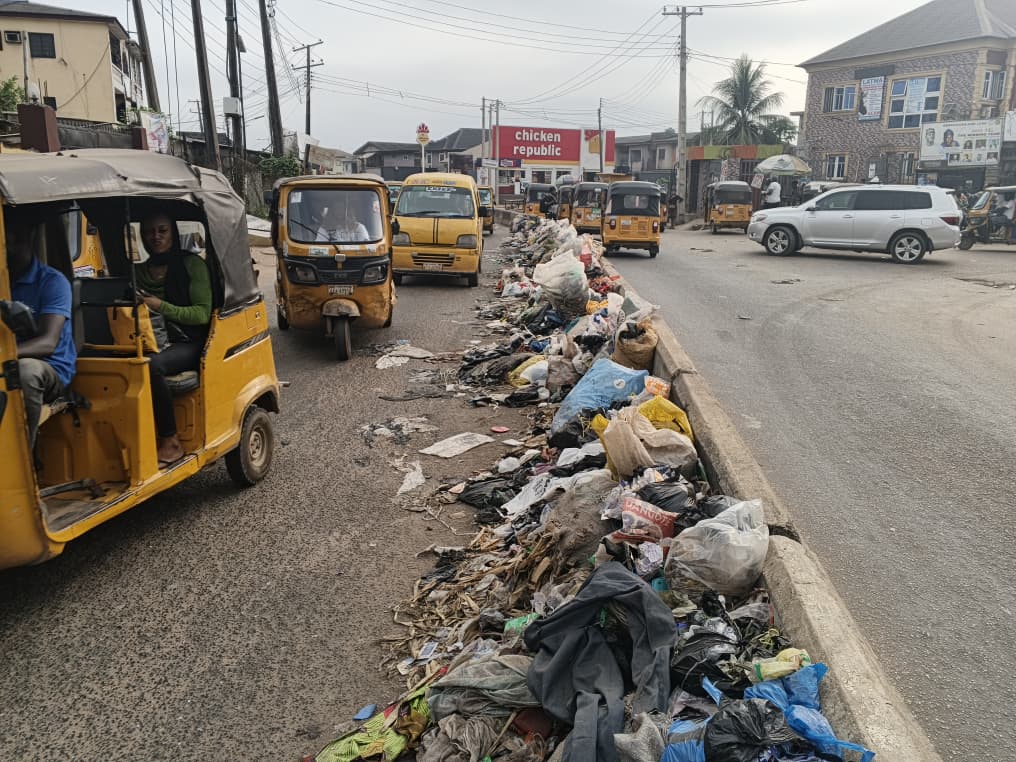
The recent clearance of illegally dumped waste along the Mile 2–Badagry Expressway and LASU–Isheri Expressway by the Lagos Waste Management Authority (LAWMA) is a welcome initiative by the Lagos State government. For commuters and residents long accustomed to the sight and stench of refuse along these highways, the operation represents a significant step toward restoring public hygiene and environmental order.

According to the Lagos State government, the clean-up involved comprehensive waste removal, deep mop-up activities, bulk evacuation, and sanitisation of key blackspots along the expressways. LAWMA operatives cleared refuse from road medians and surrounding areas, bagged the waste, and transported it to proper disposal sites.
Portions of these highways had become long-standing illegal dumps, undermining Lagos’ efforts to maintain its status as a modern megacity. Accumulated waste not only detracts from the city’s aesthetics but also poses environmental and public health risks.

Lagos remains Nigeria’s highest waste-generating state, producing about 5.46 million tonnes annually. Governor Babajide Sanwo-Olu noted that the city generates approximately 13,000 metric tonnes of waste daily—nearly double the daily output of the entire country of Ghana. Despite government efforts, significant gaps remain: roughly 60% of waste in Lagos goes uncollected, and only 13% is recycled. Consequently, illegal dumping along roads and drainage channels remains widespread.

Improper waste disposal contributes to air pollution, environmental degradation, and the spread of disease, particularly in densely populated areas. The challenges are exacerbated by Lagos’ rapid urbanisation, population growth, and socio-economic pressures.
While LAWMA’s clean-up is commendable, experts note that such exercises alone are insufficient. Refuse often reappears shortly after clearance, reflecting persistent behavioural patterns among some residents.

To address the problem sustainably, a combination of enforcement, infrastructure, and public education is needed:
- Strengthen Enforcement: The Lagos Environmental Sanitation Corps (LAGESC) should intensify surveillance of known dumping hotspots, especially at night when illegal dumping is most common.
- Improve Infrastructure: Adequate waste bins, collection points, and transfer stations along major corridors will provide residents with accessible disposal options, reducing roadside dumping.
- Public Awareness: Sustained education campaigns through schools, community platforms, and media can promote responsible waste disposal, recycling, and civic responsibility.

The government’s reintroduction of the monthly environmental sanitation exercise after nine years of suspension demonstrates renewed commitment to a cleaner, healthier, and flood-resilient Lagos. Previously halted in 2016 due to legal restrictions on movement, the revived exercise will require both public compliance and ongoing government support to succeed.

Ultimately, maintaining a clean Lagos demands more than periodic clean-ups. Consistent law enforcement, improved waste management infrastructure, and collective civic responsibility are essential. Tackling illegal roadside dumping remains a priority for the government and residents alike if Lagos is to maintain its status as a leading African megacity.




