By Princess Gloria Adebajo-Fraser, MFR
National Patriots
At a time when public discourse is increasingly driven by emotion, political framing, and selective interpretation of reality, it has become necessary to return to first principles—facts, constitutional structure, and national context.
As Nigeria gradually approaches the 2027 electoral cycle, the question of fairness—particularly as it concerns Northern Nigeria—has resurfaced with renewed intensity.
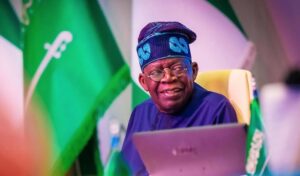
At the centre of this debate stands President Bola Ahmed Tinubu at 74.
The issue, however, is not whether hardship exists. It clearly does. The more fundamental question is whether that hardship can be fairly attributed to the present administration, or whether it is the inevitable consequence of long-delayed structural correction.

Nigeria did not arrive at its present condition overnight.
For decades, the country operated an economic system burdened by distortions—fuel subsidies that drained public resources while benefiting narrow interests, a fragmented exchange-rate regime that encouraged inefficiency and arbitrage, and a weak fiscal structure that constrained development.
These were systemic issues, not incidental ones.
President Tinubu did not come into office to preserve those distortions. He came to dismantle them.
The removal of fuel subsidy, though painful, fundamentally altered Nigeria’s fiscal trajectory. Combined with exchange-rate reforms and revenue adjustments, it expanded the pool of distributable income available 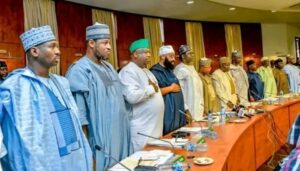
Between March 2024 and August 2025, over ₦2.45 trillion was released to states and the Federal Capital Territory for infrastructure and security support.
This is not a marginal increase—it represents one of the most significant expansions of subnational fiscal capacity in Nigeria’s recent history.
This is where clarity becomes essential.

Under Nigeria’s constitutional arrangement, governors—not the President—are the chief executives of their states.
The Federal Government provides policy direction, funding support, and major infrastructure, but it cannot constitutionally assume the operational responsibilities of state governments.
To do so would constitute executive overreach. Therefore, when funds are released and expected relief is not fully realised at the grassroots, accountability must be distributed appropriately across all levels of governance.
To hold the Presidency solely responsible is not only inaccurate—it is structurally misleading.
President Tinubu should not be misunderstood in the North.
His leadership approach reflects a national outlook rather than a sectional bias.
From the outset, his political decisions signaled a departure from identity-driven calculations toward competence and strategic alignment.
His choice of Vice President Kashim Shettima from the North-East—after decades of limited executive centrality for that region—was both deliberate and symbolic.
It affirmed trust in Northern capacity at the highest level of governance.
Shettima’s performance has validated that confidence.
Beyond symbolism, the evidence of federal engagement in Northern Nigeria is substantial and measurable.
Kano State remains central to several strategic interventions.
The Kaduna–Kano standard gauge railway is designed to enhance economic mobility across the region, reducing transportation costs and improving trade efficiency.
The Kano–Katsina–Maradi rail line extends this infrastructure into regional trade networks, positioning Northern Nigeria as a gateway for West African commerce. These are not symbolic projects; they are structural investments with long-term economic implications.

In agriculture—arguably the backbone of Northern Nigeria’s economy—the $158.15 million Value Chain Programme for Northern Nigeria represents a targeted intervention across states including Kano, Katsina, Jigawa, Sokoto, and Zamfara. This programme focuses on productivity, value addition, and market access, moving the region beyond subsistence agriculture toward a more sustainable, income-driven model.
Kaduna State has equally benefited from sustained federal attention. The Abuja–Kaduna–Zaria–Kano highway reconstruction has been restructured with modern infrastructure features, including solar-powered lighting and surveillance systems.
The establishment of the Special Agro-Industrial Processing Zone in Kaduna underscores a deliberate effort to industrialise agriculture, attract investment, and generate employment.
In addition, collaboration on rail and urban transport initiatives reflects continued prioritisation of the state within national infrastructure planning.
On the humanitarian and security front, the Resettlement Scheme for Persons Impacted by Conflict has been initiated in states such as Kaduna, Katsina, Sokoto, and Zamfara.
This intervention addresses one of the region’s most pressing challenges—internal displacement—by facilitating the rebuilding of communities and restoration of livelihoods.
Beyond individual projects, the Tinubu administration has adopted a broader structural approach to regional development through the expansion of development commissions. The move to strengthen and extend regional development frameworks across the North-West, North-Central, South-East, and South-South reflects a recognition that sustainable development must be institutionalised, not episodic.
It ensures that every region, including the North, benefits from coordinated, long-term planning.
When these interventions are viewed collectively, a consistent pattern emerges: Northern Nigeria has not been marginalised.
On the contrary, it remains central to federal policy, planning, and investment.
The persistence of the narrative of bias, therefore, demands closer scrutiny.
It often arises not from evidence, but from perception shaped by hardship and amplified by political messaging.
While hardship is real, it must be understood within the broader context of reform.
Globally, transformative leadership has rarely been popular in real time.
From Asia to Europe to North America, leaders who undertook structural reforms often faced resistance during implementation.
Yet history has consistently shown that such reforms, when sustained, lay the foundation for long-term stability and growth.
Nigeria is no different.

The present phase is one of transition—a necessary but uncomfortable stage between systemic correction and eventual recovery.
The question is not whether the process is difficult.
The question is whether it is necessary. For a country seeking to reposition itself economically and institutionally, the answer is self-evident.
At 74, President Bola Ahmed Tinubu stands at a defining moment—not just in his own leadership journey, but in Nigeria’s national trajectory. He is not a perfect leader, and no honest assessment should suggest otherwise.
However, the evidence points to a leader willing to take difficult decisions, expand fiscal capacity, invest in infrastructure, and pursue reforms that previous administrations avoided.
The North must therefore approach this moment with fairness and objectivity.
Where there are grievances, they should be articulated constructively. Where there are gaps in delivery, subnational leadership must also be held accountable.
Governance is not a one-tier responsibility, and national progress cannot be achieved through selective accountability.
Nigeria’s future will not be determined by sentiment, but by structure, discipline, and sustained reform.
As I have consistently maintained:
“A nation that refuses to confront its structural truths will remain trapped in cyclical frustration. Leadership must be judged not by temporary discomfort, but by the courage to correct what is fundamentally broken.”
President Tinubu represents that difficult but necessary correction.
At 74, he deserves not blind praise, but fair judgment.
Not emotional reaction, but rational evaluation.
Not selective criticism, but balanced national reflection.
Because in the final analysis, history does not reward convenience.
It rewards courage.