

Tinubu Reaffirms VIP Police Withdrawal, Urges Redeployment to Protect Citizens
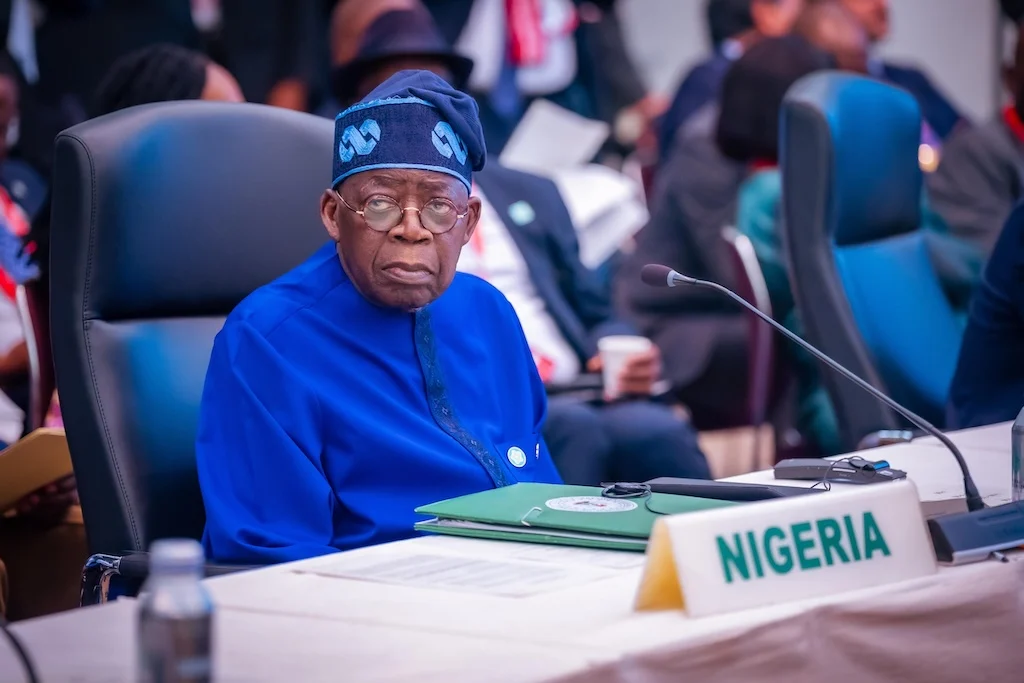
President Bola Ahmed Tinubu has reiterated his earlier directive for the complete withdrawal of police officers assigned to VIPs across Nigeria, emphasizing that security personnel should instead be deployed to areas prone to conflict to safeguard ordinary citizens.

In response, the Senate launched an investigation into what it described as “uneven and inconsistent enforcement” of the order. Despite criticism from Nobel Laureate Prof. Wole Soyinka, two civil groups—the Grassroots Mobilisation Initiative (GMI) and Democracy Watch Initiative (DWI)—defended the security detail provided to the President’s son, Seyi Tinubu.
Speaking ahead of the Federal Executive Council (FEC) meeting at the Presidential Villa in Abuja, President Tinubu instructed the Minister of Interior, the Inspector-General of Police (IGP), and the Nigeria Security and Civil Defence Corps (NSCDC) to immediately replace redeployed officers, ensuring there are no gaps in security coverage.

“I told the IGP, and I hope the Minister of Police Affairs is present. If there are security concerns due to the reassignment, contact the IGP and get my clearance,” Tinubu said. “The Minister of Interior should coordinate with the IGP and Civil Defence to redeploy officers on VIP duties, so citizens remain protected.”
He also directed the National Security Adviser (NSA) and the Department of State Services (DSS) to establish a committee to review and ensure full implementation of the redeployment plan.

Livestock Reform and State Cooperation
On livestock reforms, Tinubu tasked Vice President Kashim Shettima to engage state governments through the National Economic Council (NEC) to identify grazing reserves suitable for conversion into ranches and livestock settlements.
“We must prevent conflicts and make livestock reform an avenue for economic growth. The opportunity is there; let’s make use of it,” he said, urging states to cooperate in transforming viable areas into productive livestock villages that generate jobs and reduce herder-farmer clashes.

Senate Voices Concerns Over Inconsistent Implementation
Under Order 9, Senator Abdul Ningi raised concerns that police orderlies had been withdrawn from lawmakers, while high-profile individuals, including businessmen, celebrities, and their families, continued to enjoy armed escorts. The senator highlighted disparities in applying the directive, prompting Senate leadership to act swiftly.
Ningi cited relevant laws and parliamentary precedent, stressing that the Senate has the authority to regulate its conduct when standing orders are inadequate. He noted that while senators were stripped of security details, ministers continued to travel with convoys of police personnel.

This followed recent criticism by Prof. Wole Soyinka, who highlighted the extensive security detail surrounding Seyi Tinubu. Soyinka had counted at least 15 heavily armed personnel accompanying him to a hotel in Ikoyi, Lagos, and questioned the necessity of such protection.
Support for Seyi Tinubu
GMI and DWI defended the security measures, pointing out that Seyi Tinubu’s public profile and political influence expose him to real threats. The groups emphasized that while Soyinka’s concerns are respected, they do not fully reflect the risks faced by the President’s son.
“The security provided to Seyi Tinubu is justified given his public role and exposure,” the groups said, urging a balanced understanding of the situation.
Senator Ningi also affirmed that while he personally did not oppose the VIP withdrawal, the policy should be applied consistently across all public offices, from the presidency down to ministers and lawmakers. Deputy Senate President Barau Jibrin confirmed that the Senate had begun discussions to address the issue and expressed confidence that appropriate exemptions might be considered for lawmakers.




