

The rising wave of military takeovers across Africa, particularly in West Africa, has sparked fresh concerns about the future of democracy on the continent.
A recent but unsuccessful coup attempt in the Benin Republic further fueled these debates. The incident drew swift condemnation from regional and continental bodies, including the African Union (AU) and the Economic Community of West African States (ECOWAS). During the brief uprising, a group of soldiers led by Lieutenant Colonel Pascal Tigri reportedly took control of the national television station in Cotonou, announcing the removal of President Patrice Talon.

Although the attempt was quickly neutralised, it added to a growing pattern of democratic threats in the region, following successful military takeovers in countries such as Niger, Burkina Faso, Mali, Guinea, and Guinea-Bissau.
Nigeria’s role in helping to halt the Benin coup later became a major topic of public discussion. The Nigerian Air Force (NAF) confirmed that it deployed fighter jets to Benin as part of the ECOWAS Standby Force (ESF) mandate to help stabilise the situation.

This action was followed by the mobilisation of a regional standby force involving troops from Nigeria, Sierra Leone, Côte d’Ivoire, and Ghana to assist the Benin government in safeguarding constitutional governance.
While some analysts praised Nigeria for stepping up to its leadership responsibility in West Africa, others criticised both Nigeria and ECOWAS for what they described as delayed responses to earlier coups in the region. They questioned why similar military interventions were not carried out promptly in Mali, Burkina Faso, and Niger.
It will be recalled that Mali, Burkina Faso, and Niger later withdrew from ECOWAS and issued strong warnings against any form of military intervention after their elected governments were toppled.

Meanwhile, the 2025 Global Firepower Military Strength Index recently ranked Nigeria as the third strongest military power in Africa, behind Egypt and Algeria. The ranking assessed the defence capabilities of 145 countries worldwide and highlighted Nigeria’s capacity to undertake regional security operations such as ECOWAS peace enforcement missions.
The report also noted that Mali, Burkina Faso, and Niger do not feature among Africa’s top 10 strongest militaries, suggesting they would have struggled to confront the ECOWAS Standby Force had early intervention occurred.

TOP 10 STRONGEST MILITARIES IN AFRICA (2025)
-
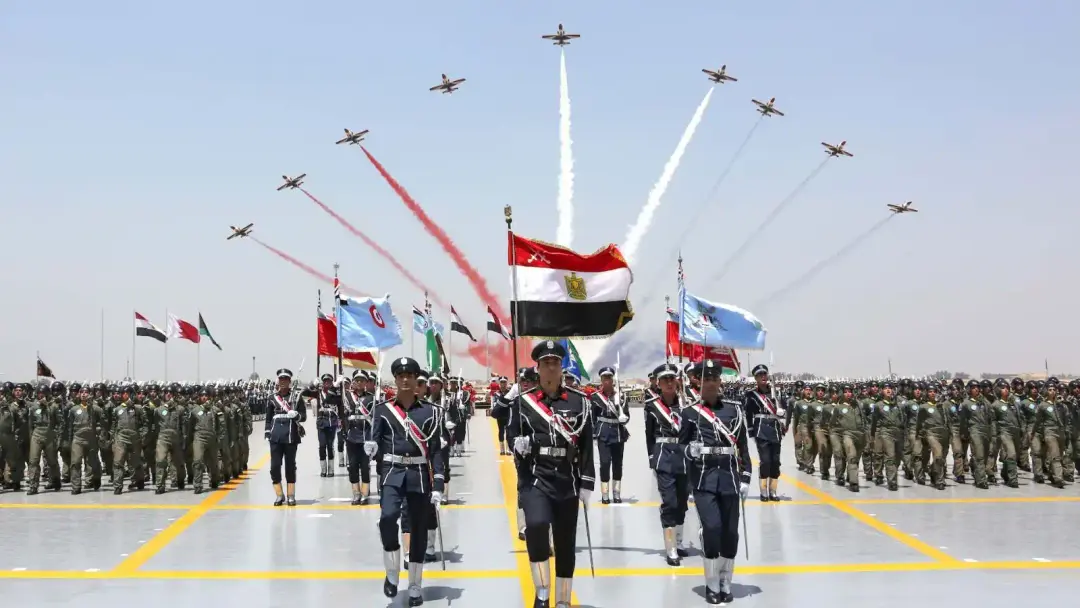
Egypt – Ranked first in Africa and 19th globally, Egypt boasts a highly modernised military with strong army, air force, navy, and air defence units, supported by significant foreign military aid.
-
Algeria – Second in Africa and 26th worldwide, Algeria’s military strength is driven by oil revenue, advanced weaponry, and a strong focus on border security and counterterrorism.
-
Nigeria – Africa’s third strongest and 31st globally, Nigeria maintains a large and active military force despite ongoing internal security challenges, including terrorism and banditry.

-
South Africa – Ranked fourth in Africa and 40th worldwide, South Africa is known for its advanced defence industry, though budgetary constraints have slowed growth.
-
Ethiopia – Fifth in Africa and 52nd globally, Ethiopia fields a large army primarily focused on regional security in the Horn of Africa.
-
Angola – Sixth in Africa and 56th worldwide, Angola leverages oil wealth to modernise its armed forces and address internal security issues.
-
Morocco – Ranked seventh in Africa and 59th globally, Morocco has prioritised military modernisation and counterterrorism, supported by strong international partnerships.
-
Democratic Republic of the Congo (DRC) – Eighth in Africa and 66th globally, the DRC continues to rebuild its military amid long-standing internal conflicts.

-
Sudan – Ninth in Africa and 73rd worldwide, Sudan’s military faces significant strain due to ongoing conflict but remains focused on territorial defence.
-
Libya – Ranked tenth in Africa and 76th globally, Libya remains militarily significant despite years of instability following the fall of Muammar Gaddafi.
The ranking has reignited discussions on which countries deserve a place on the list and whether any of the current entries should be reconsidered.




