
On December 25, 2025 (Christmas Day), U.S. forces carried out a targeted strike against Islamic State (ISIS)-linked militants in Sokoto State, northwest Nigeria, in an operation the U.S. Africa Command (AFRICOM) says was conducted “in coordination with Nigerian authorities” and initially assessed to have killed multiple ISIS fighters in their camps.
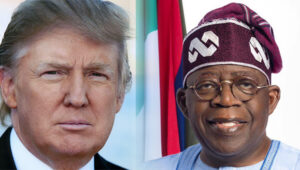
President Donald Trump publicly announced the strike the same day, framing it as a response to extremist violence, while Nigeria’s Ministry of Foreign Affairs described the action as part of ongoing security cooperation involving intelligence sharing and strategic coordination “consistent with international law” and sovereignty.
The Nigeria backdrop: why this is not “remote”
Nigeria’s security crisis has expanded far beyond the North-East. While Boko Haram and ISWAP remain lethal in Borno and neighboring states, analysts cited by the AP say the likely northwestern target may be Lakurawa, a lesser-known ISIS-affiliated faction operating around Sokoto/Kebbi, exploiting forest corridors and weak state presence.
The human cost of Nigeria’s long insurgency is staggering. A UNDP assessment estimated ~35,000 direct deaths in Borno/Adamawa/Yobe since 2009 and nearly 350,000 total deaths (direct + indirect) through end-2020, with indirect causes (collapsed services, hunger, disease) driving most fatalities.
Humanitarian agencies also continue to record large-scale displacement, with UN OCHA reporting approximately 2.3 million IDPs by end-2024.
Legal frame: “consent + counterterrorism” is the core argument
Internationally, the strongest legal grounding for foreign strikes on another state’s territory is typically host-state consent (i.e., Nigeria invited/approved the action), which both Reuters and AP reporting indicate.
Separately, the UN Charter’s Article 51 recognizes the inherent right of self-defence if an armed attack occurs—often cited in cross-border counterterror operations (though consent is the cleaner legal basis here).
United Nations Legal Affairs.
On counterterror obligations, UN Security Council Resolution 1373 (2001) requires states to suppress terrorist financing and support broad cooperation against terrorism.
And the UN’s tone on principle is blunt: “Nothing can justify terrorism — ever.”
In the USA, the enduring debate is whether such actions rely on the 2001 AUMF (Public Law 107–40) and how they are reported under the War Powers reporting requirements (48-hour report trigger in U.S. law).
● Comparative lens: the “partner-request strike” playbook.
This Nigeria strike mirrors patterns seen elsewhere:
Somalia: AFRICOM regularly announces strikes “in coordination with” Somalia’s government—same language, same partner-led framing.
Sahel: France’s long counterterror presence (and later backlash/withdrawals) shows the political risk: foreign firepower can buy time, but legitimacy and governance gaps decide whether gains last.
Global powers: Russia’s Syria intervention is widely discussed under the concept of “intervention by invitation,” underscoring how invitation/consent is repeatedly used to justify external force.
● The hard question: will airstrikes change the trend?
A single strike can disrupt camps, degrade leadership, and signal deterrence—especially when paired with intelligence. But Nigeria’s insurgencies are adaptive. Without sustained pressure, border control, community protection, and accountable security governance, militants often regenerate or relocate.
Still, the Christmas Day operation marks a meaningful escalation: direct U.S. kinetic action in Nigeria, publicly owned by Washington, and acknowledged as coordinated by Abuja—an indicator that Nigeria’s counterterror partnerships are entering a sharper phase.
The U.S. airstrike should be a wake-up call, not a one-off intervention. Nigeria must now play its part decisively by equipping its military with superior, modern air power to sustain pressure on terrorist networks and prevent regrouping.
Counterterrorism is not a sprint; it is a sustained campaign that requires air dominance, real-time intelligence, and rapid strike capability.
Equally urgent is leadership. Nigeria needs a seasoned counterterrorism expert—preferably a retired senior military officer—as National Security Adviser, empowered to coordinate a unified national counterterrorism architecture.
This must be complemented by a Presidential Advisory Committee on Security, independent of entrenched bureaucracy, to provide strategic oversight and align domestic operations with international partners, including the United States.
Porous borders must be secured immediately, and all security agencies placed on heightened alert.
The counterterrorism war has entered a new phase. Nigeria cannot afford delay, fragmentation, or half-measures.
As earlier reported a few days ago by Headlinenews.news, U.S. military aircraft conducted aerial surveillance over Nigerian airspace days before the strike, identifying terrorist targets and mapping operational zones.

The Christmas Day airstrike was therefore not sudden or speculative, but a calculated and expected development based on prior intelligence gathering.
This underscores a critical point: Nigeria must now act decisively. Surveillance without sustained follow-up creates gaps terrorists quickly exploit. The moment calls for Nigeria to match intelligence with force, strengthen its air power, and align strategically with partners. The counterterrorism war has entered a new phase, and hesitation would be costly.
U.S. Christmas Day Airstrike Signals New Phase in Nigeria’s Counterterrorism War.
The U.S. Christmas Day airstrike on ISIS-linked militants in northwest Nigeria marks a significant escalation in the fight against terrorism and signals a new operational phase. Following days of aerial surveillance reported by Headlinenews.news, the strike was a calculated action aimed at degrading terrorist camps and leadership.
Conducted in coordination with Nigerian authorities, it highlights the role of intelligence-led, precision air power in modern counterterrorism.
The development underscores an urgent need for Nigeria to strengthen its own air capabilities, tighten border security, and align strategy with partners. Sustained pressure—not isolated action—will determine whether this momentum delivers lasting security.
For full report, details, analysis, visit: www.headlinenews.news.

Dr. G. A. Fraser. MFR.
The National Patriots.