

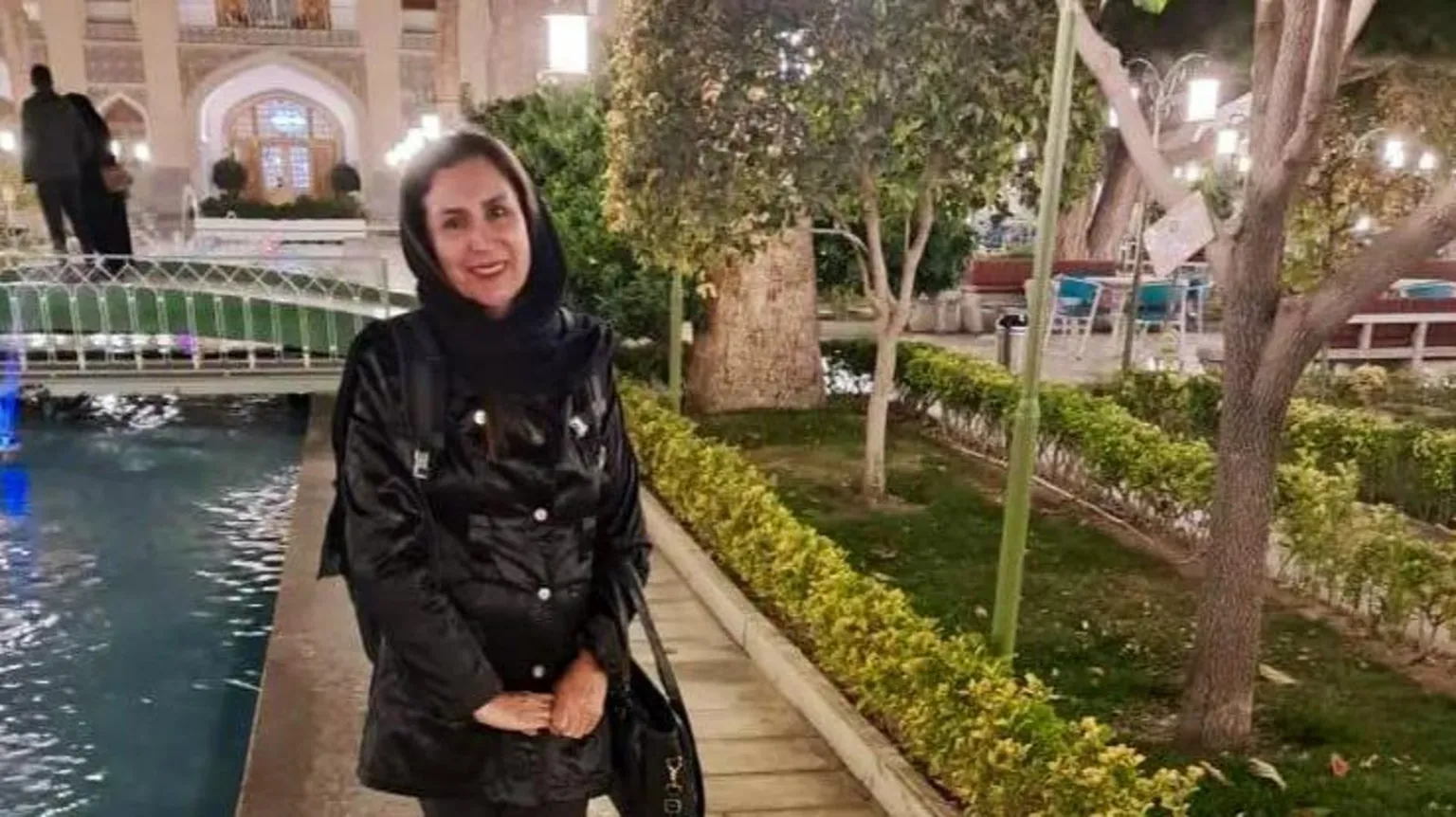
UN and Global Figures Urge Iran to Spare Zahra Tabari.
Zahra Tabari, a 67-year-old electrical engineer and women’s rights activist, faces execution in Iran. She was arrested in April and accused of collaborating with the banned opposition group, the People’s Mujahideen Organisation of Iran (PMOI).
Her trial in October lasted less than 10 minutes via video link in a Revolutionary Court in Rasht. The conviction of “armed rebellion” relied on minimal evidence, including a piece of cloth reading “Woman, Resistance, Freedom” and an unpublished audio message.
Iranian authorities have yet to comment on the case.

UN experts have highlighted numerous violations in Ms Tabari’s case:
1. Arrest without a judicial warrant
2. Solitary confinement and month-long interrogations
3. Pressure to confess to opposition membership
4. Denial of access to a lawyer of her choosing
5. Immediate death sentence after an extremely brief hearing
6. Use of insufficient evidence.
Experts stressed that international law restricts the death penalty to the most serious crimes, typically intentional killing. Executing Ms Tabari under these conditions would constitute an arbitrary execution and a form of gender discrimination, as it criminalizes women’s activism.

Over 400 prominent women, including Nobel laureates and former heads of state from Switzerland, Ecuador, Finland, Peru, Poland, and Ukraine, signed a public appeal for her release. The statement criticized Iran for making women’s activism a capital offense, calling Zahra’s case “a symbol of terror against women.”
The appeal was organized by Justice for the Victims of the 1988 Massacre in Iran, a UK-based group representing families of political prisoners executed in the 1980s.

Another Iranian woman, Kurdish rights activist Pakhshan Azizi, is also facing the death penalty for similar charges. UN experts previously noted that her sentencing appeared related solely to her humanitarian work, including support for refugees.
According to Iran Human Rights (IHR), at least 1,426 people—including 41 women—were executed in Iran during the first 11 months of 2025, a 70% increase from the previous year. Nearly half were convicted of drug-related offences, and 53 for national security offences.




