

The conflict in the Middle East has entered its 37th day following coordinated strikes by the United States and Israel, prompting a strong Iranian response that has escalated the regional crisis and affected global energy markets. Iran continues to control the strategic Strait of Hormuz while targeting economic and industrial assets in Gulf states it accuses of supporting the US-Israeli campaign.

US fighter crew rescued
President Donald Trump announced the successful rescue of the second crew member of an F-15E Strike Eagle downed over southwestern Iran. The recovery concluded a tense two-day search operation after Iran claimed responsibility for the aircraft’s downing. The first crew member had been rescued shortly after the incident.
48-hour ultimatum to Iran
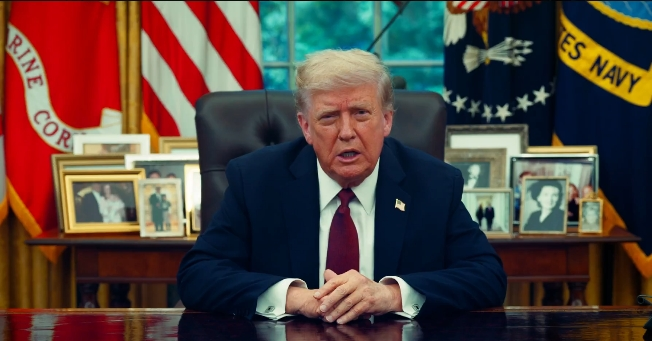
Trump issued a public warning giving Tehran 48 hours to “make a deal or open the Hormuz Strait,” threatening severe consequences for failure to comply. Iran dismissed the statement as a “helpless and nervous” ultimatum. Analysts note that such rhetoric has stalled diplomatic negotiations, leaving little room for immediate resolution.

Iraq exempted from Hormuz restrictions
In a move seen as easing tensions with Baghdad, Iran announced that Iraqi vessels would be exempt from all restrictions in the Strait of Hormuz. Iran’s Khatam al-Anbiya Central Headquarters confirmed that only “enemy countries” would be affected, explicitly excluding Iraq, highlighting Tehran’s distinction between adversaries and neutral nations.

Attacks on Iranian infrastructure raise concern
US and Israeli strikes have targeted Iranian medical and educational facilities, including the Pasteur Institute and over 30 universities, drawing international condemnation from the WHO and UN bodies. Iranian officials reported five deaths and 170 injuries in attacks on the Mahshahr Petrochemical Zone.

Hours after the US 48-hour ultimatum, Iran launched missiles and drones at Israel and Kuwait. Kuwait reported damage to power and water desalination facilities, including a fire at an oil complex, though no casualties were immediately confirmed. Tehran’s military has warned that further attacks will be met with reciprocal retaliation.
The war continues to disrupt global markets and heighten regional instability, with diplomatic efforts still stalled and both sides maintaining aggressive postures.




