


Why Nigeria’s Economic Rebound Narrative Deserves Serious Attention.
President Bola Ahmed Tinubu’s New Year message to Nigerians is not merely ceremonial. It is a strategic communication aimed at resetting national expectations after two years of deep structural reforms. Central to the address is a clear assurance: Nigeria is positioned for economic rebound and consolidation in 2026, following what the President describes as necessary but painful corrective measures.
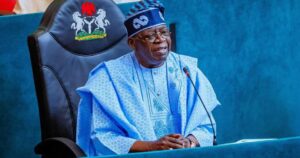
This review provides clarity, context, and coherence to the message—examining its strengths, grounding it in law, history, and comparative global experience, and explaining why the President’s vision deserves constructive national support at this critical juncture.
● A Message Rooted in Reform Logic, Not Political Rhetoric.
Unlike populist declarations that promise instant relief, President Tinubu’s address reflects a reform-first philosophy anchored in realism. The administration’s core argument is straightforward:
You cannot sustainably share what you do not first fix.
Key reforms already undertaken—fuel subsidy removal, foreign exchange liberalisation, fiscal tightening, and revenue reforms—are presented as foundational corrections.
The President’s 2026 optimism is therefore framed not as speculation, but as the expected yield of reforms already in motion.

This sequencing aligns with orthodox economic reform models applied in countries that escaped prolonged stagnation.
● Economic Indicators:
Why the Optimism Is Not Baseless.
The President’s message draws strength from verifiable macroeconomic indicators, including:
Easing inflation trajectory, signalling a gradual return to price stability.
Improved external reserves, enhancing Nigeria’s capacity to defend macroeconomic stability.
Renewed foreign investor interest, following greater FX transparency.
Stock market performance, reflecting improved investor confidence.
While macroeconomic improvements do not immediately translate into household comfort, they are a necessary precondition. Nations that skipped this stabilisation phase—historically—paid higher social and economic costs later.
Commendation: The administration deserves credit for measuring progress with data, not slogans.
● Legal and Constitutional Foundations of the President’s Economic Vision.
President Tinubu’s economic agenda is not arbitrary. It is constitutionally grounded.

The 1999 Constitution (as amended).
Section 16 of the Constitution mandates the Nigerian state to:
“Control the national economy in such manner as to secure the maximum welfare, freedom and happiness of every citizen…”
This clause legitimises the government’s interventionist role in correcting distortions that undermine national welfare—precisely what current reforms seek to do.

Central Bank of Nigeria Act.
The Act mandates the CBN to ensure:
Price stability.
Sound financial systems.
Protection of the external value of the naira.
The President’s emphasis on inflation control, FX stability, and reserves accumulation aligns squarely with this statutory responsibility.
Fiscal Responsibility Act.
The Act imposes discipline on deficits, borrowing, and public finance transparency. Tinubu’s stress on revenue reforms and expenditure rationalisation reflects compliance with this framework.
Interpretation: The President is not reinventing governance; he is reasserting rule-based economic management.
● Tax Reform: A Difficult but Necessary Pillar.
The President’s emphasis on tax reform—particularly the elimination of multiple and nuisance taxation—is one of the most consequential aspects of the address.
Nigeria’s problem has never been excessive taxation in theory, but:
Fragmented collection
Informal levies.
Weak compliance culture.
Poor value-for-tax perception.
Tinubu’s approach seeks to broaden the tax base rather than punish productivity, a principle adopted successfully by reforming economies.
Objective observation: Reforming taxes is politically risky, but avoiding it is economically disastrous. The administration’s willingness to confront this challenge deserves sober national engagement rather than reflex opposition.
● Comparative Lessons:
Why Tinubu’s Path Is Familiar—and Credible.
Indonesia.
Indonesia’s removal of fuel subsidies initially triggered public discomfort but later freed fiscal space for infrastructure, education, and social investment. The country emerged stronger and more resilient.
Egypt.
Egypt’s tough macroeconomic reforms stabilised inflation and restored investor confidence after years of imbalance—though not without social strain.
Ghana.
Ghana’s experience reinforces the need for discipline and transparency, lessons Nigeria appears to be applying earlier rather than later.
Lesson for Nigeria:
There is no painless exit from structural distortion. Countries that succeed manage the pain, communicate honestly, and stay the course.
Tinubu’s New Year message reflects all three elements.

● Security and Grassroots Development: Often Overlooked, Strategically Important.
The President’s linking of security with economic growth is a critical insight. Investment cannot thrive where insecurity persists. Equally notable is the Renewed Hope Ward Development Programme, designed to stimulate productivity at the most local level of governance.
If transparently implemented, this approach could:
Reduce rural-urban migration.
Support small-scale enterprise.
Restore confidence in grassroots governance.
This is consistent with global best practices that emphasise local economic empowerment as a buffer against national shocks.
● Clarification: The National Patriots and Their Position.
It is important to correct and clarify civic references accurately.
The Patriots, led by Chief Emeka Anyaoku, are a constitutional advocacy group.
The National Patriots, led by Princess Gloria Adebajo-Fraser, MFR, based in Lagos and Abuja, are a distinct organisation.
The National Patriots have publicly expressed support for the administration of President Bola Ahmed Tinubu, particularly his reform agenda and commitment to national renewal.
Their position reflects a strand of patriotic civic engagement that prioritises stability, reform continuity, and institutional rebuilding over populism.
● Why This Message Should Not Be Misread as Incitement.
President Tinubu’s New Year address does not call for unrest, sacrifice without purpose, or blind loyalty. Instead, it asks for:
Patience grounded in evidence.
National unity during reform.
Constructive civic participation.
This is consistent with democratic governance.
Economic reform is not incitement; it is responsibility.
Conclusion: A Rebound Is Plausible—If Nigeria Stays the Course.
President Tinubu’s 2026 economic rebound promise is not guaranteed, but it is credible.
What distinguishes this moment is not perfection, but direction:
From distortion to discipline.
From consumption to productivity.
From opacity to structure.

History shows that nations fail not because reforms are hard, but because they abandon them halfway.
This message deserves to be understood—not politicised.
For Nigerians, the task ahead is clear: engage critically, hold government accountable, but do not undermine the very reforms designed to secure long-term national stability.
That balance—not cynicism, and not blind praise—is the true mark of patriotism.

“The National Patriots regard President Bola Ahmed Tinubu’s 2026 economic rebound pledge as the logical outcome of firm, corrective leadership rather than political optimism. Economies burdened by structural distortions do not recover through delay or denial; they recover through disciplined reform and consistency of purpose.
President Tinubu has chosen to confront long-standing challenges—fuel subsidy inefficiencies, foreign exchange distortions, weak revenue mobilisation, and insecurity—with uncommon resolve. These reforms were necessary, though difficult, and they are already restoring macroeconomic order and investor confidence. History confirms that sustainable growth follows stability, not shortcuts.
The National Patriots commend the President for grounding hope in measurable indicators, institutional reform, and constitutional responsibility. A recovery strategy anchored on price stability, security, tax rationalisation, and grassroots productivity is both realistic and nationally responsible.
At this critical stage, Nigeria requires reform continuity, national cohesion, and constructive civic engagement. The direction is clear. With accountability and collective resolve, the promise of economic renewal is achievable.”
Princess Gloria Adebajo-Fraser MFR.
President, The National Patriots.




