

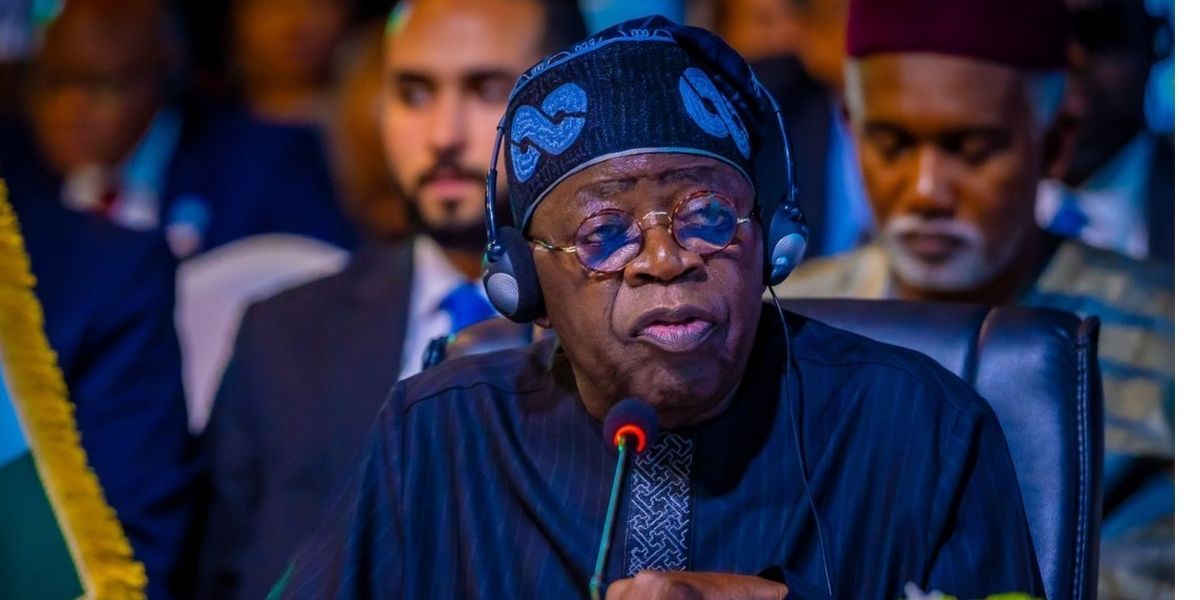
President Bola Ahmed Tinubu has asserted that the economic reforms introduced by his administration over the past two years are yielding positive outcomes, insisting that Nigeria has moved past the most difficult phase of its economic challenges.
In a nationwide address marking the second anniversary of his administration, President Tinubu stated that the reforms—though initially tough—were essential to prevent a looming fiscal crisis. He emphasized that the alternative would have been catastrophic: rampant inflation, unsustainable debt, widespread fuel shortages, a collapsing currency, and an economy in free fall.
Tinubu dismissed recent worries over declining global crude oil prices, which dipped to $58 per barrel against Nigeria’s budget benchmark of $75, saying fiscal projections for 2025 remain intact. As part of efforts to ease the burden on Nigerians, he announced a zero percent Value Added Tax (VAT) on essential items, including food, healthcare, education, rent, and public transportation.


“Our Reforms Were Necessary”
Since assuming office in May 2023, Tinubu has pursued bold economic measures, such as ending fuel subsidies and unifying the multiple exchange rate windows. These policies, widely seen as necessary structural adjustments, sparked public discomfort but have been defended as unavoidable.
Acknowledging the pain some citizens have endured, Tinubu reiterated his appreciation for Nigerians’ patience and resilience, noting that the administration is now beginning to see tangible improvements.
He highlighted:
- A decline in inflation, particularly in the cost of rice and other staples
- A surge in oil and gas sector investments, with rig activity up by over 400% from 2021 and over $8 billion in new commitments
- A drop in the fiscal deficit from 5.4% of GDP in 2023 to 3.0% in 2024
- Growth in external reserves from $4 billion in 2023 to over $23 billion by the end of 2024
- IMF obligations paid off
- Improved revenue generation and government financial transparency, with N6 trillion recorded in Q1 2025 alone


Tax Reform and Economic Inclusion
One of the highlights of the President’s speech was the administration’s ongoing tax reforms, which he described as both growth-oriented and socially responsible.
By the end of 2024, Nigeria’s tax-to-GDP ratio rose from 10% to over 13.5%, marking a significant shift in just one year. Tinubu said these gains came from more efficient tax administration and policies designed to ease burdens on low-income earners and support small businesses.
To further enhance fairness and transparency, the President announced plans for an independent Tax Ombudsman to protect taxpayers’ rights and promote equity.
Focus on Infrastructure, Healthcare, and Food Security
Tinubu also outlined achievements in other critical sectors:
- Healthcare: Over 1,000 Primary Health Centres (PHCs) have been revitalized, with 5,500 more under upgrade. Three of six new cancer treatment centers are ready. Free dialysis and cesarean sections are being offered in select hospitals, while health insurance coverage has expanded to 20 million people.
- Infrastructure: Major road projects are ongoing across all six geopolitical zones, including the Abuja-Kaduna-Zaria-Kano Expressway, Lagos-Calabar Coastal Highway, and the Second Niger Bridge access roads.
- Power: The administration is investing in generation and transmission infrastructure, alongside off-grid solar solutions to improve electricity supply to homes and businesses.
- Agriculture: Aggressive initiatives are underway to boost local food production and stabilize prices through mechanization and support to farmers.

Security and National Stability
The President reiterated his commitment to national security, highlighting enhanced coordination among security agencies, intelligence-led operations, and improved welfare for personnel.
He cited gains in the North-West where the military has reclaimed territory from bandits, allowing displaced farmers to return to their land. Highways that were once dangerous have become safer, he said, while efforts to rescue abducted persons have seen success.
Nigeria’s Global Role and the Motherland Festival
President Tinubu also looked ahead to the upcoming Motherland Festival, a global event meant to showcase Nigeria’s cultural richness, tourism potential, and creativity. The festival will serve as a platform to unite the African diaspora and reaffirm Nigeria’s position as a continental and global leader.
He acknowledged the critical role of Nigerians abroad, noting policies like the diaspora bond and non-resident Bank Verification Number (BVN) are in place to encourage their investment and participation in national development.
“The Worst Is Behind Us”
Concluding his address, Tinubu expressed optimism about Nigeria’s future:
“Today, I proudly affirm that our economic reforms are working. We are on course to building a stronger, more stable nation. By the Grace of God, the worst is behind us.”
Still, challenges remain. Critics argue that the reforms, while impactful on paper, have deepened hardship for ordinary Nigerians, with food inflation, high unemployment, and low public confidence still major issues. Small businesses continue to struggle, and many citizens feel disconnected from the reported macroeconomic gains.
Despite this, Tinubu remains confident that his administration’s efforts are steering the country in the right direction—toward sustainable growth, inclusive prosperity, and a brighter future for all Nigerians.




