


The commissioning of the Institute of Vocational Training & Skills Development in Kaduna by President Bola Ahmed Tinubu, in partnership with Governor Uba Sani, is more than a local milestone. It marks a vital moment in Nigeria’s national quest for economic inclusion, job creation, and youth empowerment.
As the federal government scales up investment in Technical and Vocational Education and Training (TVET), there is growing recognition that skills—not just degrees—are the currency of tomorrow’s economy.
A New Federal Focus on Skills
Recent federal reforms have reinvigorated TVET as a viable path for Nigeria’s future workforce:
Students enrolled in recognized TVET programs now receive monthly stipends of ₦22,500–₦45,000, free tuition, startup toolkits, and access to business loans.
Over ₦120 billion has been committed to vocational education under the NELFUND scheme.
Accreditation efforts through the National Board for Technical Education (NBTE) have accelerated, bringing structure and national recognition to previously informal training centres.


Federal technical colleges are also being upgraded into full-fledged vocational institutions, reversing decades of underinvestment in skills-based education.
Kaduna as a Case Study
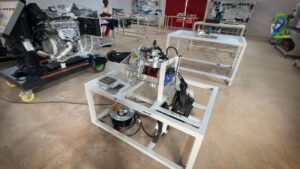
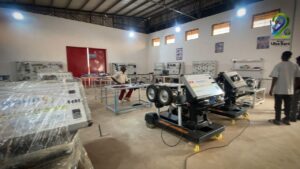
Kaduna’s newly launched institute—offering training in renewable energy, ICT, welding, tailoring, carpentry, agribusiness, and more—is a working model of how state-level commitment can complement national reform. With the capacity to train over 10,000 young people annually, it responds directly to the growing skills gap in Nigeria’s labor market.
Governor Uba Sani’s administration has prioritized people-focused development, proving that empowering youth through practical education can be both politically smart and economically strategic.








Why Vocational Education Matters Now
Youth unemployment in Nigeria stands at over 33%, with millions of graduates ill-equipped for jobs that actually exist.
Emerging sectors—green energy, technology, advanced manufacturing—need hands-on skills, not just theory.
TVET also boosts economic inclusion, particularly for rural dwellers, women, and school leavers excluded from the university pipeline.


> “Skill is our new currency. Nigeria must invest in vocational education not as a fallback, but as a foundation for economic growth.”
— Dr. Gloria Adebajo-Fraser, MFR
Strategic Recommendations: What Nigeria Must Do Now
To fully harness the promise of vocational education, coordinated action is needed across four levels of society:
1. Federal Government
Sustain monthly stipends and grants for vocational students.
Deepen and modernize the national TVET curriculum.
Launch a nationwide awareness campaign to reposition vocational training as a prestigious and viable career path.
2. State Governments
Replicate the Kaduna model with well-equipped, practical-focused vocational institutes.
Allocate funding for TVET in state education budgets.
Ensure close coordination with NBTE and federal oversight bodies for quality assurance.
3. Private Sector & Trade Associations
Partner in curriculum design and provide apprenticeship pipelines.
Offer internship programs and recruitment opportunities for top TVET graduates.
Sponsor skill competitions, startup grants, and innovation hubs.
4. Media & Educators
Promote success stories of vocational graduates thriving as entrepreneurs and professionals.
Challenge the stigma around TVET as “inferior” education.
Host forums, school tours, and digital content to popularize vocational careers.
Conclusion: Skills as National Capital
Nigeria stands at a decisive moment. With the right investments, partnerships, and policies, vocational training can become the cornerstone of a new economy—one built on productivity, innovation, and equity.
The Kaduna model is a bold first step. Now, the challenge is to scale it nationally, institutionalize funding, professionalize delivery, and elevate public perception.
In the words of Dr. Gloria Adebajo-Fraser:
> “This is not just about training hands; it is about building futures.”
The National Patriots Report.
Headlinenews.news Editorial Board.




