

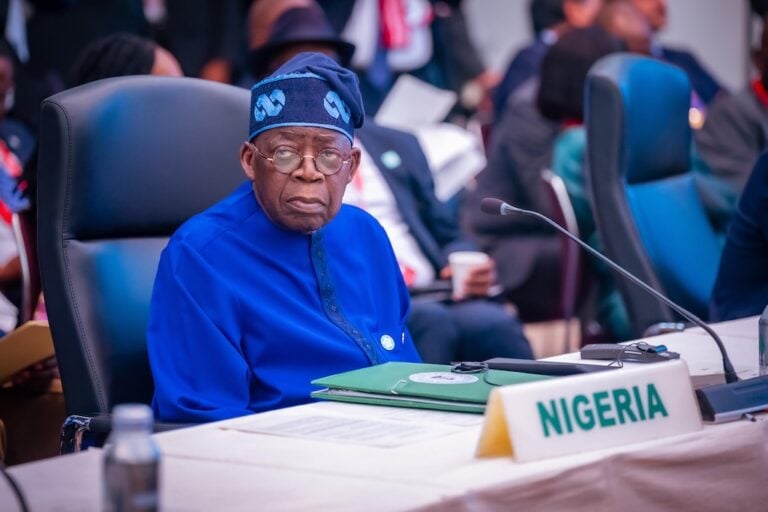
Despite worsening insecurity across Nigeria, over 500 senior military officers including Major-Generals, Rear Admirals, and Air Vice Marshals have been forced into early retirement following successive changes of service chiefs under Presidents Muhammadu Buhari and Bola Tinubu.

The retirements, which cut across the Army, Navy, and Air Force between 2015 and 2023, reflect a long-standing military tradition of disengaging officers who are senior to or of the same course as newly appointed service chiefs. Officials say the practice preserves discipline, hierarchy, and operational order, though critics call it outdated and wasteful.
Waves of Retirement
The first major wave followed Buhari’s 2015 appointments of Lt.-Gen. Tukur Buratai, Air Marshal Sadique Abubakar, and Vice Admiral Ibok-Ete Ibas, which led to the retirement of over 120 senior officers. Another major shake-up in 2021, after Buhari replaced all service chiefs, saw more than 200 generals and senior officers exit the services.

A similar pattern continued under Tinubu, whose June 2023 appointments of Lt.-Gen. Taoreed Lagbaja, Air Marshal Hasan Abubakar, and Vice Admiral Emmanuel Ogalla triggered the retirement of over 100 senior officers across the three forces.
The latest reshuffle on October 25, 2025, saw Gen. Olufemi Oluyede appointed Chief of Defence Staff, Maj.-Gen. Waidi Shaibu as Army Chief, AVM Sunday Aneke as Air Chief, and Rear Admiral Idi Abbas as Naval Chief, a move expected to force another 60 top officers into retirement.
Mixed Reactions

While some retired officers defended the practice as routine military procedure, others criticised it as wasteful and disruptive.
Retired Gen. Ishola Williams described the process as “a reflection of military-era habits,” urging reforms to create a natural order of succession. He suggested restructuring the chain of command so that only the Chief of Defence Staff reports directly to the President.
On the other hand, Gen. Aliyu Momoh (retd.) praised Tinubu’s decisiveness but urged him to “go deeper” by removing entrenched cabals within the military. “Without security, there is no development,” he said.

Brig.-Gen. Adewinbi (retd.) acknowledged the tradition’s inevitability but advised that experienced officers should be integrated into military reserves to preserve their expertise.
Calls for Reform
Former Air Force spokesman Group Captain Sadique Shehu (retd.) called the system “unsustainable,” revealing that Nigeria had about 960 generals for just 235,000 personnel as of 2022 nearly matching the U.S., which has 900 generals for a force five times larger.

Shehu blamed political interference and poor manpower planning for the frequent retirements, urging parliamentary reform to limit service chiefs’ tenure and streamline promotions.
However, Maj.-Gen. Lasisi Abidoye (retd.) and Maj.-Gen. P.J.O. Bojie (retd.) defended the retirements as a necessary mechanism to maintain efficiency and career progression within the armed forces.




