


Nigeria’s newly appointed Minister of Defense, General Christopher Musa (rtd.), delivered a firm and pivotal statement during his appearance before the National Assembly yesterday: “There will be no more negotiations with terrorists.”
The message was clear, direct, and carried the weight of a man deeply familiar with the costs, complexities, and consequences of appeasement in irregular warfare. For a nation that has endured nearly two decades of insurgency, this marks a strategic reorientation backed by operational experience and hard-earned lessons.
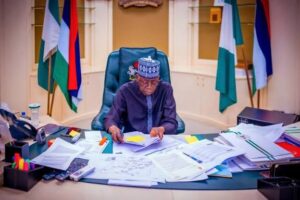
- A Minister With Theatre Experience at the Heart of Nigeria’s War
General Musa’s appointment aligns with best practices seen globally: placing seasoned military professionals with significant field and command backgrounds at the helm of national defense.
He previously served as:
Theatre Commander, Operation Hadin Kai — overseeing operations against Boko Haram and ISWAP in the North-East
Commander of several elite formations, including special forces
A senior officer engaged directly in joint operations, intelligence coordination, and multinational counterterror partnerships
Few Nigerian defense leaders in recent years have arrived in office with as much real-time exposure to the insurgency landscape. His credibility does not rest on theory; it is rooted in first-hand command experience, troop management, logistics, intelligence fusion, and strategic planning.

This background places him in the same category as leaders in countries that successfully reversed insurgencies — such as:
Somalia’s command structure under Gen. Odowaa Yusuf Rageh
Colombia’s counterinsurgency leadership against FARC
Pakistan’s military-led operations in North Waziristan
In each case, experience, discipline, and operational understanding determined success.
- Why “No Negotiation” Matters: Historical Context and Lessons Learned
Nigeria’s history with negotiations demonstrates inconsistency:
Ransom payments and informal negotiation channels contributed to financing insurgent and bandit networks.
Kidnapping surged because non-state actors learned that abducting civilians could generate revenue.
Several temporary ceasefires collapsed, allowing insurgent groups to regroup, rearm, and expand.
Global evidence strongly supports the Minister’s position:
The U.S., U.K., France, and Israel maintain strict no-negotiation policies with terrorists because concessions empower such groups.
Research by RAND Corporation shows that groups receiving ransom or concessions increase violent activity by up to 70% within three years.

“A New Era in Defence: Gen. Musa Draws a Hard Line”
General Musa’s stance aligns Nigeria with the strongest international counterterrorism standards.
- A Professional Defense Architecture Requires Complementary Expertise
A modern security system operates like a chain — its strength depends on all links functioning properly. General Musa’s leadership brings operational authority and strategic direction, but national security is multi-layered.
Countries facing high-level threats (Egypt, Turkey, India, Kenya) usually pair:
A Defense Minister with a theatre background
A Minister of State for Defense with complementary military or intelligence experience
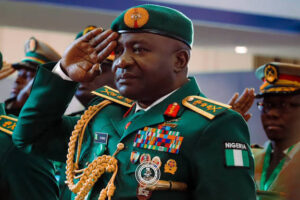
A National Security Adviser with deep expertise in joint operations, intelligence, and counterterror doctrine
This synergy creates:
Faster decision cycles
Better coordination between armed forces and civilian structures
More credible engagement with international partners
Stronger deterrence signaling
Nigeria’s long-term success will depend on building a defense team that mirrors these global standards.
- Security Architecture and Foreign Policy: Why Professionalism Matters for Nigeria’s International Standing
International confidence in Nigeria’s security reforms is tied directly to those who lead those reforms.
The United States, which currently lists Nigeria under the Country of Particular Concern (CPC) framework, prioritises:
Human rights compliance
Professional command structures
Effective oversight mechanisms
Counterterror operations led by trained, accountable experts
A strong, experienced defense leadership strengthens:
Nigeria’s credibility in international security partnerships
Access to intelligence, training, and technology
The argument for reviewing Nigeria’s CPC status
Investors also track security indicators closely. Historical data from the World Bank and African Development Bank show that:
Foreign investment increases sharply in countries that establish professional, stable security institutions

Investor confidence drops when security crises appear mishandled or politicised
A defense sector guided by competence and discipline is therefore critical not only for national safety but for economic recovery.
- National Patriots’ Recognition: A Signal of Public Expectation
The National Patriots, known for honoring individuals with verifiable contributions to national progress, recently recognised General Musa as a “Patriot Per Excellence.””
This recognition reflects:
His professional record
His leadership in high-risk theatres
His measured, disciplined approach to national security
It also symbolises a growing public expectation that Nigeria’s defense leadership must uphold:
Integrity
Expertise
Modern strategic knowledge

A citizen-focused approach to security
“Nigeria Shifts Strategy as Gen. Musa Rejects Terror Negotiations”
Nigerians expect results — and they now expect leadership that is technically prepared to deliver them.
- Strategic Guidance and Future Outlook
General Musa’s refusal to negotiate with terrorists marks a significant policy turn, but the broader national security strategy will depend on:
A unified command system across defense, intelligence, and policing
Advanced security technology
Improved troop welfare and logistical support
Strong strategic communication
Deep integration of professional expertise at every rank of national security leadership
These pillars have driven successful counterterrorism outcomes globally and can do the same for Nigeria.
Conclusion
General Christopher Musa’s testimony before the National Assembly marks a decisive shift in Nigeria’s counterterrorism doctrine. His experience, credibility, and clarity of purpose position him strongly to lead Nigeria’s military response in a volatile era.
Equally important is the institutional strengthening of the wider security architecture — ensuring that every key role involved in national defense is staffed with individuals whose backgrounds match the complexity of Nigeria’s security challenges.

A stronger, professionalised defense ecosystem will help:
Enhance stability
Restore investor confidence
Improve Nigeria’s global standing
Contribute to long-term peace
Nigeria stands at a pivotal moment, and the Minister’s early signals indicate a future built on discipline, competence, and strategic resolve.
We wish the new Minister of Defense the best of luck, God’s protection & guidance as Nigerians expect so much from him. We thank President Tinubu for granting our request for military experts in the security architecture of Nigeria. We look forward to more replacements for the best interest of Nigeria, Nigerians, and survival of the administration.
Princess G. A. Adebajo-Fraser MFR.
The National Patriots Movement.




