

FEDERAL GOVERNMENT PROJECTS N50.74TN REVENUE, RAISES 2026 DEFICIT TO N20.10TN
The Federal Government has projected total revenue of N50.74 trillion for 2026 and targets an economic growth rate of 4.68 per cent. However, its proposed deficit for the year has surged sharply to N20.10 trillion, exceeding the entire 2022 national budget by N2.78 trillion, The PUNCH reports.

Analysts warn that the ballooning deficit, coupled with a high debt service burden, could deepen fiscal stress in 2026. They emphasise the need for tighter expenditure planning, improved efficiency, and a credible budget calendar to prevent destabilisation of Nigeria’s fragile economic gains.
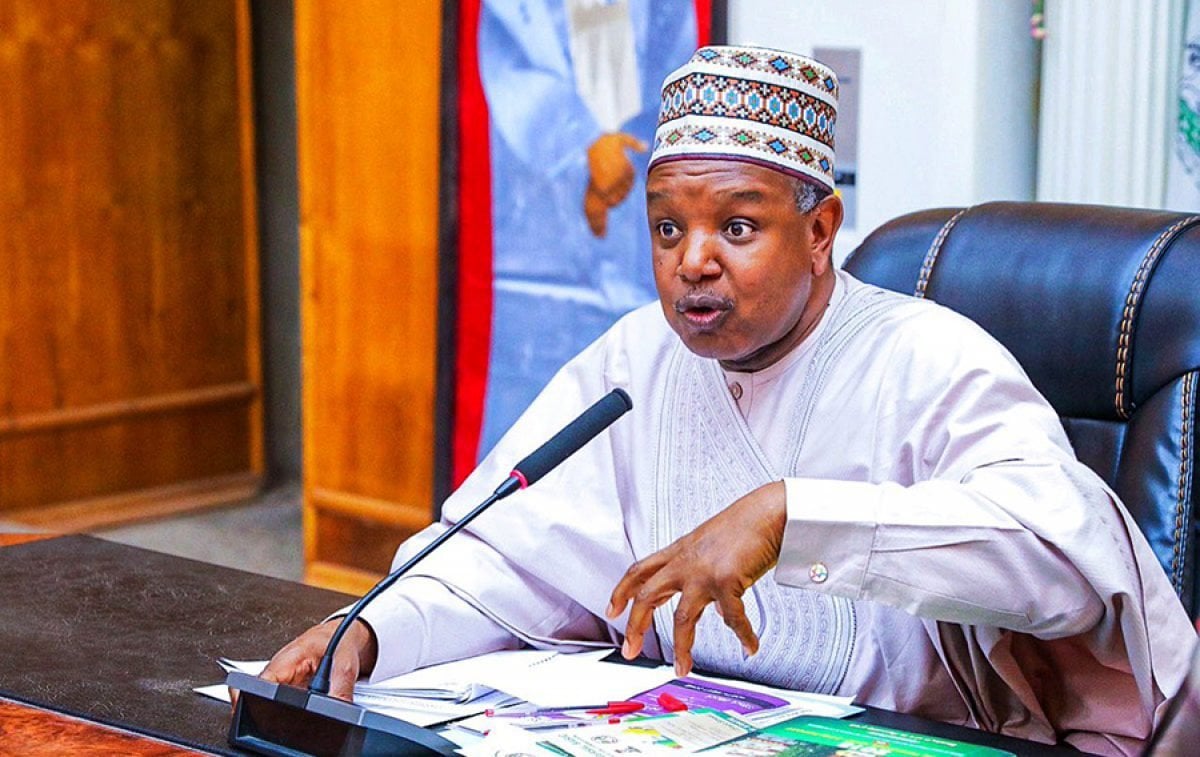
The announcement followed the Federal Executive Council’s approval of the 2026–2028 Medium-Term Expenditure Framework (MTEF) and Fiscal Strategy Paper (FSP). Minister of Budget and Economic Planning, Atiku Bagudu, told State House correspondents that the framework would be forwarded to the National Assembly for consideration on Monday.

Bagudu explained that the budget was based on a cautious oil price benchmark of $64.85 per barrel and an exchange rate of N1,512 to the dollar. For the first time, dual crude production targets were adopted: 2.06 million barrels per day as the operational target and 1.8 million barrels per day as a conservative planning figure, providing a 12.6 per cent buffer against output disruptions.
The minister highlighted that the Federal Government’s projected share of revenue stands at N34.33 trillion, including N4.98 trillion from government-owned enterprises, while total expected revenue allocations include N22.60 trillion to the federal government, N16.30 trillion to states, and N11.85 trillion to local governments.

The proposed 2026 spending envelope is N54.43 trillion, with debt service alone accounting for N15.91 trillion—or nearly 30 per cent of total expenditure. The resulting deficit of N20.10 trillion represents 36.9 per cent of the budget, meaning the government intends to borrow more than a third of its planned spending. By comparison, the 2025 budget had a deficit of N9.22 trillion and debt service of N14.32 trillion.
Recurrent expenditure is projected at N15.27 trillion, more than double the N7.11 trillion recorded in 2022, while capital spending has grown more slowly. Bagudu noted that the MTEF/FSP incorporated stakeholder inputs, reviewed 2025 budget performance, and aligns fiscal and monetary policies, with emphasis on security spending, infrastructure investment, and revenue protection in critical sectors.

ECONOMISTS RAISE CONCERNS
Economists have expressed concern over the 2026 deficit, warning that the large-scale borrowing, delayed budget preparation, and ongoing fiscal irregularities could threaten macroeconomic stability.
Dr Muda Yusuf, CEO of the Centre for the Promotion of Private Enterprise, cautioned that rising deficits and debt levels risk choking fiscal space and undoing recent economic gains. He urged the government to leverage improved revenue performance to reduce deficits and manage debt sustainably.
Sheriffdeen Tella, a professor at Olabisi Onabanjo University, criticised the timing of the 2026 budget, noting that the 2025 plan has only just begun implementation. He questioned the justification for projecting a N20 trillion deficit without performance data from the current budget, warning that this approach undermines fiscal credibility.

Professor Adeola Adenikinju, President of the Nigerian Economic Society, also highlighted that the late submission of the budget to the National Assembly disrupts the fiscal calendar, prevents proper scrutiny, and risks multiple overlapping budgets in the same year. He stressed that the Fiscal Responsibility Act limits deficits to three per cent of GDP and cautioned that heavy domestic borrowing could crowd out private sector investment, increase interest rates, and worsen inflationary pressures.
Experts agree that while borrowing is not inherently problematic, ineffective capital releases and delayed execution can reduce developmental impact and exacerbate economic instability, highlighting the urgent need for disciplined fiscal management in 2026.




