

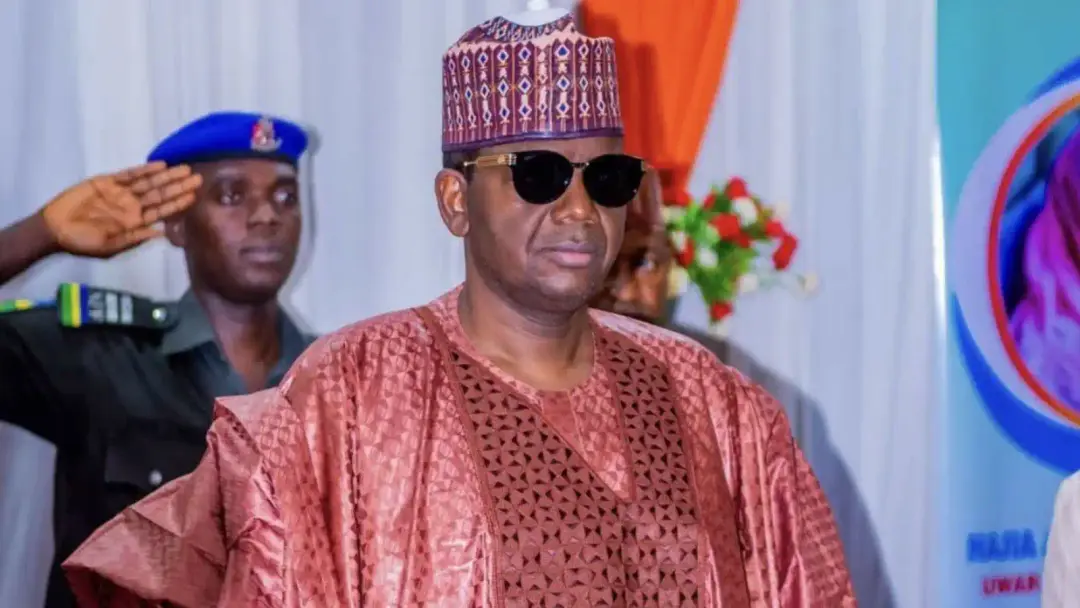
When Bello Matawalle, then Governor of Zamfara State, said in 2021 that “not all bandits are criminals,” many Nigerians were shocked but treated it as one more reckless political statement in an era of rising insecurity. That video has now resurfaced, but this time in a very different context: Matawalle is no longer a state governor; he is the Minister of State for Defence.
The core question is simple and uncomfortable:
> Can someone who once publicly rationalised the actions of illegal armed groups credibly lead Nigeria’s fight against banditry, insurgency, and terrorism?
This is not about emotion. It is about judgement, professionalism, and strategic credibility in a country that has become one of the world’s major theatres of terrorism and organised violence.

What Matawalle Said – and Why It Still Matters
In the 2021 interview, Matawalle argued that “not all bandits are criminals.” He claimed that some took up arms due to injustice, attacks on their communities, or alleged excesses by vigilantes and security forces. He cast parts of the violence as reprisal or a reaction to state and community actions.
Behind closed doors, security professionals are expected to analyse root causes – marginalisation, poverty, local grievances, abuses by security forces. That is normal in counterinsurgency planning.
The problem is not that he acknowledged grievances. The problem is how he framed it and where he said it:
On national television, not in a technical security briefing.
As a serving governor, now elevated to a senior defence role.

With language that appears to blur the line between perpetrator and victim, criminal and aggrieved actor.
In a context where armed groups are massacring villagers, abducting students, downing military aircraft, and overrunning communities, a senior political leader publicly suggesting that “not all bandits are criminals” is far more than a “poor choice of words.” It is a direct signal about mindset.
Nigeria’s Reality: This Is Not a Semantic Debate
Nigeria is not dealing with minor security disturbances.
Boko Haram and ISWAP have killed tens of thousands and displaced millions across the North-East and the Lake Chad Basin.
Armed bandit groups in the North-West have been responsible for thousands of deaths, mass kidnappings, village burnings, and the collapse of local economies.

Nigeria consistently ranks among the countries most affected by terrorism globally.
In that environment, every senior official in the security chain must project absolute clarity: taking up arms against the state and civilians is criminal, full stop. You can study causes without diluting responsibility.
When a man who once publicly muddied that line is later put in charge of defence policy at the federal level, it inevitably raises doubts about the seriousness and coherence of the country’s security architecture.
Mindset vs Office: You Don’t Automatically Reset With a New Title

It is important to be precise: Matawalle made the controversial remarks as governor, before his appointment as Minister of State for Defence. The timeline is clear.
But the issue doesn’t disappear with time or promotion. In security, past behaviour and public statements are evidence. They tell you how someone thinks about the problem:
Do they instinctively protect the moral and legal authority of the state?
Or do they slip quickly into rationalising armed groups as misunderstood actors?
As a minister, Matawalle has never fully, clearly, and publicly walked back those positions in a way that reassures victims, troops in the field, and international partners. That silence is not neutral. It is read as continuity.
A serious state would, at minimum, demand an explicit correction: a clear statement that whatever the grievances, anyone who picks up arms to kill, kidnap, extort, or terrorise civilians is a criminal and will be treated as such.

Nigeria’s Security Leadership Problem: Political Appointments in Technical Roles
Matawalle’s case sits inside a wider pattern: critical security positions filled primarily on political, not professional, grounds.
Nigeria’s security leadership today includes:
Service chiefs with long military careers,
An NSA, Nuhu Ribadu, with a law enforcement and anti-corruption background,
And political heavyweights placed into roles that require deep operational understanding of counterterrorism and counterinsurgency.
Ribadu, to be fair, has a reasonable credibility in law enforcement and has been presented to Washington and other capitals as Nigeria’s main security interlocutor. There are speculations from sources close to the Pentagon on the reaction of the United States to his limited qualifications for the position according to global standards and expectations for the collaboration; if anything, he is being used now only as a primary channel for security cooperation with the belief that Nigeria shall reorganize her security architecture before the collaboration takes off.

But that only highlights the inconsistency: one or two credible figures do not fix a structurally weak system. When other key positions are filled with individuals whose track record, training, or public rhetoric do not match the gravity of the threat, the entire architecture looks compromised.
How Other Countries Do It – and Why Nigeria Keeps Falling Behind
Compare Nigeria’s approach with countries facing similar or even smaller threats:
Kenya: After Westgate and subsequent attacks, key counterterror roles went to intelligence and special operations professionals.
Somalia: Progress against Al-Shabaab improved when professional commanders and structured international partnerships began to drive operations.
Pakistan and India: Counterinsurgency theatres are run by senior officers and seasoned security professionals; political appointees do not run technical counterterror portfolios.
The pattern is straightforward: where professionals lead, outcomes improve; where political logic overrides expertise, insurgencies drag on and mutate.

Nigeria, despite its size and resources, routinely behaves like the second category.
Strategic Messaging: The Hidden Damage of the 2021 Interview
Strategic communication is part of modern warfare. That 2021 clip does damage on several fronts:
● Communities under attack hear a senior leader downplay or rationalise the very people tormenting them. That erodes trust in the state.
● Soldiers and officers in the field hear someone, now above them in the chain of command, who once seemed more interested in explaining bandits than backing the troops. That hurts morale.
● International partners – already cautious about human rights, accountability, and capability – see confusion at the top. They are less inclined to share critical intelligence or advanced capabilities with a system that does not speak clearly and consistently about its own enemies.
You cannot build a credible counterterror partnership abroad while tolerating ambiguous, indulgent language about armed groups at home.
What a Serious State Would Do
If Nigeria were treating this as the national emergency it actually is, the reaction would be structural, not cosmetic:
Audit the public record and operational history of all top security appointees.

Align key defence and security roles with people who have demonstrable experience in counterinsurgency, intelligence, and joint operations.
Impose strict communication standards: no public rationalising, no semantic games, no narratives that confuse perpetrators and victims.
Codify appointment criteria: minimum professional experience, clear understanding of modern security strategy, and ability to engage with global counterterror partners on equal technical footing.
This is not about personal dislike of Matawalle or any other official. It is about whether Nigeria is prepared to match its rhetoric on insecurity with the hard, boring work of putting the right people in the right positions.
Conclusion
Bello Matawalle’s 2021 remarks as Zamfara governor are not ancient history. They are a live test of Nigeria’s seriousness. Leaving such a record unaddressed at the top of the defence structure signals that, for all the bloodshed and displacement, the country still treats security as politics first, profession second.
Nigeria is paying a heavy price for that choice. And unless competence and clarity start to matter more than party and patronage, the country should not expect very different res ults from its war on terror and banditry – no matter how many times the faces change at the top.
Princess G. Adebajo-Fraser MFR.
The National Patriots.




