

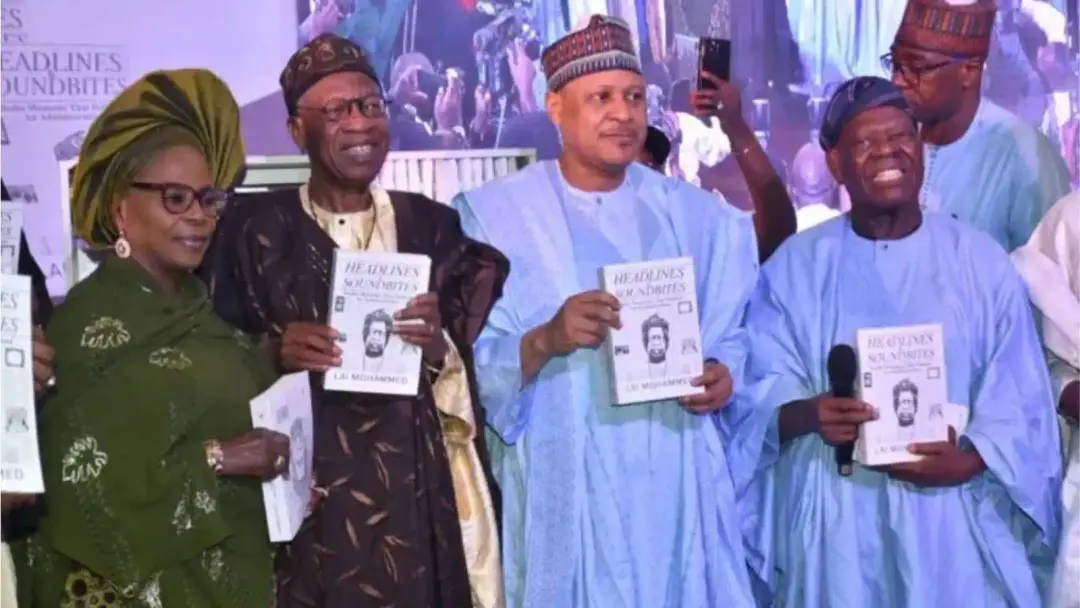
Former Information Minister, Alhaji Lai Mohammed, has revealed that suspending Twitter, now known as X, was among the most difficult decisions he made during his tenure.
In June 2021, the Nigerian government announced the indefinite suspension of Twitter, citing the platform’s persistent use for activities capable of undermining the nation’s corporate existence.

In his newly released book, Headlines & Soundbites: Media Moments That Defined An Administration, launched in Abuja on Wednesday, Mohammed explains the rationale behind the suspension.
Chapter 14, titled “Silencing the Bird: The Story of Nigeria’s Twitter Suspension,” details how the government negotiated with Twitter to resume operations after the blackout.
Mohammed wrote that the decision was challenging for two main reasons: first, the impact on Nigerians who relied on Twitter for business or influence; and second, the perception it could create about the government’s commitment to free speech and democratic openness.

Despite these concerns, Mohammed emphasized that “none of the reasons outweighed the threat to national security posed by irresponsible use of social media, particularly Twitter.” He added that public interest must always take priority over individual interest in governance.
He acknowledged the backlash from Nigerians, noting that criticisms were “fast and furious,” with many users venting their frustrations through the Federal Ministry of Information and Culture’s official Twitter handle (@FMINONigeria).
Addressing claims that the suspension was triggered by Twitter deleting a post by the late President Buhari, Mohammed said, “The timing created optics that influenced both domestic and international reactions.” He criticized Twitter for double standards, highlighting that while the platform removed the President’s tweet, it had allowed far more harmful posts, including those by Nnamdi Kanu, leader of the banned Indigenous People of Biafra (IPOB).

Mohammed stressed that the suspension did not happen suddenly. The government had repeatedly warned social media companies against enabling fake news, disinformation, and hate speech, concerns that escalated during the #EndSARS protests of October 2020, when false content amplified tensions and contributed to violence.
He recounted that when he approached President Buhari about suspending Twitter, the President asked two questions: whether the suspension was because of his deleted tweet (Mohammed said no) and whether he had the capacity to block the platform (he said yes). The President then approved the decision.

The federal government eventually lifted the 222-day suspension on January 12, 2022, with access restored the following day.
The debate continues: did the ban protect national security or hinder free expression? Share your thoughts in the comments.




