
Nigeria’s Borders as a Defence Priority: Restoring Territorial Control and Stability
Border security is not a side-project of government; it is the practical expression of sovereignty. When a country cannot control who and what enters its territory—by land, sea, or air—it invites terrorism, arms proliferation, smuggling, illegal resource extraction, revenue leakage, and reputational damage that scares away long-term investment. Nigeria’s persistent insecurity is not occurring in a vacuum. It is closely linked to decades of porous borders, weak federal presence in frontier communities, fragmented inter-agency coordination, and gaps in air and maritime domain awareness.

This report draws from Headlinenews.news’ ongoing research into Nigeria’s border-security challenges and available digital solutions, and from comparative lessons across Africa and the wider world. It sets out Nigeria’s border facts, highlights the strategic consequences of border weakness, clarifies constitutional and institutional responsibilities (including the central role of the military), and proposes sustainable options that match Nigeria’s realities—especially power constraints and corruption risk. It also recognizes commendable steps already underway, notably the activities of the Border Communities Development Agency (BCDA) under the Presidency and the planned Nigeria Border Security and Development Summit, designed to support the successful implementation of BCDA initiatives. These are signals of seriousness that investors and sponsors should treat as an invitation to engage constructively.

● Why Border Security Determines National Survival
Borders are not lines on a map. They are the points where national authority either holds—or collapses. Effective border security enables a country to:
Prevent infiltration by terrorists, bandits, and transnational criminal networks
Stop the inflow of small arms, explosives, and narcotics
Control migration and identity fraud (including cross-border movement of suspects)
Protect strategic assets and reduce illegal mining and smuggling
Capture customs revenue and reduce economic sabotage
Create a stable environment that makes foreign investment rational and defensible
States that control their borders reduce internal security pressure because fewer threats enter in the first place. States that do not, spend endlessly on internal containment while the supply lines of violence remain open.
● Nigeria’s Borders in Facts and Figures
Nigeria’s border challenge is among the most demanding in Africa:
Total land borders: about 4,047 km
Coastline (maritime edge): about 853 km
Bordering countries: Benin, Niger, Chad, Cameroon
The 21 Border States that Require Protection

Lagos, Ogun, Oyo, Kwara, Niger, Kebbi, Sokoto, Zamfara, Katsina, Jigawa, Yobe, Borno, Adamawa, Taraba, Cross River, Akwa Ibom, Rivers, Bayelsa, Delta, Ondo, Edo.
This means Nigeria’s border strategy cannot be “one-size-fits-all.” The threat profile of Borno differs from that of Ogun; the maritime risk in Bayelsa differs from the desert frontier in Katsina. Yet a national system must integrate them into one operational picture.
Headlinenews.news’ research and engagement across security and policy circles consistently points to a recurring structural issue: many frontier communities face weak federal presence, insufficient infrastructure, and delayed response capacity. These gaps convert border areas into corridors for illicit movement rather than protected national frontiers.
● The Border Vacuum Problem: Where Federal Presence is Thin, Threats Thrive
A recurring feature of border insecurity is the absence—or near absence—of permanent federal security infrastructure in critical frontier zones. In some border LGAs, communities report the lack of police stations, intelligence outposts, and functional immigration or customs capabilities. A frequently cited example is in parts of Sokoto State, where large border LGAs are described as having no meaningful federal security presence at scale—creating conditions where armed groups can operate on Nigerian soil with limited deterrence.

This vacuum matters because terrorism and transnational crime are logistics-driven. Where there is no state presence, there is no friction. Movement becomes easy, illegal trade becomes normal, and violent networks embed themselves into local economies.
● Comparative Lessons: Niger Republic and African Peers
Niger Republic
Across the Nigeria–Niger frontier, many observers argue that Niger has at times maintained stronger border discipline—through consistent patrol patterns, tighter control in certain corridors, and clearer state authority in key frontier areas. The widely discussed effect is that some violent actors avoid operating on Nigerien territory while remaining active on the Nigerian side. Whether in full or in part, the comparison still highlights Nigeria’s core issue: execution and presence, not merely budgets or rhetoric.
Broader African Lessons
Several African states have demonstrated that effective border control is achievable even with limited resources when command clarity, surveillance, and quick response are prioritized:
Rwanda (tight border controls and rapid response culture in sensitive zones)
Egypt (integrated land and air surveillance posture in high-risk areas)
Morocco (multi-layered surveillance and enforcement posture in critical border regions)
The key lesson: technology and manpower must be fused with rapid response and intelligence, otherwise surveillance only produces “nice dashboards” while intrusions continue.

● Global Comparative Analysis: What the U.S., Israel, and India Teach
Nigeria can learn from global systems without copying them blindly.
United States
U.S. border strategy is layered: fixed surveillance in known corridors, mobile assets in shifting hotspots, and a heavy emphasis on intelligence integration across agencies. The important takeaway is not the scale; it is the operating principle: detect early, verify fast, respond decisively, and use data to reduce discretionary loopholes.
Israel
Israel’s border posture emphasizes integrated fencing/sensors, persistent aerial surveillance, and rapid military response. Its core lesson is operational: a border is only as strong as the speed and certainty of response once an intrusion is detected. Sensors without response capacity are a false sense of security.
India
India’s long borders led it toward fencing in some sectors, extensive patrol networks, and technology deployments tailored to terrain and threat. India’s key lesson for Nigeria is institutional: border management works better when there is a clear lead security authority, strong intelligence support, and disciplined coordination across agencies.
Nigeria’s takeaway from these systems: the best border security isn’t one “miracle product.” It is an ecosystem—built around reliable detection, communications, rapid response, accountability, and sustained funding.
● Maritime Border Security: Nigeria’s Underestimated Frontline
Nigeria’s maritime border security has direct implications for national revenue, investor confidence, and internal security. Nigeria’s coastline is long, the Niger Delta waterways are complex, and criminal networks exploit the sea and creeks for:
Illegal bunkering and crude oil theft
Arms and drug smuggling through coastal routes
Piracy/armed robbery at sea and intimidation of lawful commerce
Illegal fishing and resource theft
Undeclared exports, including minerals and high-value contraband
Because so much of Nigeria’s trade and strategic infrastructure is maritime-linked, weak maritime security affects:
shipping confidence and insurance costs
port integrity and customs revenue
offshore energy operations
national reputation for rule-of-law
A credible border security plan for Nigeria must treat maritime domain awareness as equal to land border awareness—integrating coastal radar, AIS monitoring, patrol vessels, and maritime drones into the same command-and-control picture used for land borders.

● Airspace Security: The Blind Spot That Enables Crime and Insurgency
Airspace is border security. If a country cannot reliably detect, track, and investigate aircraft movements—especially low-flying or unscheduled movements—then criminal logistics can bypass land checkpoints entirely.
From Frontier to Firewall: A Defence-Led Approach to Securing Nigeria’s Borders
Regional security discussions have pointed to instances where smaller states such as Burkina Faso demonstrate real-time detection capability for suspicious aircraft movements, highlighting a gap Nigeria must urgently close. The core point stands even without dramatization: Nigeria requires stronger nationwide airspace detection and inter-agency integration, because uncontrolled air movement can support:
illegal export of gold and strategic minerals
covert import of weapons or supplies
revenue loss from unregulated aviation activity
operational advantage for violent groups
The Ministry of Aviation and its relevant institutions (regulatory and air navigation management) must be integrated into the national security command framework. Inter-ministerial cooperation between Interior and Aviation on border/travel security has been publicly emphasized as an important direction.
● Roles and Responsibilities: Who Must Do What
Nigeria’s border problem cannot be solved if agencies compete, duplicate, or pass blame. Clarity is essential.

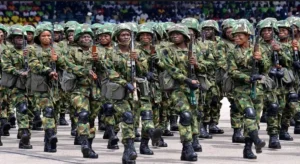
The Armed Forces of Nigeria
The military’s constitutional role includes defending Nigeria’s territorial integrity. Under Section 217 of the 1999 Constitution (as amended), this is not optional—it is foundational. The military must be the lead in hostile border zones and must anchor the national border security posture.
Military border tasks should include:
holding key border terrain and corridors
forward operating bases and patrol sectors
rapid reaction forces for incursions
surveillance operations (drones, ISR)
integration with intelligence agencies and zonal commands
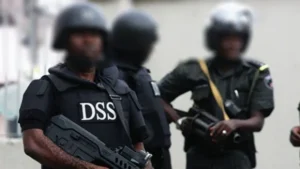
DSS
DSS should dominate intelligence functions:
infiltration and monitoring of cross-border networks
early warning on planned movements and attacks
counterintelligence to prevent insider compromise
Police
Police functions are vital but must be correctly positioned:
policing border towns after stabilization
criminal investigation and prosecution support
community policing and protection of civilians
Police should not be framed as the lead force where armed groups hold the advantage in firepower.
NIA
NIA’s role is external intelligence:
tracking external support networks
monitoring transnational logistics and financing
engaging partner intelligence channels where appropriate
Immigration and Customs
Immigration manages legal entry/exit and biometric identity systems.
Customs protects revenue and enforces trade compliance.
These institutions work best when the security environment is already stabilized and corridors are controlled.
Homeland Security as a Concept
Homeland security should be understood primarily as administrative and policy coordination—standards, frameworks, integration, and oversight—rather than replacing the military’s territorial defense role.

● What Equipment and Deployment Nigeria Needs
Border security must be layered. Not every kilometer needs a soldier standing on it—but every kilometer must be within a detection-and-response system.
Ground Layer (0–10 km from border)
permanent outposts at strategic corridors
all-terrain and armored mobility
night vision and secure communications
observation towers where terrain supports it
Surveillance Belt (10–50 km)
mobile patrol units
tactical drones to verify alerts quickly
thermal imaging at known routes
Wide-Area Coverage (50–200+ km)
long-endurance surveillance drones
zonal quick reaction forces able to respond rapidly
intelligence fusion support
Some drones can be weapon-capable under strict military rules of engagement, primarily for counter-terror response where ground forces face ambush risk. The purpose is controlled deterrence and operational advantage—not indiscriminate force.
Maritime Equipment
coastal radar and AIS integration
patrol vessels and fast interceptors
maritime drones (air and, where feasible, surface)
integrated port-to-coast intelligence flow
Airspace Equipment
radar and surveillance coverage improvements where feasible
integrated flight tracking, anomaly detection, and alerts
strong civil–military information-sharing protocols
● Digital Border Security That Nigeria Can Sustain
Nigeria must not procure “beautiful” systems that collapse under electricity shortages or maintenance realities. Sustainability is strategy.

Option 1: Solar-Powered Sensor Networks
Solar-powered ground sensors (motion, vibration, thermal) can work in remote areas with low grid reliability—creating persistent detection without constant manpower. This approach reduces discretionary corruption points because intrusion detection is automated.
Option 2: Sensor–Drone–Response Integration
Sensors detect → drones verify → forces respond. This reduces false alarms, focuses manpower, and improves evidence quality.
Option 3: National and Zonal Command-and-Control
Nigeria should implement:
a National Command & Control Centre in Abuja
six zonal centres aligned with geopolitical zones
unified dashboards combining land, maritime, and air alerts
disciplined response protocols and performance metrics
Option 4: Digital Travel and Profiling Systems
Advanced passenger information and command centres have been discussed publicly as part of strengthening border and travel security architecture.
The critical point: these systems must connect to real operations—watchlists, interdictions, prosecutions—not just “data collection.”
National Patriots, as an advocacy group, has been notably resourceful in networking with security stakeholders and consultants on border security ideas and technology options. Government should treat informed advocacy as a support asset—provided it remains evidence-based and focused on outcomes, not politics.
● BCDA Under the Presidency: Development as a Security Tool
Border insecurity is often fueled by poverty, neglect, and lack of state legitimacy in frontier communities. That is why the Border Communities Development Agency (BCDA) matters.
BCDA is established by law as an agency to address border community development needs. Government leadership has also publicly linked border community development to security outcomes—emphasizing that poor border security drives the flow of weapons and insecurity and that BCDA has a role in improving the security landscape.
BCDA’s success can:
reduce local incentives for smuggling economies
improve trust and cooperation with security forces
stabilize frontier settlements that are otherwise exploited by criminals
A Non-Negotiable Warning

BCDA must not become another underperforming institution. It must not be politicized, hollowed out, or reduced to patronage. It needs competent technocrats, clear KPIs, transparent procurement, and measurable outcomes. A border agency that cannot deliver becomes another security risk.
● The Nigeria Border Security and Development Summit
The planned Nigeria Border Security and Development Summit—being organized to enable cross-fertilization of ideas and solutions—should be treated as a serious opportunity to improve implementation quality and reduce avoidable mistakes. Done properly, it can:
align security, development, and technology stakeholders
surface practical lessons from other countries’ successes and failures
build consensus around sustainable procurement (including power realities)
strengthen accountability for BCDA-led initiatives
Headlinenews.news can support this effort credibly because it has conducted research on border security challenges and digital solutions and networks with other media associates—an advantage for amplifying evidence-based discourse and sustained accountability. National Patriots’ advocacy and stakeholder networking can also be constructive support, especially in bridging technical ideas between security agencies and solution providers.
Investors and sponsors should engage. Stable borders protect capital, supply chains, and project continuity. Supporting credible border-security and development initiatives is not charity—it is risk reduction.
● Legal and Policy Anchors That Support Investor Confidence
Nigeria’s legal framework supports border security and national protection:
1999 Constitution (as amended): security and welfare obligation of government, and the Armed Forces’ role in defending territorial integrity (including Section 217)
Border Communities Development Agency (Establishment, etc.) Act (providing BCDA’s legal basis)
Immigration Act 2015 and relevant customs and aviation laws
national security agency frameworks (for intelligence and counterintelligence roles)
For investors, the key message is simple: the law is not the missing piece; execution is. A functional border system raises Nigeria’s credibility as an investment destination because it reduces uncertainty, improves enforcement, and strengthens the predictability that serious investors require.

Conclusion: Nigeria’s Border Security Has Been Played Down—And the Cost Is Visible
Nigeria’s border challenge is solvable, but only if it is treated as the strategic priority it is. Land borders, maritime space, and airspace must be secured as one integrated system. The best international examples (U.S., Israel, India) show that success comes from layered detection, rapid response, intelligence integration, and institutional discipline—not slogans.
The Federal Government’s direction—strengthening border governance through BCDA under the Presidency and convening a Nigeria Border Security and Development Summit—are commendable steps that signal commitment. But initiatives only matter if they deliver measurable results. That requires technocratic leadership, sustainable technology choices suited to Nigeria’s power realities, strong anti-corruption safeguards, and unified command-and-control architecture from Abuja to zonal hubs.
If Nigeria secures its borders credibly, insecurity will not vanish overnight. But insurgency and organized crime will lose oxygen: weapons routes, supply lines, illegal revenue streams, and cross-border sanctuary. That is how states regain control—through disciplined border power, not periodic reactions.
Princess G. A. Adebajo-Fraser MFR.
The National Patriots.
Headlinenews.news Special Investigative Report.