

ABUJA — The Presidency yesterday distanced itself from alleged alterations of the tax bill passed by both chambers of the National Assembly.
Addressing questions from journalists, the Minister of Information and National Orientation, Idris Mohammed, dismissed claims of executive interference in the tax law process, saying any discrepancy identified was an affair of the National Assembly.
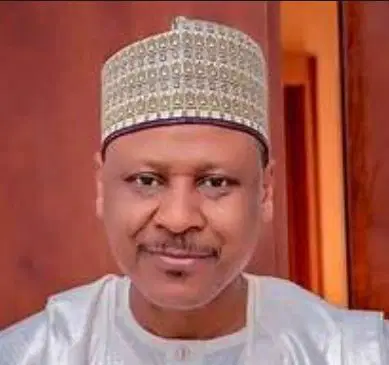
Mr. Abdulsammad Dasuki (PDP, Sokoto) alleged last week that the gazetted version of the tax laws is different from what lawmakers debated and approved, prompting the House of Representatives to set up a seven-man committee to investigate the matter and report back.
Amid pressure and public outrage, the House of Representatives will sit today to debate the issue. The Senate will also sit to deliberate on constitutional amendments, among other issues.

Responding to claims by lawmakers that the tax laws President Bola Tinubu signed into law differed from what the National Assembly passed, Idris said the matter was firmly within the legislature’s domain.
“To be honest with you, I have not seen the two versions. What I know is that the executive presented a document, it was processed by the National Assembly, passed, returned and signed. If the National Assembly has identified discrepancies and has set up a committee, we should allow that process to run,” he said.
The minister stressed that as far as the Federal Government was concerned, there is only one version of the tax document, adding that any further clarification would come after the lawmakers conclude their review.

Let lawmakers investigate — Oyedele
Speaking in a similar vein, Chairman of the Presidential Fiscal Policy and Tax Reforms Committee, Taiwo Oyedele, asked the National Assembly to investigate alleged discrepancies in the gazetted versions of the laws.
Oyedele spoke on Channels Television’s programme amid growing calls for suspension of implementation of the tax laws by former Vice President Atiku Abubakar, the 2023 presidential candidate of the Peoples Democratic Party, Peter Obi of the Labour Party, and several civil society organisations.
Reacting, Oyedele dismissed reports circulating in the media as misleading, insisting that claims of discrepancies could not be verified without access to the officially certified versions of the bills passed by lawmakers.

“Before you can say there is a difference between what was gazetted and what was passed, we don’t even have what was passed. The official harmonised bills certified by the clerk, which the National Assembly sent to the President, we don’t have a copy to compare. Only the lawmakers can say authoritatively what they sent.”
Oyedele also addressed concerns surrounding a controversial provision in Section 41(8), which reportedly required a 20 per cent deposit, saying he reached out to the relevant House committee for clarification.
“I know that particular provision is not in the final gazette, but it was in the draft gazette,” he said, adding that some documents circulating publicly were prepared before the committee had concluded its work.
“What is out there in the media did not come from the committee set up by the House of Representatives. I think we should allow them do the investigation,” Oyedele said.

President Tinubu recently signed four major tax reform bills into law, describing them as the most significant overhaul of Nigeria’s tax system in decades. The laws — the Nigeria Tax Act, Nigeria Tax Administration Act, Nigeria Revenue Service (Establishment) Act, and Joint Revenue Board (Establishment) Act — are scheduled to take effect on January 1, 2026.
What we didn’t pass can’t become law
Yesterday, the public space was awash with a report of the House committee, which alleged that critical provisions of several 2025 tax laws were altered after passage by the National Assembly. The development has triggered serious constitutional and institutional concerns and set the stage for what is expected to be a tense and far-reaching plenary session today.
According to the committee’s findings, substantive clauses were allegedly inserted, deleted, or modified outside the constitutionally recognised law-making process after approval by both chambers of the National Assembly.

If upheld by the House, the development could render parts of the affected laws legally void and expose the Federal Government to significant litigation risks.
Lawmakers are expected to scrutinise the report’s conclusion that new coercive and fiscal powers — including arrest powers, garnishee proceedings without court orders, security deposits, compulsory United States dollar computations, and restrictions on appeal rights — appeared in the final gazetted Acts without legislative approval.
Constitution
The committee also found that oversight and accountability provisions approved by parliament were removed in the final versions now in force.

The panel warned that such changes cannot be dismissed as clerical or editorial corrections, stressing that Sections 4 and 58 of the 1999 Constitution vest exclusive law-making powers in the National Assembly.
“What the National Assembly did not pass cannot become law,” the committee stated, describing any post-passage alteration as unconstitutional, ultra vires, and legally void to the extent of the changes.
Sources in the House say today’s sitting will test parliamentary resolve to defend legislative supremacy, as members weigh recommendations calling for immediate legislative review of the altered provisions, possible rectification or re-enactment of affected laws, and the summoning of officials allegedly linked to the enrolment and certification process under Sections 88 and 89 of the Constitution.

The report identified discrepancies in provisions of the Nigeria Tax Administration Act, the Nigeria Revenue Service Act, and the Joint Revenue Board Act, citing differences between Votes and Proceedings of May 28, 2025, clerk-certified “as-passed” bills, and the final gazetted Acts. A section-by-section forensic comparison, backed by legal opinions and certified documents, formed the basis of the committee’s conclusions.
Beyond the legal implications, lawmakers are expected to debate the broader consequences for governance, investor confidence, and fiscal stability. The committee cautioned that allowing the alleged alterations to stand would erode parliamentary integrity, weaken oversight, and set a dangerous institutional precedent capable of undermining democratic governance.

As the House sits, all eyes will be on the chamber to see whether it will move swiftly to adopt the report, enforce accountability, and restore confidence in Nigeria’s legislative process, or allow one of the most serious allegations of post-passage legislative alteration in recent history to fade without decisive action.
Alleged alterations
Substantive provisions were inserted, deleted, or modified after passage by both chambers.
Several oversight, accountability, and reporting mechanisms approved by Parliament were removed in the final Acts.

New coercive and fiscal powers, including arrest powers, garnishee proceedings without court orders, compulsory US dollar computation, and appeal security deposits, appeared without legislative approval.
These changes cannot be classified as clerical or editorial corrections and are described as deplorable.
Constitutional implications
If the allegations are true, the following constitutional consequences arise:
Sections 4 and 58 of the 1999 Constitution vest law-making power exclusively in the National Assembly.
The executive, or any person acting on its behalf, has no constitutional authority to alter a bill after passage.
Any post-passage alteration is ultra vires, unconstitutional, and void to the extent of the alteration.
Affected provisions are vulnerable to judicial invalidation, creating legal and fiscal uncertainty.
Rights group demands probe as questions trail altered tax laws
Meanwhile, the Resource Centre for Human Rights and Civic Education, CHRICED, has called for an urgent and independent investigation into allegations that Nigeria’s tax reform laws were altered after passage by the National Assembly.
In a statement by its Executive Director, Dr. Ibrahim Zikirullahi, the organisation said the alleged post-passage alterations point to a coordinated effort to rewrite legislation outside the authority of parliament, undermining the role of elected representatives and the principle of separation of powers.
“This is not a clerical error, and it is not a misunderstanding. It raises serious concerns about the integrity of our democratic process,” Zikirullahi said.
According to the organisation, the altered laws reportedly contain provisions never debated or passed by lawmakers, including powers allowing tax authorities to seize funds without court orders, a requirement for taxpayers to pay 20 per cent of disputed assessments before filing appeals, a mandate to compute taxes solely in United States dollars, and unauthorised changes to Petroleum Income Tax and Value Added Tax provisions.
“These provisions were not approved by lawmakers, and their appearance in the final laws raises troubling questions,” he said.
CHRICED noted that Section 58 of the 1999 Constitution clearly prohibits any alteration of bills after passage, stressing that those responsible for the alleged tampering breached both constitutional provisions and public trust.
While acknowledging the Speaker’s decision to set up a seven-member ad hoc committee, the group cautioned against downplaying the allegations and expressed concern that more than 48 hours after the claims became public, both the Presidency and the Senate were yet to issue official responses.
“The continued silence is worrying and does not inspire confidence in our democratic institutions,” Zikirullahi stated.
The organisation demanded a time-bound and independent probe, immediate suspension of the affected tax laws, prosecution of culpable officials, full public disclosure of findings, and safeguards to prevent future post-passage alterations.
ADP calls for thorough investigation
Similarly, the Action Democratic Party raised concerns over allegations that the presidency assented to a tax law materially different from the version passed by the National Assembly.

Speaking to journalists in Abuja, the party’s National Chairman, Engr. Yabagi Sani, said allegations that aspects of the Tax Act 2025 were altered after legislative passage must be holistically investigated, stressing that legislative authority belongs solely to Parliament.
He added that Nigeria’s tax data is a strategic national asset that must be protected from opaque foreign control, noting that sovereignty without accountability invites abuse.
On insecurity, Sani lamented that despite defence spending exceeding N4 trillion annually, insecurity persists, describing it as a systemic failure driven by political interference, corruption, fragmented intelligence, and lack of accountability.
He said that between 2023 and mid-2025, independent security trackers estimate over 15,000 fatalities linked to violence, with thousands of abductions annually and ransom payments running into trillions of naira. He added that more than 3.5 million Nigerians remain internally displaced, unable to return to farms or schools.




