
The phrase “I’m going to make him an offer he can’t refuse” has endured not because it glorifies coercion, but because it captures a deeper truth about how power often operates—quietly, indirectly, and behind closed doors. The fictional and allegorical narrative presented here, inspired by Michael Corleone’s explanation of power to Kay, does not allege an actual meeting or agreement between Nigeria and the United States. Rather, it provides a lens through which to examine how global power, security partnerships, and national sovereignty have historically intersected—and what that means for Nigeria today.

Allegory as a mirror, not an accusation.
In geopolitics, formal respect and informal pressure often coexist. States rarely compel one another through open threats. Influence is exerted through leverage: intelligence cooperation, access to finance, trade privileges, diplomatic support, and the shaping of international narratives. As former UN Secretary-General Kofi Annan once observed, “Sovereignty today cannot be a shield for impunity, nor can it be a license for isolation.” That tension—between autonomy and interdependence—defines modern statecraft.
There is no public evidence that Nigeria’s leadership was coerced, blackmailed, or threatened into counterterrorism collaboration with the United States. What is evident is that Nigeria faces a prolonged, transnational security challenge that has narrowed policy choices and increased the appeal of external support. Allegory, in this context, is not a claim of fact but a tool for reflection.
The global pattern: how interventions begin—and evolve.
History offers sobering lessons. Many U.S. military engagements began with limited objectives: intelligence sharing, air surveillance, and targeted strikes against non-state actors. Afghanistan after 2001, Iraq in 2003, Libya in 2011, and prolonged operations in Somalia all followed an initial counterterrorism or humanitarian rationale. In several cases, early success gave way to mission expansion, political entanglement, and long-term consequences for sovereignty and stability.
The United Nations has repeatedly emphasized caution. Current UN Secretary-General António Guterres has stated that “nothing can justify terrorism, but counterterrorism must always respect international law, human rights, and the sovereignty of states.” This dual imperative—security and restraint—is where many partnerships succeed or fail.
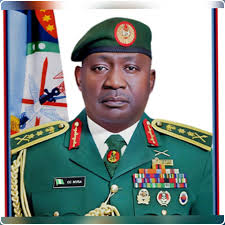
Nigeria’s strategic weight changes the equation.
Nigeria is not a peripheral state. It is Africa’s most populous nation, a regional military power, and a key economic actor with vast reserves of crude oil, natural gas, gold, and critical minerals. Its market size, diplomatic reach, and influence within ECOWAS and the African Union give it leverage that many countries subjected to deeper foreign intervention lacked.
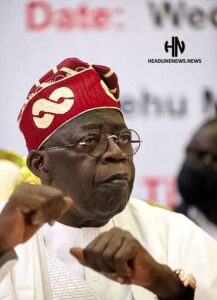
President Bola Ahmed Tinubu has repeatedly emphasized Nigeria’s commitment to sovereignty, partnership, and African-led solutions to African problems. In public addresses, he has framed security cooperation as a means to strengthen Nigeria’s capacity, not replace it—an important distinction. Nigeria’s challenge is not whether to cooperate, but how to do so without ceding strategic control.
Comparative perspective: resistance within partnership.
Not all states that cooperate with the United States lose autonomy. Turkey, a NATO member, has repeatedly resisted U.S. pressure when its national interests diverged. India maintains deep security ties with Washington while preserving strategic non-alignment. Brazil, under President Luiz Inácio Lula da Silva, has been explicit about this balance. Lula has argued that “strong nations cooperate without submission,” insisting that partnerships must respect domestic priorities and regional independence.
These examples matter for Nigeria. They demonstrate that leverage is not one-directional. Countries with strategic value can negotiate terms, set boundaries, and diversify partnerships to avoid dependency.
Is the U.S. seeking more than counterterrorism?
Strategically, all major powers seek influence, access, and positioning. The United States is no exception. Counterterrorism cooperation often aligns with broader objectives: regional stability, protection of economic interests, and geopolitical competition—particularly as U.S. influence in parts of the Sahel has waned amid growing Russian engagement.
This does not automatically imply malign intent. It does, however, require vigilance. As analysts often note, airspace is territory. Control over skies carries implications for intelligence dominance, deterrence, and long-term presence. Nigeria must therefore ensure that any cooperation is bounded, transparent, and subject to Nigerian command authority.
Domestic realities: why pressure narratives resonate.
Nigeria’s internal challenges—demographic pressures, educational gaps, economic hardship, and political polarization—make external narratives more potent. When reform policies are poorly understood or misrepresented, foreign involvement can be framed as either salvation or subjugation. Neither extreme is accurate.

The UN Development Programme has consistently stressed that sustainable security depends on governance, education, and economic inclusion. External force can disrupt threats, but it cannot substitute for domestic legitimacy. Nigeria’s leadership must therefore communicate clearly, build consensus, and anchor cooperation within national institutions.
The allegory revisited: what is plausible—and what is not.
Could quiet diplomatic pressure accompany security negotiations? Historically, yes. Do global powers sometimes signal preferences about leadership, alignment, or policy direction? Also yes. But outright regime change through covert coercion is neither simple nor cost-free—especially in a country of Nigeria’s scale and political complexity.

Moreover, Nigerians are politically conscious and deeply nationalistic. Any perception of foreign overreach would likely provoke resistance across civil society, the media, and political class—raising the cost of intervention dramatically.
What Nigeria should do next: confidence, not fear.
The lesson for Nigeria is not paranoia, but preparation.
Sovereignty is preserved through structure:
Clear mandates and timelines for any foreign military activity.
Operational sovereignty, with Nigerian command and oversight.
Parliamentary and legal scrutiny to ensure constitutional alignment.

Diversification of partnerships, including African and non-Western actors.
Regional diplomacy, strengthening ECOWAS-led security frameworks.
As President Tinubu has indicated in various fora, Nigeria seeks partnership, not patronage. That posture should guide every negotiation.
A final reflection.
The allegory of “the offer you can’t refuse” is powerful because it warns how power can erode autonomy quietly. But it is not destiny. History also shows that nations aware of power dynamics are best positioned to manage them.
Nigeria is not without agency. Its size, resources, people, and regional role confer leverage. Cooperation with the United States can yield real security benefits—if it is entered into with clarity, confidence, and firm red lines.
As António Guterres has cautioned, “International cooperation must be based on trust, mutual respect, and shared responsibility.” That principle, more than fear or suspicion, should define Nigeria–U.S. engagement.
The offer, allegorical or not, does not have to be refused—but it must be negotiated on Nigeria’s terms.
Princess G. Adebajo-Fraser MFR.
The National Patriots.
Former Special Adviser to Former President Goodluck Jonathan.