

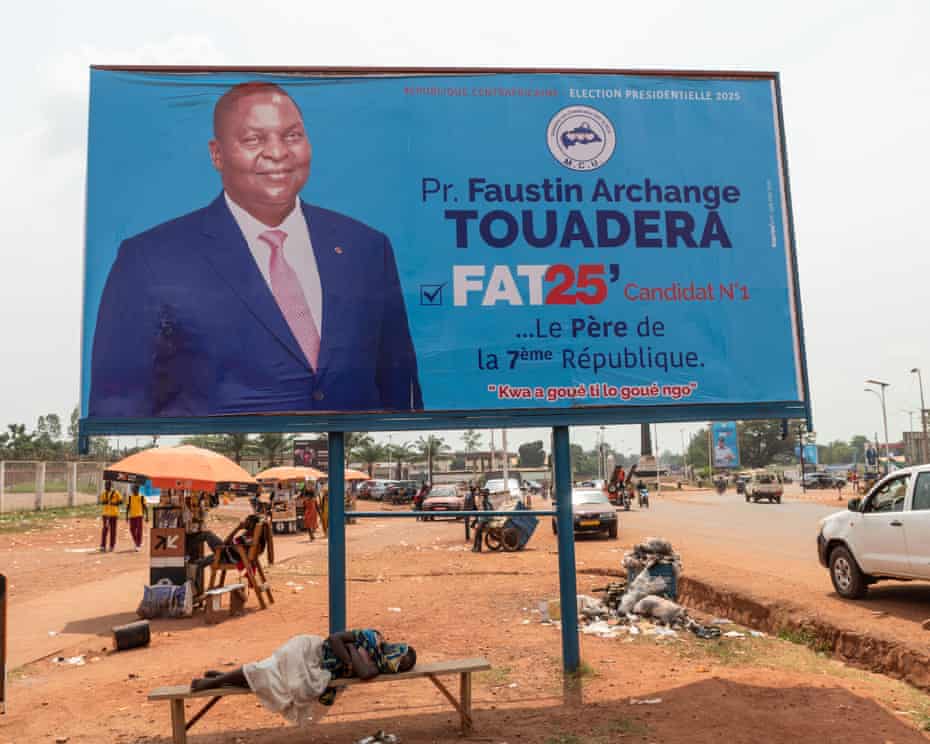
The Central African Republic heads to the polls on Sunday with President Faustin-Archange Touadéra seeking a third term in office, as voters cast ballots amid ongoing insecurity and political tension.
About 2.3 million registered voters are expected to take part in what observers describe as a quadruple election, covering the presidency, parliament, and local and municipal councils. Seven candidates are contesting the presidency, including former prime ministers Anicet Georges Dologuélé and Henri-Marie Dondra, both of whom were initially barred before being cleared by the constitutional court.

Dologuélé finished second in the 2015 and 2020 presidential elections, while Dondra previously served briefly under Touadéra. The opposition hopes to capitalize on widespread frustration in a country where conflict remains a daily reality. More than half a million people are internally displaced, with a similar number living as refugees in neighboring states.

Touadéra, a former mathematics professor who has ruled since 2016, is nonetheless widely expected to win. He first rose to prominence after being appointed prime minister in 2008, before a rebel uprising toppled the government in 2013 and plunged the country into civil war. Following a turbulent transition, his image as a neutral figure helped secure his election victory.

A peace agreement signed earlier this year with two major rebel groups has raised cautious hopes of stabilization. International observers say there has been measurable progress, though challenges remain. The United Nations has highlighted improvements in border security and domestic political dialogue, while warning that fragile conditions persist.
Concerns remain that violence, logistical failures, and supply-chain disruptions could affect voting, particularly in rural areas. The UN peacekeeping mission, Minusca, is providing security and logistical support as the state struggles with weak infrastructure.

Opposition groups have raised alarms over alleged electoral irregularities, including claims that voter lists were published only online despite limited internet access. Some opposition politicians have announced a boycott, warning that the process could disenfranchise large segments of the population.
The 2023 constitutional referendum that removed presidential term limits and extended mandates from five to seven years has also fueled anxiety. Critics argue another Touadéra term could deepen foreign influence, particularly from external security partners.

Touadéra has relied heavily on the Russian Wagner mercenary group for security since 2018, while UN peacekeepers and Rwandan forces help stabilize other regions. Rwanda has pursued a more economic-focused presence, though opposition-linked media have accused the government of prioritizing foreign interests over local development.
As voters head to the polls, hopes for peace and stability remain tempered by fears that long-standing political, security, and governance challenges may persist regardless of the outcome.




