


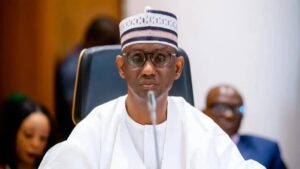
President Bola Ahmed Tinubu recently announced the establishment of a national Forest Guard system, directing that 7,000 personnel be trained and deployed nationwide to deny terrorists and bandits access to forest hideouts. The President further directed the National Security Adviser (NSA) to oversee the training and deployment.


On its face, the initiative reflects urgency and intent. But in light of recent revelations and unresolved allegations surrounding the Office of the NSA, the decision raises serious legal, institutional, and operational questions that must be addressed before any deployment proceeds.
BEFORE DEPLOYMENT, OBEY THE LAW: WHY GIVING FOREST GUARDS TO THE NSA RISKS NATIONAL SECURITY.
The legal problem: who has the authority?
Nigeria’s security architecture is clear. The NSA is a coordinating and advisory official, not an operational commander. There is no statute empowering the NSA to:
Recruit or train armed personnel.
Deploy forces.
Command or supervise combat or paramilitary units.
Those powers lie with:
The Armed Forces of Nigeria (Sections 217–218, Constitution).
The Nigeria Police Force.
Statutorily created paramilitary services.
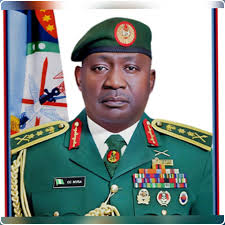
The Ministry of Defence, which supervises the military and defence training institutions.
If the NSA were to train and deploy armed Forest Guards, that role would be ultra vires—beyond the legal authority of the office.
Why timing matters: unresolved allegations.

This concern is heightened by pending calls for an independent probe into allegations that the NSA previously constituted and armed a covert vigilante structure, an action widely viewed as outside the lawful remit of the office.
Before assigning new security responsibilities, due process must come first:
A full investigation into the alleged illegal vigilante structure.

A forensic audit of all weapons reportedly distributed.
Clear accountability for recruitment, vetting, command, and deployment.
Without this, there is a real risk—perception or reality—that an unlawful structure could be rebranded or absorbed into the Forest Guard scheme, granting retrospective legitimacy to what must first be independently examined.
International comparison: how forest guards work elsewhere.
Nigeria is not the first country to confront insecurity in forested terrain.
India: Forest Rangers are trained under state forest services, lightly armed, and supported by paramilitary and military units when insurgents are present.
Brazil: Environmental and forest protection units operate under federal agencies, with military and air support used against heavily armed groups.
United States: Park Rangers focus on law enforcement and conservation; counterterrorism or heavily armed threats are handled by federal agencies and the military, not rangers.
France and Germany: Forest protection is civilian; armed threats trigger military or gendarmerie intervention, often supported by air surveillance.

SECURITY BY LAW, NOT IMPROVISATION: WHY NIGERIA MUST RETHINK FOREST GUARDS AND THE NSA’S ROLE.
In no serious democracy does a national security adviser recruit, arm, and deploy forest forces.
The operational reality Nigeria must confront.
Nigeria’s most dangerous forests—Sambisa, and large forest belts across Katsina, Zamfara, Kaduna, Niger, Kebbi, Sokoto, Yobe, and parts of the North-West—are not conservation zones. They are militarised environments, occupied by heavily armed groups with combat experience.
Sending lightly trained Forest Guards into such terrain risks:
Mass casualties.
Hostage-taking.
Weapon capture by criminals.
Demoralisation of security forces.
It must be said plainly: no conventional forest guard unit would survive sustained contact in Sambisa or North-West bandit forests without heavy military support.

Modern security doctrine: technology before boots.
Contemporary counter-insurgency and counter-terrorism doctrine prioritises:
Persistent aerial surveillance.
Intelligence-driven targeting.
Precision engagement from standoff positions.
Minimal exposure of ground personnel.
This approach preserves lives, reduces collateral harm, and avoids turning security personnel into easy targets. Forest density does not defeat modern surveillance; technology has evolved precisely to overcome foliage, terrain, and concealment.
Nigeria’s security challenge is not a manpower deficit, but an integration deficit—intelligence, air capability, and command coherence must come first.
A necessary course correction.
The Forest Guard concept should not be discarded—but it must be reordered:
Pause deployment until the NSA-related allegations are fully investigated.
Remove the NSA from training and deployment roles, consistent with the law.
Assign responsibility to the Ministry of Defence, which has constitutional and institutional authority.
Define Forest Guards as support, conservation, and intelligence-reporting units, not frontline combat forces.
Anchor operations in air surveillance, intelligence fusion, and military-led engagement.

A message to the Presidency.
It is entirely possible that the President’s directive stemmed from urgency, not legal misreading. But governance demands correction when lines blur. The strength of leadership lies not in persistence, but in adjustment when facts demand it.
Nigeria cannot afford institutional confusion at a time of existential security threat.
Forest Guards may have a role—but law must lead, oversight must precede action, and lives must not be gambled.
The moment calls not for speed, but for structure, legality, and strategic clarity.
President Tinubu needs a strategic security advisory committee urgently. There are many pending issues and there is a need for unbiased professional advice in line with the law.
The National Patriots.
Headlinenews.news Special Investigative Report.




