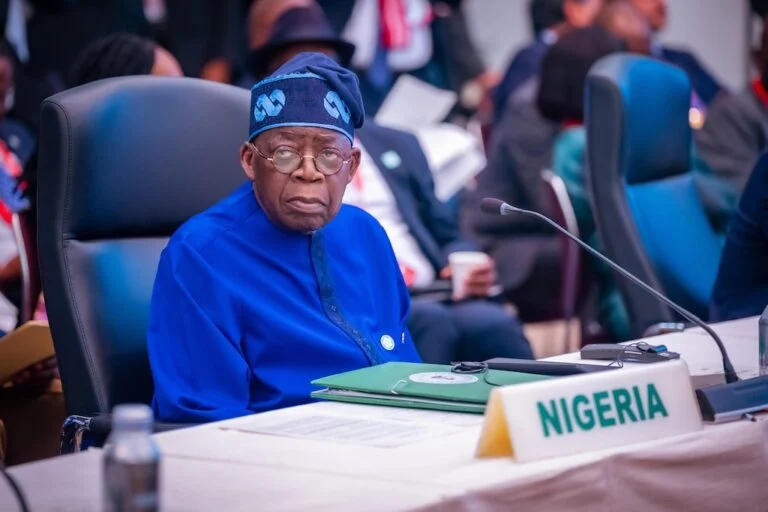
President Bola Tinubu has reaffirmed that the newly enacted tax laws will begin implementation on January 1, 2026, as originally scheduled. This position was contained in a statement personally signed by the President and released on Tuesday.
His stance has drawn sharp criticism from former Vice President Atiku Abubakar and the Peoples Democratic Party, who described the decision as rushed and insensitive in light of unresolved disputes over alleged alterations to the legislation.
On June 26, 2025, President Tinubu signed four Tax Reform Bills into law. These include the Nigeria Tax Act, the Nigeria Tax Administration Act, the Nigeria Revenue Service Act and the Joint Revenue Board Act. The laws are designed to comprehensively restructure Nigeria’s tax system in order to stimulate economic growth, boost revenue generation, improve the business climate and strengthen tax administration across all levels of government. While some provisions are already operational, others are scheduled to take effect from January 1.
Tinubu said, “The new tax laws, including those that took effect on June 26, 2025, and the remaining Acts scheduled to commence on January 1, 2026, will continue as planned. These reforms are a once-in-a-generation opportunity to build a fair, competitive, and robust fiscal foundation for our country.
“The tax laws are not designed to raise taxes, but rather to support a structural reset, drive harmonisation, and protect dignity while strengthening the social contract. I urge all stakeholders to support the implementation phase, which is now firmly in the delivery stage.

“Our administration is aware of the public discourse surrounding alleged changes to some provisions of the recently enacted tax laws. No substantial issue has been established that warrants a disruption of the reform process. Absolute trust is built over time through making the right decisions, not through premature, reactive measures.”
The President further stressed his administration’s commitment to due process and the sanctity of enacted laws.
“The Presidency pledges to work with the National Assembly to ensure the swift resolution of any issue identified. I assure all Nigerians that the Federal Government will continue to act in the overriding public interest to ensure a tax system that supports prosperity and shared responsibility,” he stated.

The controversy follows allegations that parts of the gazetted tax laws differed from versions debated and approved by the National Assembly. A member of the House of Representatives from Sokoto State, Abdulsamad Dasuki, alleged that certain provisions in the published laws were never considered or passed by lawmakers, prompting calls for a suspension of implementation.
Former Vice President Atiku Abubakar criticised the President’s insistence on proceeding with implementation despite the controversy, describing it as irresponsible.

He said, “How do we know that nothing substantial was altered? Was there an investigation by the Federal Government or the Presidency? We are only aware that there was an ad hoc committee that had not completed its work. So why would the President go ahead? The President should remember that his mandate is derived from Nigerians. Nigerians have spoken, and they have spoken clearly about how they feel concerning these tax laws.
“As you know, tax laws have a huge impact on people’s lives, and it is only proper that all the processes that have been initiated are exhausted to be sure that this law was duly passed by the National Assembly and assented to by the President without discrepancies. Otherwise, it amounts to forgery.
“If the President goes ahead with its implementation, I want to say clearly that this is an act of irresponsibility. It reflects elements of dictatorship and follows the same pattern of state capture.”
The PDP echoed similar concerns, insisting that Nigerians are demanding a full investigation to determine who allegedly inserted unapproved provisions and how it was done. The party accused the administration of prioritising revenue over citizens’ welfare.

The party stated, “Rather than address these issues comprehensively, the Presidency has consciously minimised them and instead vehemently insisted that the commencement date must stand, despite the discrepancies. This disposition clearly shows where the priority of the government lies, between Nigerians and money.”
The National Assembly had earlier ordered the re-gazetting of the tax laws and the issuance of Certified True Copies of the versions duly passed by both chambers. Lawmakers described the move as an administrative step to authenticate legislative decisions, while an ad hoc committee was set up to investigate the circumstances surrounding the passage, assent and gazetting of the laws.
Several opposition figures, labour groups and professional bodies have called for a delay in the January 1 implementation pending the outcome of the investigation.

The Nigerian Bar Association and the Arewa Consultative Forum also expressed reservations over the planned commencement date. The NBA President said the association’s concern was not with the tax reforms themselves, but with any version alleged to have been altered after legislative approval.
Similarly, the ACF said unresolved discrepancies between the laws passed by the National Assembly and those gazetted raise serious credibility and integrity concerns. It urged that due process be allowed to run its full course in the interest of democracy and national stability.