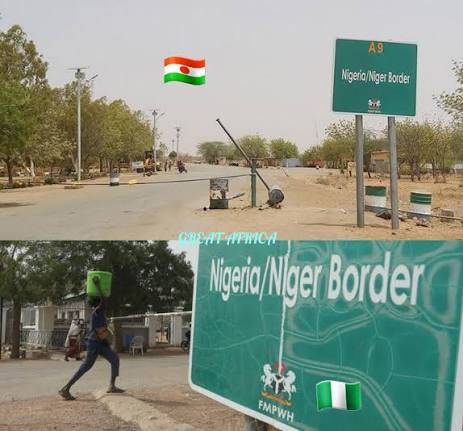
A retired military commander, Major General Rogers Nicholas (retd.), has said Nigeria cannot effectively tackle its growing insecurity without urgently strengthening border control, warning that the country is confronting an existential threat rather than a routine socio-economic challenge.
He made the remarks during an end-of-year programme reviewing developments in politics, security, and the economy.

Nicholas, a former Commander of Operation Lafiya Dole (North-West) and former Chief of Civil-Military Affairs at Army Headquarters, said President Bola Tinubu already has access to workable solutions to the security crisis but has not fully acted on them.
“There are some basic things to do. I want to tell the President that the key solution to this problem of insecurity is right there in his office.
“When his Chief of Staff was Speaker of the House of Representatives, a comprehensive national security retreat was conducted, and the communiqué issued afterwards was very detailed. Everything that needed to be done to address insecurity is in that document. It is unfortunate that those ideas have remained largely unimplemented,” Nicholas said.

The retired general also criticised the lack of emphasis on border security in defence planning and budgetary allocations, despite repeated warnings from senior security officials over the years.
“The current Minister of Defence, (Christopher Musa) when he was Chief of Defence Staff, spoke clearly about border security. He stated that you cannot have a secure Nigeria without secure borders.
“He was criticised at the time, yet today we are still operating budgets that do not adequately capture border security. If we do not secure our borders, there can be no security,” he said.

Nicholas dismissed the notion that Nigeria’s security challenges can be resolved mainly through economic measures.
“I am not a student of the liberal security theory that only talks about bread-and-butter security. What we are facing today is an existential threat. It does not respond to bread and butter solutions,” he added.
Nigeria’s long land and maritime borders have been identified as major contributors to the country’s insecurity, largely because of their porous nature and vast ungoverned areas.

Security agencies have repeatedly stated that extremist groups such as Boko Haram and ISWAP exploit northern border routes linking Nigeria with Niger, Chad, and Cameroon to move fighters and weapons, compounding challenges such as banditry, kidnapping, and communal violence across the country.