


Nigeria’s security crisis is real, complex, and urgent. Terrorism, banditry, and transnational criminal networks continue to threaten lives, territorial integrity, and economic stability.
While international cooperation can support Nigeria’s counterterrorism efforts, such cooperation must align with national sovereignty, constitutional secularism, foreign-policy coherence, and—critically—the will of the Nigerian people.
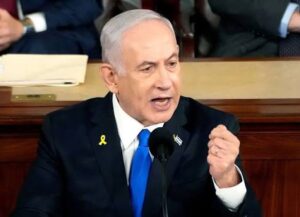
Recent statements attributed to Israeli Prime Minister Benjamin Netanyahu offering counterterrorism and intelligence support to Nigeria—framed around the protection of allegedly persecuted Christian communities—have generated widespread domestic rejection.
Opinion polls cited by Nigerian media indicate overwhelming public opposition, reportedly approaching 90%, to any Israeli security role in Nigeria.
Religious leaders, political actors, and civil society voices have warned that such engagement would be morally problematic, diplomatically incoherent, and socially divisive.
This report argues that accepting Israeli counterterrorism support would be a strategic mistake and a diplomatic faux pas.
It would contradict Nigeria’s publicly stated positions on Gaza and Somaliland, undermine its credibility at the African Union (AU) and United Nations (UN), inflame internal religious tensions, and weaken national sovereignty.

Nigeria has more logical, legitimate, and effective alternatives—particularly security collaboration with its neighbouring Alliance of Sahel States (AES), which have achieved measurable success in neutralising terrorist groups, including ISIS affiliates now displaced into Nigerian territory.
● Nigeria’s Foreign Policy Principles.
Nigeria’s foreign policy has long been anchored on non-alignment, respect for international law, African solidarity, and peaceful coexistence.
Since independence in 1960, Nigeria has positioned itself as a regional stabiliser and a moral voice within Africa and the Global South.
Diplomatic relations with Israel were established at independence, severed during the Arab-Israeli conflicts, and restored in 1992.
Since then, relations have largely remained transactional—focused on trade, agriculture, and limited technical cooperation.
Crucially, Israel has never been a core strategic or security ally of Nigeria.

By contrast, Nigeria has consistently supported the Palestinian cause, formally recognised the State of Palestine in 1988, and aligned with AU and UN positions calling for restraint, humanitarian access, and respect for international law in Gaza. This stance enjoys broad domestic legitimacy and reinforces Nigeria’s credibility among African and Muslim-majority states.
In recent years, Nigeria and Israel have increasingly diverged geopolitically—particularly over Gaza and Israel’s recognition of Somaliland, a move that contradicts African Union consensus and Somalia’s territorial integrity.
These divergences are not symbolic; they directly affect Nigeria’s diplomatic credibility and strategic consistency.
Netanyahu’s Statements and Their Domestic Impact.
Statements attributed to Prime Minister Netanyahu—made during engagements with evangelical leaders in the United States—presented Israel as uniquely capable of protecting persecuted Christian communities globally, including in Nigeria.
He reportedly outlined an agenda involving intelligence and security support in Africa.
This framing is deeply problematic in the Nigerian context.
First, Nigeria’s insecurity is not a religious war. Terrorist violence affects Christians, Muslims, and traditional communities alike. Churches, mosques, markets, and villages across religious lines have all been targeted. Framing Nigeria’s crisis primarily as Christian persecution is inaccurate and destabilising.
Second, framing counterterrorism cooperation around religion risks importing external ideological narratives into Nigeria’s fragile inter-religious balance.
Nigeria is a secular state; its security policy must remain neutral and inclusive.
Third, the remarks were made without public consultation or formal clarification from Nigerian authorities, reinforcing perceptions of external interference rather than partnership.
Nigerian Public Opinion: Overwhelming Rejection.
Public sentiment in Nigeria has been unequivocal. Polls cited by local platforms such as Headlinenews.news indicate that up to 90% of respondents oppose Israeli security involvement in Nigeria.
While such polls may not meet strict academic sampling standards, their consistency reflects a broad national mood.

Reasons cited for rejection include:
Moral opposition to engagement with a country facing international legal scrutiny over alleged war crimes in Gaza.
Rejection of religious framing of Nigeria’s security challenges.
Concerns over sovereignty, hidden geopolitical agendas, and resource exploitation.
Fear of worsening religious and ethnic divisions.
This opposition cuts across religious and political lines. Nigerians distinguish clearly between pragmatic security cooperation and partnerships perceived as divisive or morally compromised.
● Religious and Political Responses.
Muslim leaders across northern Nigeria have categorically rejected Israel’s offer, emphasising that Nigeria welcomes legitimate, neutral support—but not assistance framed in ways that risk provocation or division.

Political figures, including senior opposition party chieftains, have also condemned the statements attributed to Netanyahu. They questioned both the factual basis of claims about Christian persecution and the sincerity of Israel’s intentions, warning that such rhetoric could destabilise Nigeria’s social fabric.
A recurring concern among critics is that external actors may exploit Nigeria’s insecurity to advance strategic or economic interests under the guise of counterterrorism.
● Nigeria’s Security Reality: Complexity Over Simplification.
Nigeria’s security challenges are multi-layered, involving Boko Haram, ISWAP, banditry, farmer-herder conflicts, arms trafficking, and porous borders. These threats are driven by governance gaps, poverty, unemployment, climate stress, and regional instability—not a simple religious binary.
Nigerians have shown openness to international assistance when it is:
Time-bound and clearly defined,
Requested by Nigerian authorities,
Coordinated with domestic forces,
Free from ideological or religious framing.
This explains why limited U.S. military support has been more broadly accepted. It was framed as a temporary, targeted intervention against specific terrorist threats—not a civilisational or religious campaign.
● Diplomatic Coherence and the Risk of Strategic Contradiction.
Nigeria cannot condemn Israel’s actions in Gaza alongside the AU and UN, raise concerns over Israel’s recognition of Somaliland, and then turn around to enter a counterterrorism collaboration with Israel. Such a move would represent a clear diplomatic contradiction and a serious foreign-policy faux pas.
Foreign policy coherence matters. Security cooperation carries political and reputational consequences. Accepting Israeli support while publicly aligning with positions critical of Israel would undermine Nigeria’s credibility, weaken trust among African and Muslim-majority partners, and expose Nigeria to accusations of opportunism rather than principle.
● The Regional Alternative: Collaboration with AES States.
Nigeria has a more logical, defensible, and effective alternative: deepened security collaboration with its neighbouring Alliance of Sahel States (AES)—Niger, Mali, and Burkina Faso.
These states:
Share extensive borders with Nigeria,
Face identical terrorist threats,
Have conducted sustained military operations that significantly degraded ISIS-affiliated and other terrorist groups.
As a result of AES operations, many militants have been neutralised, while others have fled southward.
Regional security assessments indicate that Nigeria has increasingly become a refuge for displaced terrorist elements, exploiting border gaps and intelligence blind spots.
Nigeria should not allow the political orientation of the AES or the preferences of their foreign allies to obscure the clear security and geographic advantages of good neighbourliness. The proximity, shared borders, intelligence relevance, and operational outcomes of AES states offer far greater strategic value to Nigeria than distant partnerships such as Israel.
Public sentiment reinforces this logic:
Nigerians show greater acceptance of security cooperation with the United Kingdom and the United States, but consistently reject Israel as a counterterrorism partner.
● Sovereignty, Legitimacy, and Public Consultation.
Decisions of this magnitude must not be taken without public consent.
Entering a sensitive security partnership without consultation risks undermining the legitimacy of Nigeria’s counterterrorism strategy.
The Federal Government should:
Conduct transparent nationwide opinion surveys.
Consult religious, traditional, and civil society leaders.
Clearly define the scope and limits of any proposed security cooperation.

● Conclusion.
Nigeria’s security challenges demand effective responses—but not at the cost of sovereignty, national cohesion, or diplomatic credibility. Israel is not a strategic ally of Nigeria, is widely rejected by Nigerian public opinion, and presents significant moral and geopolitical complications as a counterterrorism partner.
While Nigeria may disagree with aspects of AES governance or their external alignments, geography, shared threats, and proven counterterrorism outcomes must take precedence over political discomfort.
Accepting Israeli counterterrorism support would be a serious strategic and diplomatic error. Nigeria’s interests are best served by reinforcing regional cooperation, respecting public sentiment, and pursuing security partnerships that strengthen—rather than fracture—national unity.
Princess G. Adebajo-Fraser MFR.
President, The National Patriots.




