

Trump Invites Colombian President Petro to White House Following Tensions Over Drugs
United States President Donald Trump has extended an invitation to Colombian President Gustavo Petro to visit the White House, just days after accusing him of cocaine trafficking and threatening military action against his government.

The development came on Wednesday following a one-hour phone call between the two leaders, during which they discussed “the situation of drugs” and other points of disagreement, according to Trump. This marked their first conversation since Trump’s warning of a military operation in Colombia after the U.S. captured Venezuelan President Nicolas Maduro in a raid on Caracas. The threat had prompted Petro to urge Colombians to protest in defense of their nation’s sovereignty.

Trump took to his Truth Social platform, writing:
“It was a great honour to speak with the President of Colombia, Gustavo Petro, who called to explain the situation of drugs and other disagreements we have had. I appreciated his call and tone and look forward to meeting him in the near future.”
He added that arrangements are underway for a meeting in Washington, without specifying a date.
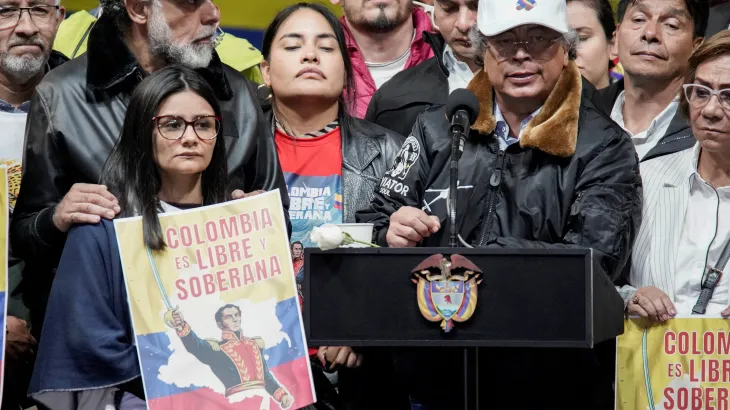
Petro, Colombia’s first left-wing president, addressed protesters at Bogota’s Plaza Bolivar after the call, noting that diplomacy had been restored.
“If we don’t speak, there is war. Colombia’s history has taught us that,” Petro said. “We talked and re-established communication for the first time. I discussed Venezuela and our efforts against drug trafficking, providing the US with our figures.”

Petro also criticized certain Colombian politicians, saying they had misled Trump and contributed to the diplomatic crisis between the two nations.
Tensions between Trump and Petro have been high since the Republican returned to the White House in January 2025. Trump has repeatedly accused Petro’s administration—without presenting evidence—of facilitating cocaine shipments to the U.S., even imposing sanctions on him last October. Earlier this week, Trump described Petro as “a sick man who likes making cocaine and selling it to the United States” and suggested military action “sounds good.”
Petro condemned the U.S. raid on Venezuela as “abhorrent,” convened emergency sessions at the UN and the Organization of American States, and threatened to take up arms if necessary to defend Colombia. The two leaders have also clashed over deportation flights, visa revocations, and Petro’s criticism of Israel’s war in Gaza.

Despite the tensions, the U.S. remains a key partner for Colombia in its fight against left-wing rebels and drug trafficking, providing roughly $14 billion in aid over the past 20 years. Colombia also serves as a primary source of intelligence for U.S. counter-narcotics operations in the Caribbean and is classified as a Major non-NATO ally.
Anthea McCarthy-Jones, a Latin America expert at the University of New South Wales, described the relationship as “volatile and unpredictable,” oscillating between threats and diplomatic engagement.

Colombia’s government confirmed that cooperation on intelligence, defense, and law enforcement with the U.S. continues. Defence Minister Pedro Sanchez told The New York Times that operations involving the Navy, Coast Guard, DEA, FBI, and ATF remain uninterrupted.



