

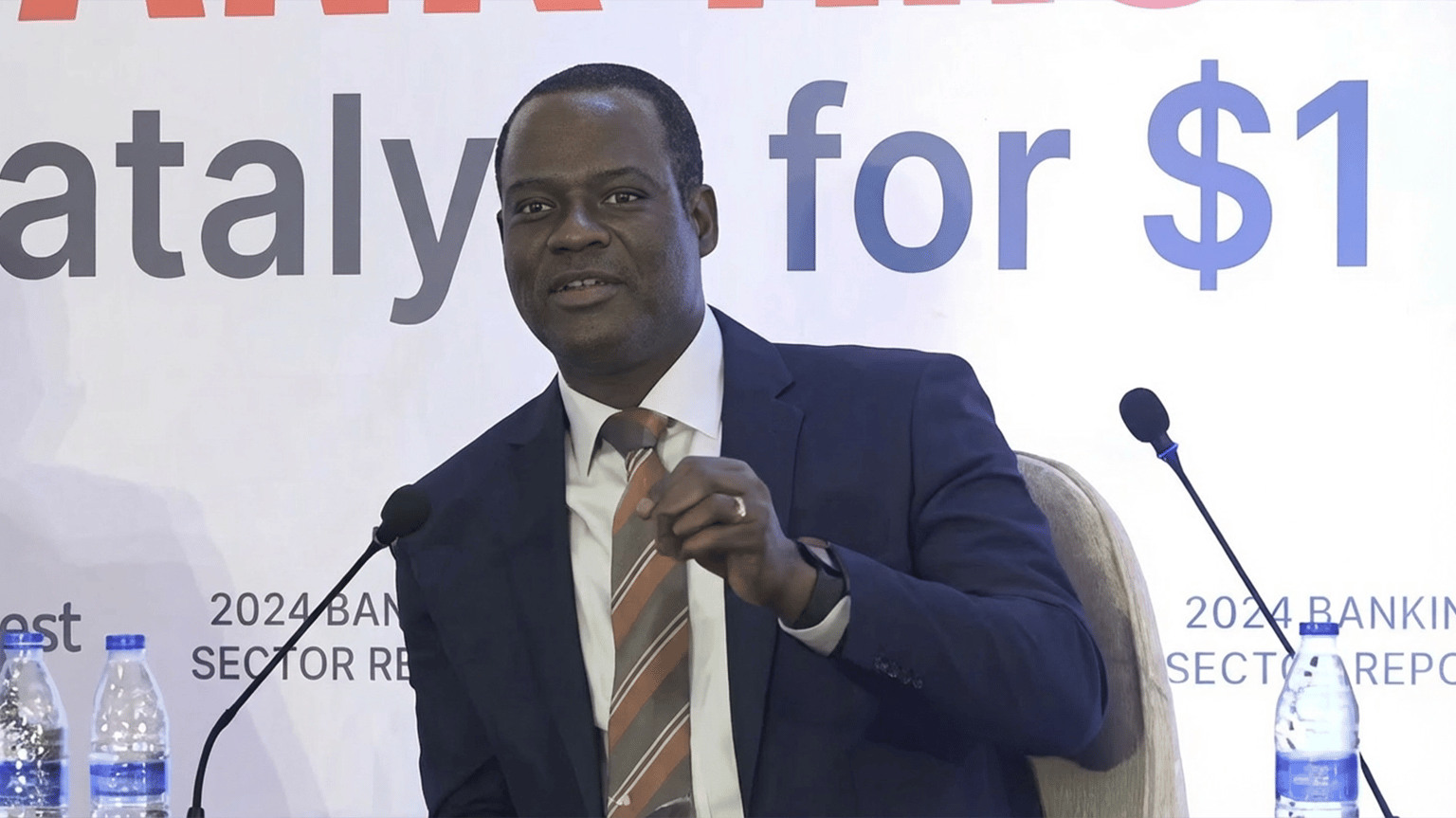
Chairman of the Presidential Fiscal Policy and Tax Reforms Committee, Taiwo Oyedele, has assured Nigerian manufacturers that the ongoing tax reforms are designed to significantly reduce the cost of doing business, attract investment, and drive industrial expansion across the country.

Oyedele gave the assurance while speaking at a stakeholders’ engagement held at the Manufacturers Association of Nigeria (MAN) House, themed “From Legislative Assembly to Factory Floor: What the New Tax Laws Mean for Nigerian Manufacturers.” He said the reforms were deliberately structured to support local production, improve competitiveness, and remove longstanding tax bottlenecks facing manufacturers.

He dismissed reports suggesting that the Federal Government had suspended the issuance of implementation guidelines for the new tax laws due to uncertainty, describing such claims as inaccurate. According to him, there was no policy decision to halt implementation, adding that he remains fully committed to the reform process, even stating that he was prepared to give everything for Nigeria’s progress as a reformer.
Highlighting key provisions of the new laws that directly benefit manufacturers, Oyedele explained that Value Added Tax (VAT) would no longer apply to locally manufactured sanitary towels, pads, tampons, assistive devices, and disability-related products. He added that several items had been zero-rated, including fertilisers, locally produced agricultural chemicals, veterinary medicines, and animal feed, in order to stimulate domestic production and reduce input costs.

He further disclosed that the charging and collection of VAT on petroleum products, renewable energy equipment, Compressed Natural Gas (CNG), Liquefied Petroleum Gas (LPG), and other gaseous hydrocarbons may be suspended through an order issued by the Minister, as part of efforts to ease pressure on businesses and households.
On the issue of input tax credits, Oyedele clarified that manufacturers would be allowed to deduct input VAT incurred on taxable supplies, including services and fixed assets, from output VAT payable, provided such inputs were directly linked to the production of taxable goods and services.

Speaking earlier at the Cowry Quarterly Economic Discourse in Lagos, Oyedele also noted that the law now provides automatic capital gains tax exemptions for individuals whose total proceeds from asset disposals do not exceed ₦150 million, as long as the gains are not more than ₦10 million in a year. He said this measure was aimed at encouraging investment and asset recycling in the economy.

Addressing controversy surrounding the implementation guidelines, Oyedele explained that confusion arose over differing versions of the tax laws. He said his team attempted to obtain printed copies from the government printer in line with the Acts Authentication Act, but was informed that all printed copies had been taken by the National Assembly pending the conclusion of its internal review. He added that while an executive version was initially published, lawmakers disputed its accuracy, leading to the production of separate gazetted copies.
Meanwhile, former Director-General of the Budget Office of the Federation, Ben Akabueze, noted that Nigeria’s tax-to-GDP ratio remains critically low at below 10 per cent, far behind the African average of about 16 per cent. He said this gap had largely driven the government’s push to widen the tax base, strengthen compliance, and improve efficiency in tax administration.

Akabueze spoke at a media briefing ahead of an upcoming economic summit scheduled for January 24 in Lagos, which aims to equip participants with practical tools to navigate Nigeria’s evolving tax and economic environment. He described the current period as one of the most comprehensive reform phases in Nigeria’s history, spanning taxation, fiscal policy, exchange rate management, and market liberalisation.
The summit is expected to feature the Minister of State for Industry, Trade and Investment, John Enoh, as keynote speaker, with discussions focusing on economic reforms and emerging investment opportunities.
Despite the optimism expressed by reform advocates, the Director-General of the Lagos Chamber of Commerce and Industry (LCCI) noted that the cost of doing business in Nigeria remains high, underscoring the need for effective implementation and sustained engagement with the private sector to ensure that the benefits of the reforms are fully realised.




