


Elder statesman and former Osun State Governor, Chief Bisi Akande, has warned that Nigeria’s deepening insecurity cannot be resolved through force alone, arguing that quality education remains the most effective long-term solution to the country’s security crisis.
Akande’s position is anchored on a simple but hard truth: insecurity thrives where ignorance, poverty, and exclusion intersect. He noted that decades of neglect of public education—particularly in vulnerable regions—have produced millions of idle, unemployable youths who are easily recruited into criminal gangs, bandit networks, and extremist groups.

Education as a Strategic Security Asset.
Nigeria currently has over 18 million out-of-school children, the highest number globally, according to UNESCO estimates. Security analysts observe that many of the country’s most volatile regions also record the lowest literacy levels, weakest school infrastructure, and minimal access to vocational or technical training.
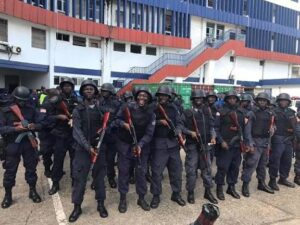
Akande argues that education must be treated not as a social welfare obligation but as a core national security investment.
In his view, a society that consistently fails to educate its young people is effectively manufacturing future insecurity.
Lessons from Other Countries.
International experience supports this position. Countries emerging from violent conflict have often prioritised education as a stabilising tool.

Rwanda expanded access to basic and technical education after the 1994 genocide, contributing to social cohesion and long-term stability.
Indonesia invested heavily in education reform and community-based learning following extremist attacks in the early 2000s, significantly weakening radical recruitment over time.
By contrast, nations that rely solely on militarised responses without addressing human capital deficits tend to experience recurring cycles of violence.

The Economic Cost of Neglect.
Insecurity carries a heavy economic burden.
The World Bank estimates that conflict and violence cost Nigeria billions of dollars annually through lost productivity, destroyed infrastructure, and displaced populations. Education-led prevention, experts argue, is far cheaper and more sustainable than prolonged military deployments and emergency humanitarian responses.

Akande emphasised that “quality education” must go beyond school enrolment figures.
Curriculum relevance, vocational skills, civic education, and values-based learning are critical to producing employable, socially responsible citizens.
Without these, even educated youths risk remaining disconnected from the economy and susceptible to criminal influence.
National Patriots Movement Perspective.
The National Patriots Movement has echoed Akande’s position, consistently framing education as one of Nigeria’s most potent but underutilised security tools.
The Movement argues that the country is facing not just an education crisis, but a national security emergency driven by youth exclusion.
According to the National Patriots, strategic investment in functional schools, vocational training, and value-based education—especially in high-risk regions—would weaken criminal recruitment pipelines and reduce long-term dependence on military force.
The group maintains that education, properly delivered, is prevention, stabilisation, and nation-building combined.
Aligning Security and Human Capital Policy.
While security agencies continue to disrupt criminal networks, policymakers increasingly acknowledge that Nigeria cannot “arrest its way out” of insecurity. Sustainable peace, analysts say, will depend on aligning security operations with robust human capital development.
Akande’s warning is clear: without urgent, deliberate investment in quality education, Nigeria risks losing an entire generation to crime, extremism, and despair.
His message reframes education not as charity, but as national defence—one of the most powerful tools available for securing Nigeria’s future.
Dr. G. Fraser MFR.
Headlinenews.news Special report.




