

Young Nigerians seeking better opportunities abroad are being deceived into fighting in the Russia-Ukraine war, often under the guise of civilian jobs, reports WALE AKINSELURE.
Thirty-one-year-old Benjamin Oloko, a trader from Ibadan, Oyo State, believed he was traveling to Russia for a lucrative security job offering $1,500 monthly and a $20,000 sign-up bonus. He borrowed money, paid agents’ fees, and arrived in Russia in September 2025, only to discover he had been misled into joining a military camp.
 “At first, I was told I would work in kitchens, not the frontline. But it became clear we were in a military setup,” Oloko said. After refusing to sign a contract committing him to combat, he and a fellow Nigerian Amotekun officer were threatened, detained, and eventually abandoned in a forested area far from the camp. They trekked for hours before receiving help from a local truck driver and eventually returned to Nigeria. Two of their fellow recruits who signed up reportedly died in combat, while another survived with injuries.
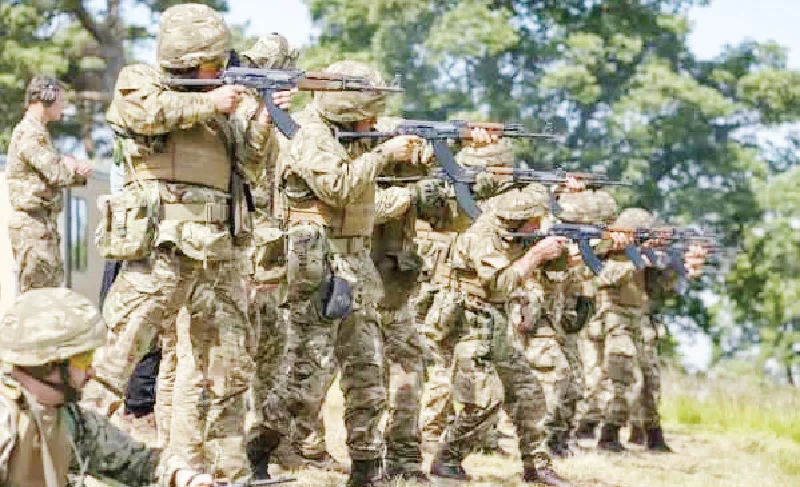
Similarly, 36-year-old mechanic Bankole Manchi left Lagos for a security job in Russia promising N500,000 monthly. Instead, he was taken to a military-style camp with recruits from across Africa, Europe, and South America. Training involved weapon handling, grenade exercises, and night operations, with minimal food and harsh conditions. Bankole was later deployed to the frontline in Ukrainian territory and was shot in the leg.
These deceptive recruitment schemes often present jobs in supermarkets, airports, or security roles. Young Africans are lured with promises of well-paid civilian work but end up as mercenaries, pressured into military service by agents upon arrival.

The Russia-Ukraine conflict, which began in 2014 and escalated with Russia’s full-scale invasion in February 2022, has created a manpower shortage on both sides. Casualty reports indicate massive losses: over 13,300 civilians killed and 31,700 injured, while military deaths and injuries in Russia are estimated to have reached one million by 2025, with Ukraine reporting around 400,000.
Russia and Ukraine have openly recruited mercenaries, with Ukraine listing requirements such as physical fitness, military experience, and legal entry into the country. Ukraine’s Foreign Minister, Andriy Sybiha, described African recruits as being sent to “meat assaults,” where survival is unlikely. Over 1,400 Africans from 36 countries were reported to have joined Russian forces, with some governments, including South Africa and Kenya, investigating cases of citizens being trapped in military camps.
The Nigerian government has repeatedly warned citizens against traveling to Russia or Ukraine for employment, evacuating over 1,000 Nigerians from Ukraine since March 2022. The Nigerians in Diaspora Commission cautioned that anyone who chooses to enlist in foreign armies does so at their own risk.

Experts note that economic hardship and lack of opportunities have driven many young Nigerians to take such risks. Prof. Olufemi Otubanjo of the Nigerian Institute of International Affairs explained, “Young people, abandoned by a society with limited opportunities, are willing to take extreme risks to survive or earn better pay.”
Prof. Sylvester Akhaine of Lagos State University added that both Russia and Ukraine rely on foreign mercenaries due to high domestic casualties and conscription challenges, describing the conflict as a “meat grinder” for both sides.

Media Rights advocates have called on Nigerian authorities to use diplomatic channels to prevent citizens from being recruited into the conflict.
Oloko, Bankole, and the Amotekun officer are now safely back in Nigeria, counting their survival as a narrow escape from a perilous gamble disguised as opportunity.




