

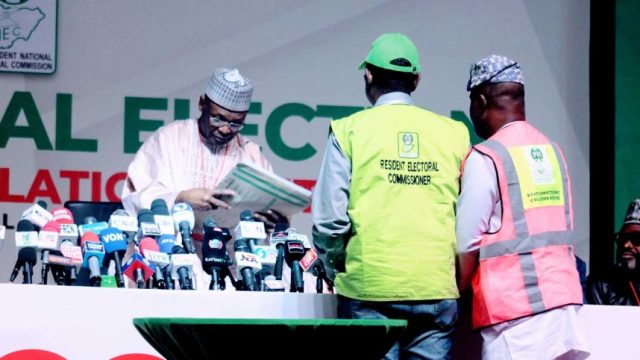
As Nigeria moves steadily toward the 2027 general elections, renewed concerns over electoral credibility have reignited intense debate around unresolved weaknesses in the Electoral Act 2022. Key stakeholders, including political leaders, civil society groups, legal experts and election observers, say lingering ambiguities in the law could undermine future polls if urgent reforms are not carried out.
Central to these concerns are unresolved issues surrounding the electronic transmission of election results, weak enforcement of sanctions against electoral offences such as vote-buying, and questions over the operational independence and capacity of the Independent National Electoral Commission (INEC). Many observers argue that the credibility of the 2027 elections will depend largely on strengthening the Electoral Act and ensuring INEC is better prepared, even as they express frustration over the National Assembly’s slow response to these concerns.

Although the Electoral Act 2022 was initially hailed as a landmark reform following years of pressure from civil society organisations, opposition parties and election monitors, the conduct of the 2023 general elections exposed critical gaps in the law. Analysts warn that unless these shortcomings are addressed promptly, they could define Nigeria’s next electoral cycle.
There is growing agreement among stakeholders that while the Act contains progressive provisions, it remains vulnerable to manipulation by political elites, excessive institutional discretion and weak enforcement mechanisms. With political realignments already underway ahead of 2027, calls to amend the Electoral Act have become closely tied to the broader struggle to deepen democratic accountability in Nigeria.

One of the most contentious issues is the lack of clarity around the use of technology, particularly the electronic transmission of election results. While Sections 50 and 60 of the Act allow for electronic accreditation and result collation, they stop short of making real-time electronic transmission mandatory for all elections. This loophole proved costly during the 2023 polls. Although the Bimodal Voter Accreditation System (BVAS) largely functioned well in verifying voters, the failure to consistently upload presidential results to the INEC Result Viewing Portal (IReV) sparked widespread suspicion, legal challenges and public outrage.

INEC’s explanation that technical challenges prevented full deployment of the system further highlighted a major weakness in the law, which grants the commission broad discretion over technology deployment without clearly defined safeguards or penalties for non-compliance. Opposition figures and election observers argue that unless the Act is amended to mandate electronic transmission with clear timelines, backup systems and enforceable sanctions, future elections may continue to be shaped by administrative excuses rather than legal certainty.

Beyond technology, enforcement of electoral offences remains one of the most troubling weaknesses of the current framework. Despite detailed provisions on electoral offences in the Act, prosecution has been slow, selective and largely ineffective. Vote-buying, voter intimidation, ballot box snatching and election-related violence continue to occur with little consequence for perpetrators.
Observers point to a structural flaw in the system, noting that INEC is burdened with both organising elections and prosecuting offences. This dual responsibility, critics say, has overstretched the commission and contributed to widespread impunity. During the 2023 elections, hundreds of suspects were reportedly arrested nationwide for electoral violations, yet only a small fraction of cases progressed meaningfully through the justice system, with very few convictions recorded.

As a result, stakeholders have renewed calls for the establishment of an independent Electoral Offences Commission to handle investigation and prosecution. Proponents argue that such a body would professionalise enforcement, deter malpractice and shift elections away from violence and financial inducement toward genuine voter choice.
Money politics and vote-buying have also emerged as major areas requiring urgent reform. Although the Electoral Act prescribes spending limits for candidates and political parties, enforcement has remained weak. The 2023 elections witnessed widespread and open vote-buying, with reports of cash handouts, food distribution and digital inducements at polling units. Critics say the law’s narrow definition of vote-buying, combined with INEC’s limited monitoring capacity, has rendered existing provisions ineffective.
Reform advocates are calling for tougher penalties, stricter financial disclosure requirements and the use of digital tools to track campaign spending. Some have also proposed candidate disqualification in severe cases, arguing that fines alone do not deter wealthy political actors. Without firm action, they warn, credible but less affluent candidates may continue to be sidelined.

Internal party democracy is another area under scrutiny. Although the Electoral Act sought to regulate party primaries and candidate selection, political parties have continued to bypass these provisions through manipulated delegate lists, forced consensus arrangements and arbitrary substitutions. This has led to a surge in pre-election litigation, weakening party cohesion and confusing voters ahead of general elections.
Amid these concerns, elder statesman Tanko Yakassai has expressed scepticism about the willingness of lawmakers to reform a law that benefits them. He advised aggrieved stakeholders to seek judicial intervention instead, arguing that court rulings could compel compliance where legislative action fails.
However, other political figures and analysts insist that credible elections in 2027 will depend on urgent legislative amendments. They have called for compulsory electronic transmission of results, resolution of pre-election disputes before polls, swift prosecution of electoral offenders and reduced burdens on INEC through institutional reforms.

Meanwhile, credible sources within the National Assembly and INEC have indicated that work on far-reaching amendments to the Electoral Act will be fast-tracked once lawmakers resume plenary later in January. The proposed Electoral Bill 2025 is intended to address gaps exposed during the 2023 elections and strengthen Nigeria’s electoral framework ahead of future polls.
The bill reportedly includes provisions for compulsory electronic transmission of results, early voting for essential workers, expanded voter identification options, diaspora voting, improved financial autonomy for INEC and the establishment of an Electoral Offences Commission. Lawmakers are also considering clearer rules for party primaries, stronger sanctions for electoral malpractice and more defined roles for security agencies during elections.
Sources familiar with the process have expressed confidence that the amendments will be concluded before the end of February, insisting that most of the groundwork has already been completed. If passed and signed into law, the reforms could significantly reshape Nigeria’s electoral landscape and determine the credibility of the 2027 general elections.




