

Headlinenews.news | Energy & Economy Report.
Nigeria’s drive to rebuild investor confidence in its energy sector received a major boost this week as Shell Plc disclosed plans that could see up to $20 billion in new investment flow into the country’s deep offshore oil and gas landscape.
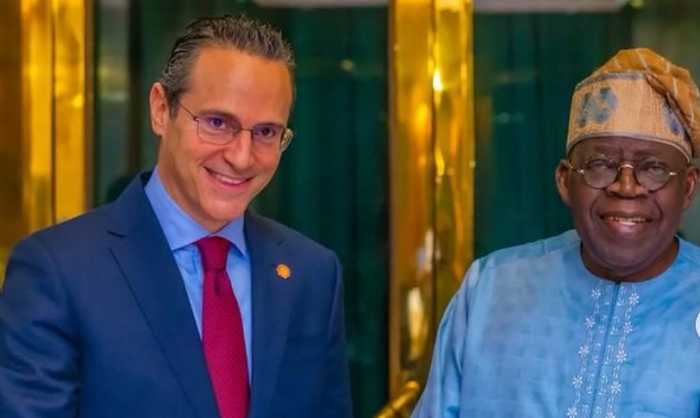
The pledge, linked to Shell’s proposed Bonga South West project, follows high-level engagement between President Bola Ahmed Tinubu and Shell’s Global Chief Executive Officer, Wael Sawan, who described Nigeria as entering a new phase of stability, clearer incentives, and renewed long-term competitiveness.

According to Reuters, Shell’s proposed $20 billion injection would centre on deepwater expansion, with Tinubu urging the company to reach a Final Investment Decision (FID) within his first term, signalling urgency in converting policy reforms into real capital inflows.
A Strategic Return of Confidence.
Shell’s announcement is striking not only for its size, but for its symbolism. In the past decade, international oil companies have gradually reduced exposure to Nigeria’s onshore sector, citing security risks, oil theft, community disruptions, and regulatory uncertainty.
Yet deep offshore projects remain a different frontier: more secure, capital-intensive, technologically advanced, and capable of delivering large-scale production growth and foreign exchange earnings.

Shell has already invested around $7 billion in Nigeria since Tinubu assumed office in 2023, including progress on Bonga North, and is now positioning Bonga South West as a flagship expansion.
Tinubu’s Reform Agenda and the Investment Shift.
The renewed interest reflects a reform sequence under President Tinubu aimed at reversing years of investor hesitation.
Central to this effort is the implementation of targeted fiscal incentives and regulatory clarity for deep offshore ventures. In January 2026, the Presidency announced that Tinubu had approved the gazetting of “investment-linked incentives” designed to unlock jobs, FX inflows, and new upstream capital tied specifically to projects such as Bonga South West.
This approach marks a shift from broad concessions to performance-driven frameworks: incentives structured around actual investment delivery, production expansion, and measurable economic returns.
Shell CEO Wael Sawan reportedly told Nigerian authorities that the company increasingly understands and aligns with the administration’s vision, noting that Bonga South West could attract investment “around $20 billion.”

Bonga, Deepwater Expansion and Nigeria’s Offshore Future
Bonga is not a marginal asset.
It is one of Nigeria’s most significant deepwater oil hubs, with expansion expected to add substantial new barrels over the coming decade.
In 2025, Shell increased its stake in the offshore Bonga field after purchasing TotalEnergies’ interest for $510 million, taking its ownership to roughly 67.5% and reinforcing its strategic commitment to offshore Nigeria.
The Bonga floating production system has a capacity of about 225,000 barrels per day, underscoring the scale of Nigeria’s offshore production potential.

If Bonga South West reaches final approval, the project could become one of the largest new energy investments in sub-Saharan Africa in years.
From Retreat to Re-engagement.
Shell’s evolving posture reflects broader global dynamics.
Several years ago, international oil majors were scaling back Nigerian exposure, selling onshore assets and diverting capital to lower-risk basins.
Shell itself exited significant onshore operations, choosing instead to concentrate on deepwater and integrated gas projects.

In October 2025, Reuters reported Shell and Sunlink Energies approved development of the HI offshore gas project, designed to supply up to 350 million standard cubic feet of gas per day to Nigeria LNG.
These moves highlight a strategic recalibration: Nigeria is being repositioned not as a fading hydrocarbon province, but as a deepwater and gas-driven growth hub aligned with global LNG demand trends.
Economic Significance: Why $20bn Matters.
At $20 billion, the scale is transformational.
Such inflows can strengthen Nigeria’s foreign exchange position, boost upstream employment, deepen local content, and expand government revenues—particularly as Nigeria seeks to stabilise fiscal conditions amid subsidy reforms and macroeconomic restructuring.
Analysts note that deep offshore investments also send powerful market signals: multinational capital commits only where policy predictability, contract sanctity, and investment protection are improving.

In that sense, Shell’s planned expansion is being interpreted as a vote of confidence in Tinubu’s reform-driven attempt to rebuild Nigeria as an investable energy jurisdiction.
A Test of Reform Delivery.
However, industry observers caution that commitments must translate into execution.
Nigeria’s long-standing challenge has not been announcements, but delivery: ensuring security, reducing bureaucratic friction, and maintaining stable fiscal terms over project lifecycles.
Tinubu’s administration appears determined to shift that narrative, framing investment not as aspiration, but as measurable reform dividends.
If Bonga South West reaches FID and construction advances, it may become one of the defining economic markers of Tinubu’s energy reform era—proof that policy clarity can unlock capital at scale.
For Nigeria, Shell’s $20bn plan is more than a corporate project. It is a strategic test of whether reforms can truly restore the confidence required for global investors to bet long-term on Africa’s largest oil producer.
The National Patriots Movement welcomes Shell’s planned $20 billion investment as a strong signal that Nigeria’s reform trajectory under President Bola Ahmed Tinubu is beginning to restore global investor confidence. This development underscores the importance of policy clarity, regulatory stability, and sustained security reforms in unlocking large-scale capital inflows. Nigeria must now ensure that such investments translate into jobs, local content growth, and long-term national prosperity.
Dr. G. Fraser. MFR
The National Patriots.




