

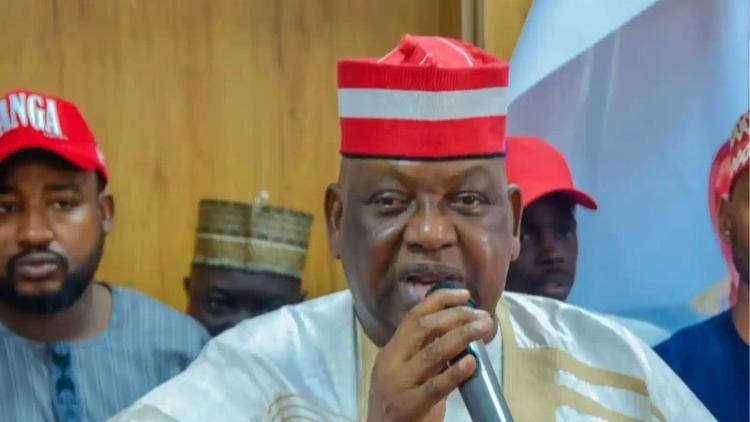
Senator Rufai Sani Hanga, who represents Kano Central Senatorial District, has instructed former New Nigeria People’s Party (NNPP) local government chairmen to return vehicles earlier allocated to them after their recent defection to the All Progressives Congress (APC).

The directive was contained in a letter dated January 28 and signed by the Secretary to the Senator’s Office, Engr. Ibrahim Nakwalli Kawaji. According to reports, the letter asked the affected officials to hand back the vehicles provided for party activities.

In one of the letters addressed to the NNPP chairman of Kura Local Government Area, Alhaji Ubale Isyaku Waskas, the senator requested the return of the “party vehicle” to his office located at No. 48, Sokoto Road, Nasarawa GRA, Kano.

The letter specified that the vehicles should be returned between January 28 and January 30, 2026, and stated that they would remain in the senator’s custody pending the resolution of internal party issues. Recipients were also encouraged to continue supporting the party during the period.

The directive reportedly applies to all NNPP local government chairmen across the Kano Central Senatorial District, covering areas such as Dala, Fagge, Gwale, Kano Municipal, Kumbotso, Nasarawa, Tarauni, Ungogo, and several others.
Chairmen were instructed to hand over the vehicles directly to the head of the senator’s office, Alhaji Shehu Tijjani Usman Tarauni.

The development comes amid broader political shifts in Kano State. Recently, Governor Abba Kabir Yusuf defected to the APC alongside more than 20 state lawmakers, eight members of the House of Representatives, and all 44 local government chairmen.
The move has sparked mixed reactions among political observers and residents. While some view the senator’s directive as a matter of accountability over party assets, others see it as political retaliation.

A social media user, Sani Gilashi Haruna, criticised the decision, calling it inconsistent with previous political practices. He noted that other politicians had distributed vehicles to party leaders in the past without demanding their return after electoral losses, adding that the vehicles had initially been described as empowerment support.
The action continues to generate debate over whether it reflects administrative control of party property or a response to the recent wave of defections.




