

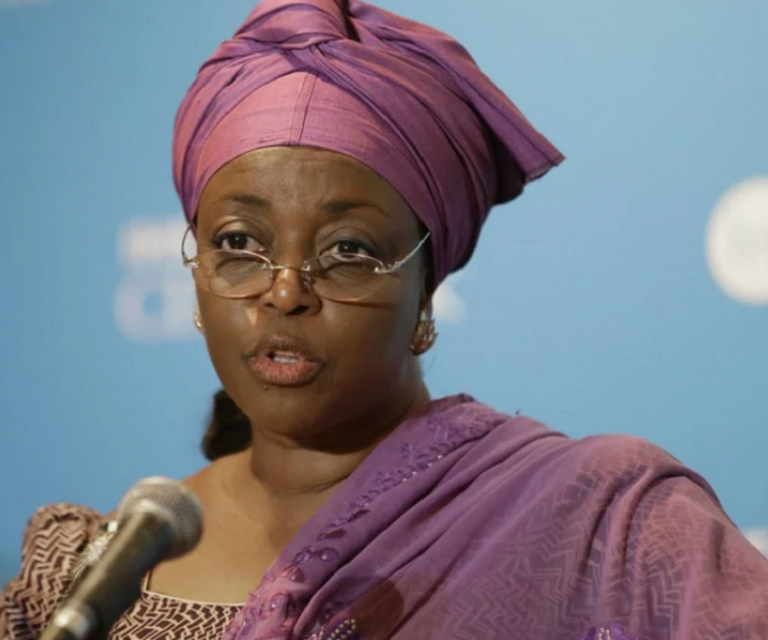
The corruption and bribery trial of former Nigerian Minister of Petroleum Resources, Diezani Alison-Madueke, resumed on Thursday at a London court, with jurors presented detailed accounts of what prosecutors described as an extravagant spending pattern during her time in office.
The court heard that large sums were allegedly spent at an upscale antiques store in London, including claims that up to £140,000 was paid in a single day for luxury furniture, custom-made lighting, and decorative artworks. Prosecutors alleged that the payments were made through third parties while Alison-Madueke served as minister.

Supporters from the Ijaw ethnic group were present in the public gallery, having travelled to London to observe the proceedings.
Alison-Madueke, however, has denied all charges connected to alleged corruption while overseeing Nigeria’s oil and gas sector. Prosecutors maintain that she received cash and luxury benefits in exchange for influence over energy-related contracts, a case they say raises serious questions about transparency and accountability in the global energy industry.
During proceedings at Southwark Crown Court, defence lawyers formally rejected the bribery allegations against the former minister, who also served as the first female president of the Organisation of Petroleum Exporting Countries (OPEC). The 65-year-old was seen taking notes in the dock as the trial entered its third day.
The alleged offences are said to have taken place between 2011 and 2015, a period during which Alison-Madueke was Nigeria’s oil minister and maintained a residence in the United Kingdom. The UK National Crime Agency (NCA) accused her of receiving illicit benefits while in Britain.

Prosecutors earlier alleged that she lived an opulent lifestyle funded by individuals seeking lucrative oil and gas contracts with Nigeria’s state-owned petroleum company.
However, her defence counsel, Jonathan Laidlaw, told the jury that critical evidence that could support her innocence was unavailable due to what he described as an excessive delay in bringing the charges. He said Alison-Madueke had been unable to return to Nigeria to prepare her defence, noting that British authorities had held her passport since her arrest more than a decade ago.
Laidlaw also stated that Nigerian ministers are prohibited from holding foreign bank accounts, arguing that records in Nigeria would have shown that expenses covered by third parties were later reimbursed. He claimed that many of those documents had since been lost, weakening her ability to fully defend herself.
The former minister is accused of receiving financial and material benefits from individuals linked to Atlantic Energy and SPOG Petrochemical groups, companies that allegedly secured contracts with the Nigerian National Petroleum Corporation (NNPC) or its subsidiaries.

Additional allegations include receiving large sums of cash, luxury transportation services, private jet flights, refurbishment costs for London properties, school fees, and high-end goods from premium retailers.
Alison-Madueke, who has faced multiple legal cases internationally, including in the United States, has been on bail in the UK since her arrest in October 2015. She was formally charged in 2023 and has continued to deny all allegations.

Two other defendants, Doye Agama and Olatimbo Ayinde, are also standing trial on related bribery charges. Prosecutors said all three had UK addresses at the time the alleged offences occurred.



