

The Lagos State House of Assembly has ordered an immediate stop to ongoing demolitions in the Makoko waterfront community following protests by residents and advocacy groups last Tuesday. The directive comes amid growing concerns over the displacement of hundreds of residents.
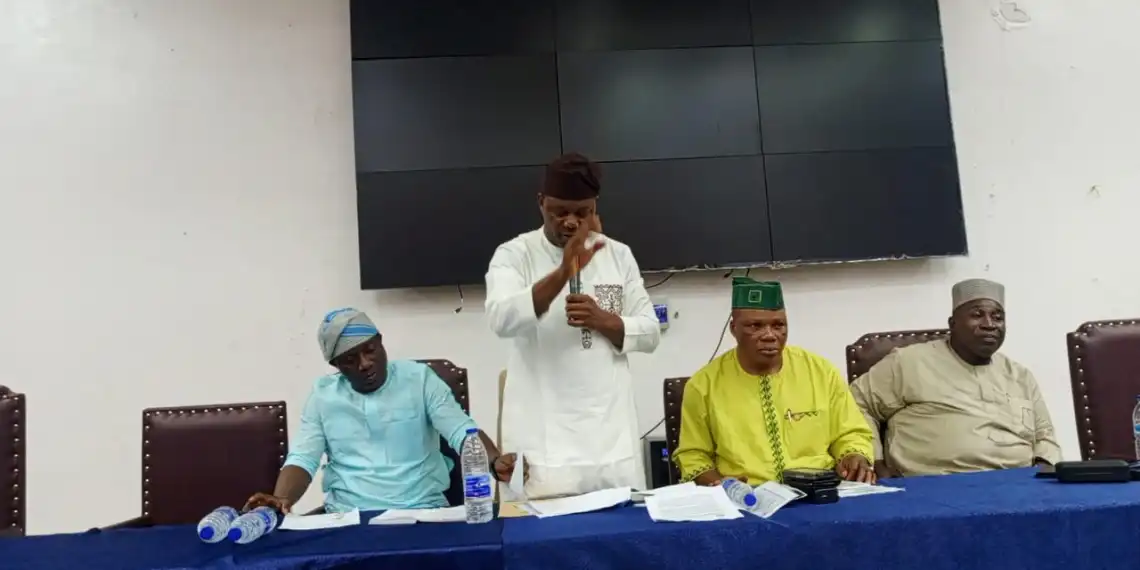
Majority Leader Noheem Adams, who chaired a meeting between lawmakers and community representatives at the Assembly Complex in Alausa, Ikeja, said the halt was issued on behalf of Speaker Rt. Hon. Mudashiru Ajayi Obasa and the Assembly members.

“All ongoing demolitions should be stopped,” Adams stated, adding that the House would collaborate with relevant ministries and agencies to review issues surrounding the demolitions and ensure proper engagement with all stakeholders. The Assembly plans to appoint a task force to examine concerns raised by residents, including disputes over setback measurements, reportedly ranging between 15 and 30 metres along the waterfront.
Community representatives expressed frustration over inconsistent enforcement of setback rules. Kojah Phinehas, a schoolteacher and president of the Makoko Students Association, called for clearer guidelines, noting that “the actual measure was supposed to be 15, 20 and 30 metres. There is nothing we have heard here about those things at all.”

Lawyer Jiti Ogunye, representing the residents, accused the Lagos State Government of conducting forced evictions beyond the initially communicated 30-metre setback, leaving hundreds homeless. He claimed that demolitions extended as far as 100, 250, and in some cases 522 metres, creating confusion and fear among residents.
“The petition before this House concerns forced evictions and illegal demolitions threatening tens of thousands of residents in Makoko and neighbouring communities,” Ogunye said, urging the Assembly to clarify setback regulations and ensure enforcement aligns with due process and human rights standards.
Responding to the allegations, Olajide Babatunde, Special Adviser to Governor Babajide Sanwo-Olu on E-GIS and Urban Development, denied any extension of demolitions to 500 metres and confirmed the halt ordered by the governor. He explained that setbacks ranging from 30 to 200 metres were discussed in line with planning regulations but dismissed claims of fatalities linked to the exercise.

Babatunde said a task force, including the local government chairman and other stakeholders, would engage with the community to address concerns. He noted that the Makoko regeneration plan, which incorporates floating structures and shoreline improvements, aims to modernise the historic fishing community while improving living conditions.
Yaba Local Council Development Area chairperson Bayo Adefuye announced that N20 million has been earmarked for palliative support for affected residents. In addition, the Lagos State Government plans to invest approximately $10 million in Makoko’s regeneration, with $2 million from the state and $8 million from international partners, including the United Nations, for a proposed “water city” project.

Following protests, community leaders, civil society groups, and lawmakers have called for dialogue, clarity on setback measurements, proper documentation of affected structures, and sustainable development that preserves residents’ livelihoods.
Tensions escalated last Wednesday when residents from Makoko, Owode-Onirin, Oworonshoki, Bariga, and Ajegunle staged a peaceful protest at the Lagos State House of Assembly, demanding compensation for destroyed properties and an end to indiscriminate demolitions. Police deployed teargas and attempted arrests, reportedly injuring several protesters, including elderly residents and children.
Civil rights groups criticised the police response as excessive. The Centre for Human and Socio-Economic Rights (CHSR) has called for an independent investigation into the crackdown and demanded the removal of Lagos State Commissioner of Police, Moshood Jimoh. Activists cited a history of impunity, including unresolved cases of police brutality from previous protests.
Residents maintain that demolitions extended beyond the 30-metre safety setback, and the lack of profiling, numbering, and documentation of destroyed structures has complicated compensation and resettlement. While the government cites public safety, infrastructure protection, and urban planning as justification, civil society groups argue that poor waterfront dwellers are being disproportionately affected without adequate consultation or support.



