

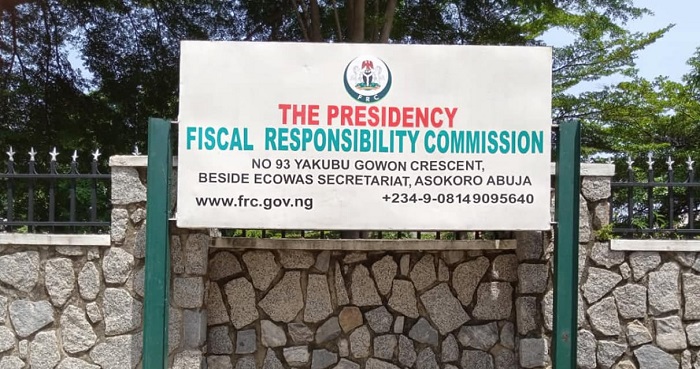
The Federal Government has cautioned states and local governments against obtaining loans from financial institutions without securing a Certificate of Proof of Compliance from the Fiscal Responsibility Commission (FRC).
The government stated that borrowing without an FRC certificate is illegal and carries serious legal consequences. The warning was issued during a financial management workshop held in Kaduna, which was attended by 23 local government chairmen.
Charles Abana, FRC’s Director of Legal Services, Investigation and Enforcement, represented Executive Chairman Victor Muruako at the event organized by the Kaduna State Fiscal Responsibility Commission.

The commission reminded government officials that under the Fiscal Responsibility Act of 2007, borrowing for routine operational expenses is prohibited. Loans should instead be directed toward long-term projects, such as infrastructure development and human capital investments, that generate sustainable value for citizens.
In a statement by FRC’s Strategic Communication Officer, Bede Anyanwu, the agency described the practice of spending public funds outside approved budgets as “fiscal haram,” which erodes public trust and hampers development.
“Every kobo spent must deliver value for money. Public resources should be carefully planned, budgeted, appropriated, and used to implement projects that positively impact citizens’ lives,” the statement read.

The FRC also warned local government officials against misappropriating public funds, awarding salaries to unqualified individuals, or favoring friends, supporters, and party loyalists. All expenditures, the commission emphasized, must strictly follow budget approvals and be tied to tangible benefits for the public.
Financial institutions, particularly banks, were similarly cautioned against issuing loans that violate the law, with public officers who flout regulations facing potential sanctions.
The agency urged council chairmen to adopt transparent and accountable governance practices, manage resources prudently, and consider the long-term effects of their financial decisions on future generations. The FRC also pledged technical support to help local governments implement proper fiscal responsibility frameworks.
Governor Uba Sani received praise in the statement for backing reforms that promote transparency and accountability. He condemned misuse and theft of public funds, calling on elected officials and political appointees to act with integrity and openness. Sani reiterated his administration’s commitment to financial discipline, responsible leadership, and reforms aimed at earning citizens’ trust through proper management of public resources.

Earlier, Sani Bako, Executive Chairman of the Kaduna State Fiscal Responsibility Commission, described the workshop as a crucial step in strengthening the management of public finances at the local government level. He acknowledged the support of agencies including the Code of Conduct Bureau, the Economic and Financial Crimes Commission, the Bureau of Public Procurement, and the Centre for Fiscal Transparency and Public Integrity.
Bako emphasized that sound public financial management is essential for sustainable development, leading to better infrastructure, cleaner communities, improved schools, and overall economic growth. Presenters at the workshop also discussed ethical leadership, proper procurement processes, and anti-corruption measures, all aimed at ensuring public funds are effectively utilized at every level of government.



