

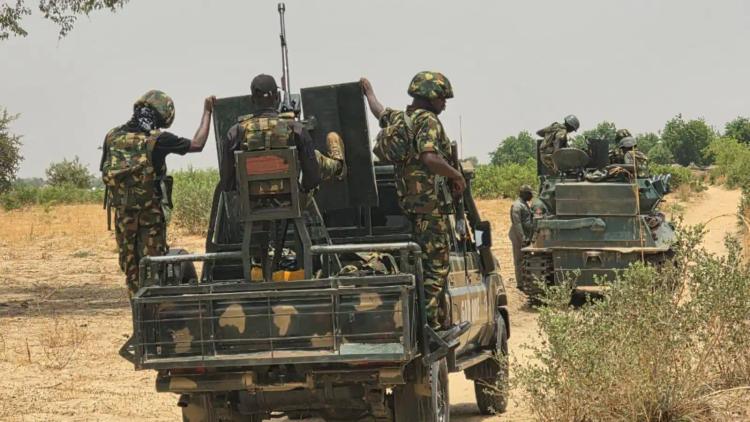
President Bola Ahmed Tinubu has ordered the immediate deployment of an army battalion to Kaiama Local Government Area of Kwara State following a devastating terrorist attack that claimed the lives of more than 162 residents in Woro and Nuku communities on Tuesday, February 3, 2026.
The assault, described as one of the deadliest recorded in Nigeria this year, began around 6:00 pm when an estimated 200 heavily armed gunmen stormed the villages, firing indiscriminately, executing civilians, and setting homes, shops, and other structures ablaze.

The Kwara State chapter of the Nigerian Red Cross confirmed 162 deaths as of Wednesday afternoon, while local politician Sa’idu Ahmed told Reuters the toll could reach as high as 170. Ahmed, who was assisting military personnel in the area, described how attackers rounded up villagers, tied their hands behind their backs, and carried out mass executions.
“I am in the village along with military personnel, sorting dead bodies and searching nearby areas,” Ahmed said.

Many survivors fled into surrounding bushes with gunshot wounds, and several residents—including the village’s traditional ruler—remained missing as of Wednesday. Homes and commercial properties were extensively damaged by fire.
Police have acknowledged the incident but have not yet released official casualty figures.
Presidential Response and Deployment
In a statement issued Wednesday night by presidential spokesperson Bayo Onanuga, President Tinubu condemned the attack as a “cowardly and beastly assault” on defenceless civilians. He accused the perpetrators of deliberately targeting soft targets in their “doomed campaign of terror.”

Tinubu noted that the victims were killed for rejecting violent indoctrination and choosing to practise a peaceful form of Islam.
“It is commendable that the community members, even though Muslims, refused to be conscripted into a belief system that promotes violence over dialogue,” the statement read.
The president directed the newly deployed army battalion to lead “Operation Savannah Shield,” with a clear mandate to halt further violence, protect vulnerable communities, and pursue the attackers.

He called for seamless coordination between federal and state authorities to deliver immediate relief to survivors and ensure those responsible face justice. Tinubu offered condolences to the affected families, the government, and people of Kwara State, praying for the repose of the souls of the deceased and strength for those grieving.
Context and Broader Security Challenges
The attack occurred in a border region between Kwara and Niger States, areas increasingly infiltrated by armed gangs and extremist elements. Recent military operations have targeted terrorist groups in the region, but rural communities remain vulnerable.

Nigeria continues to grapple with overlapping security threats, including jihadist insurgencies in the northeast and northwest, widespread banditry and kidnappings, and intercommunal violence in the north-central zone.
The surge has attracted international attention, with the U.S. Africa Command recently confirming the deployment of a small military team to Nigeria to strengthen cooperation on counterterrorism efforts.
The latest tragedy has reignited public debate over the effectiveness of the state of emergency on insecurity declared by President Tinubu, with critics questioning why such large-scale attacks continue despite heightened military operations and redeployments.
Why do you think insecurity continues to escalate in Nigeria despite the declaration of a state of emergency? What more should be done to decisively address banditry and terrorism? Share your views in the comments below.




