

By Chuks Okocha, Onyebuchi Ezigbo, Sunday Aborisade and Folalumi Alaran, Abuja
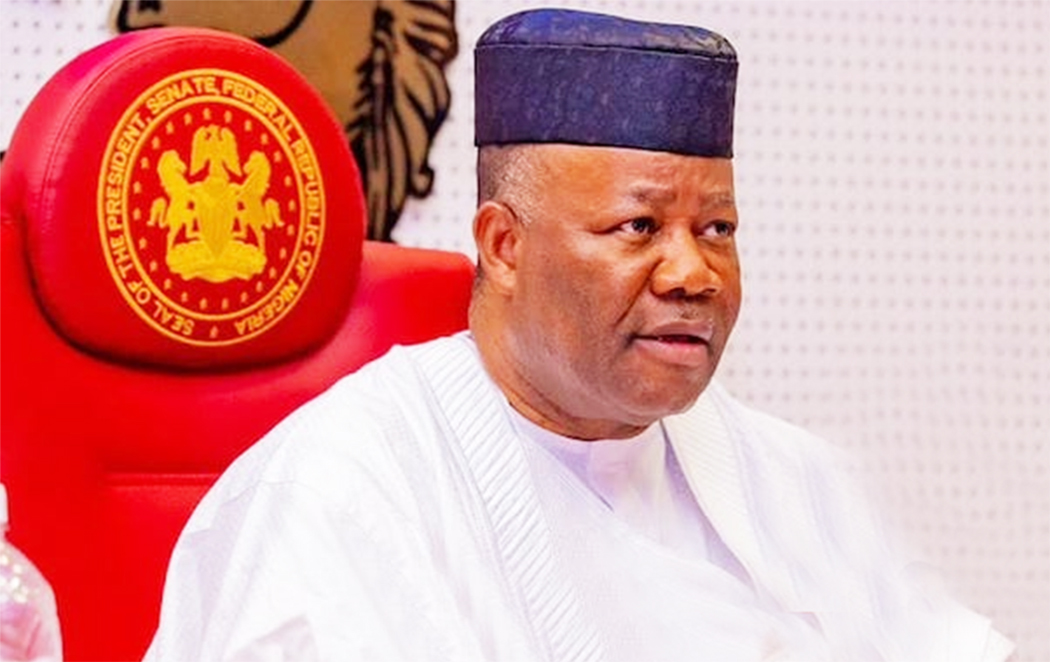
In response to growing public outrage over recent changes to the Electoral Act, Senate President Godswill Akpabio has convened an emergency plenary session scheduled for Tuesday, February 9, to hasten legislative action on the contentious Electoral Act Amendment Bill.
The development comes amid strong resistance from several prominent Nigerians, including former Senate President David Mark, human rights lawyer Femi Falana (SAN), former Minister Oby Ezekwesili, economist Pat Utomi, labour leader Ayuba Wabba, Usman Bugaje, Bilikisu Magoro, Nkoyo Toyo, Shehu Sanni, Ene Obi and Olawale Okunniyi, who have criticised the Senate’s decision to drop provisions mandating electronic transmission of election results.

Similarly, the Nigeria Labour Congress (NLC) has called on the Senate to ensure that the amended Electoral Act clearly empowers the Independent National Electoral Commission (INEC) to electronically transmit and collate election results from polling units in real time.
A statement issued by the Clerk of the Senate, Emmanuel Odo, instructed all senators to reconvene for the extraordinary sitting, which is slated to begin at noon. Although the notice did not specify the reason for the recall, findings revealed that the session is meant to adopt the Votes and Proceedings from the Senate’s previous sitting—a necessary step to enable the conference committee on the Electoral Act amendments to begin its work.
A senior lawmaker and principal officer of the Senate confirmed the development, explaining that senators had received official communication directing them to resume. According to the lawmaker, approving the Votes and Proceedings would pave the way for the conference committee to commence deliberations on the bill.

The senator further disclosed that the session might initially be held behind closed doors due to heightened political tension surrounding the issue of electronic transmission of results, which has sparked intense debate both within and outside the National Assembly.
The emergency recall comes at a time of mounting criticism from opposition parties, civil society organisations and election observers, who accuse the National Assembly of attempting to weaken critical electoral reforms ahead of the 2027 general elections.
Although both chambers of the National Assembly are currently on a two-week recess to engage ministries, departments and agencies on the implementation of the 2026 budget, the interruption underscores the urgency attached to resolving outstanding issues in the Electoral Act—legislation central to the credibility and integrity of Nigeria’s electoral process.

Political analysts believe Tuesday’s sitting could be decisive, as it may shape the final direction of electoral reforms and influence future interactions between the legislature, the executive and Nigerian voters, particularly on the contentious issue of electronic result transmission.
Speaking at the public presentation of “The Burden of Legislators in Nigeria” at the NAF Conference Centre in Abuja, former Senate President David Mark insisted that the African Democratic Congress (ADC) remained firm in its demand for real-time electronic transmission of election results.
Earlier, Senate President Akpabio had urged critics to exercise patience, noting that the Senate had not concluded work on the amendments. He cited infrastructure challenges, including poor electricity supply and internet access in rural areas, as reasons for caution, warning that mandatory real-time transmission could negatively affect electoral outcomes.
However, Mark countered that Akpabio did not speak for the ADC, stressing that Nigerians were not asking for explanations but demanding transparency. He argued that the National Assembly should pass the law and allow INEC to raise any operational concerns, rather than pre-emptively weakening the legislation.

Meanwhile, a newly formed coalition, the Movement for Credible Elections (MCE), comprising leading political activists, condemned the Senate’s decision to remove mandatory electronic transmission from the Electoral Act Amendment Bill 2026. The group described the move as an assault on Nigerians’ right to freely choose their leaders.
In a statement signed by Comrade James Ezema, the coalition warned against any attempt to roll back planned mass protests and called on citizens to mobilise peacefully to resist a return to manual manipulation of election results.
The group accused lawmakers of choosing secrecy over transparency and manipulation over credibility, insisting that mandatory electronic transmission was a basic safeguard against electoral fraud. According to MCE, rejecting the provision revealed fear of genuine votes and exposed the political elite’s resistance to technological transparency.
MCE demanded the immediate reinstatement of mandatory electronic transmission, public disclosure of lawmakers who opposed the clause, and accountability for legislators who have benefited from Nigeria’s democratic system since 1999.

Similarly, the ADC Diaspora Roundtable criticised the Senate for ignoring public opinion by removing the “real-time” requirement from the electronic transmission clause, warning that the move could undermine confidence in the 2027 elections.
Youth-led group, the Youth Electoral Reform Project (YERP-Naija) Consortium, also expressed disappointment, describing the Senate’s action as a setback to electoral integrity. The group said retaining INEC’s discretionary power weakened accountability and legal clarity, particularly for young voters who see technology as essential to restoring trust in elections.
Despite the concerns, YERP-Naija urged the conference committee to use the harmonisation process with the House of Representatives to revisit the decision and align reforms with citizens’ expectations.
The Nigeria Labour Congress further warned that failure to mandate real-time electronic transmission of results could trigger nationwide mass action or election boycotts. In a statement signed by NLC President Joe Ajaero, the labour union criticised contradictory explanations from the Senate and demanded immediate clarity.
The NLC insisted that the amended Electoral Act must clearly mandate INEC to electronically transmit and collate results in real time, stressing that Nigeria’s path to the 2027 elections must be built on certainty, transparency and public trust.



