

The Nigerian National Petroleum Company Limited (NNPC) spent approximately N13.2 trillion on the country’s three state-owned refineries in 2023 and 2024, primarily covering turnaround maintenance, operations, and bank charges, even as the facilities continued to operate at significant losses.
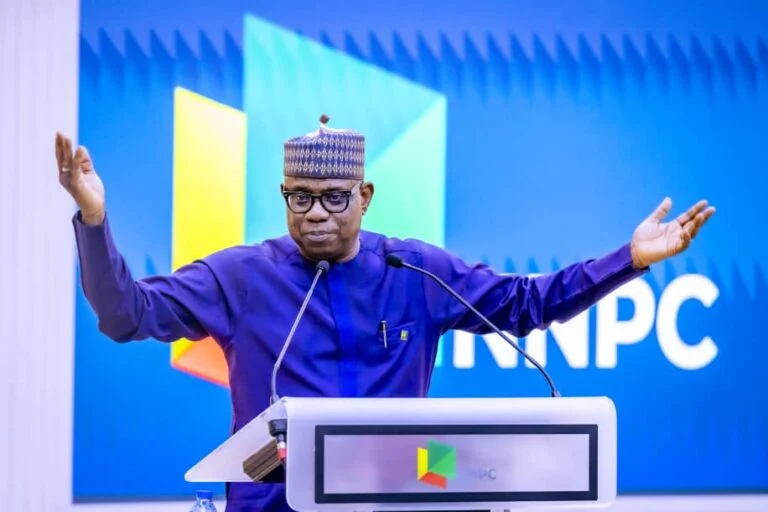
NNPC Group Chief Executive Officer, Bayo Ojulari, acknowledged the heavy financial drain during a fireside chat in Abuja on Wednesday at the Nigeria International Energy Summit 2026, describing the refineries’ operations as a “monumental loss” to the nation.

According to NNPC’s 2024 financial statements, the Port Harcourt, Warri, and Kaduna refineries owed the company about N4.52 trillion in 2023, rising to N8.67 trillion by the end of 2024, totaling around N13.2 trillion over the two years. The funds were used for operations, maintenance, and bank charges as efforts were made to revive the moribund plants.
Ojulari criticized past attempts to resuscitate the refineries, noting that despite the substantial investment, operations were unprofitable. “We were just wasting money. I can say that confidently now,” he said, adding that public frustration over the refineries’ performance was justified.

The Port Harcourt refinery accounted for the largest share of expenditure, with obligations increasing from N1.99 trillion in 2023 to N4.22 trillion in 2024. Despite heavy spending, it generated no receivables during this period. At the Warri refinery, liabilities rose from N1.17 trillion to N2.06 trillion, while Kaduna’s obligations increased from N1.36 trillion to N2.39 trillion, reflecting continued costs for maintenance, staffing, and security.
Ojulari revealed that crude oil continued to be supplied to the refineries, yet utilisation remained low at 50–55 percent. “We were spending a lot on operations and contractors, but in net terms, we were just leaking value,” he said. He noted that the absence of a credible recovery plan compounded the challenges, prompting his administration to halt refinery operations to reassess the assets.

As of the end of 2024, the three refineries still owed N8.67 trillion to NNPC, highlighting the ongoing financial burden of the turnaround maintenance programme. Despite repeated rehabilitation efforts, the facilities remained net cost centres, entirely dependent on NNPC’s balance sheet.
The Port Harcourt refinery, with a 60,000 barrels-per-day capacity, briefly resumed operations in November 2024 under the former GCEO, Mele Kyari, but was shut down again in May. Similarly, the Warri refinery was reactivated in December but ceased operations within a month. Plans to fully reopen the Kaduna refinery and the upgraded Port Harcourt complex were never realized before Kyari left office.

Experts, including Aliko Dangote and former President Olusegun Obasanjo, have expressed skepticism about the viability of the government-owned refineries, suggesting that the facilities may never achieve commercial sustainability despite billions spent. Some in the private sector have even advised the NNPC to sell the assets.

Ojulari, however, remains optimistic, asserting that the refineries will eventually function efficiently, leaving Nigerians to await developments under his management.



