

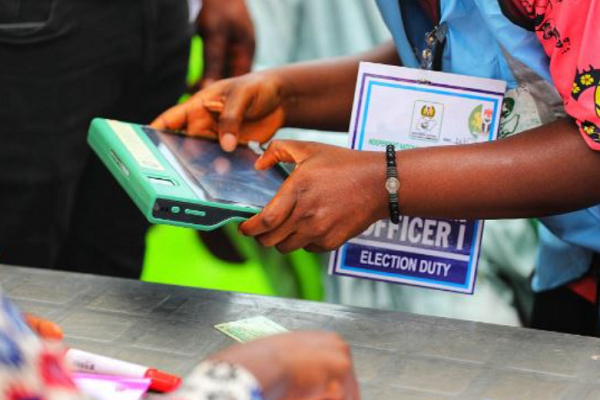
A Civil Society Organisation, Nigeria Integrity Watch (NIW), has warned that mandating real-time electronic transmission of election results could disenfranchise millions of voters, particularly in rural and insecure areas of Nigeria.

The caution comes after the Senate passed the Electoral Act 2022 (Repeal and Reenactment) Amendment Bill 2026, rejecting a proposed amendment to Clause 60(3) that would have required presiding officers of the Independent National Electoral Commission (INEC) to transmit polling unit results electronically in real time to the INEC Result Viewing Portal (IREV).
The Senate retained the existing provision, which allows results to be transmitted “in a manner as prescribed by the Commission,” without insisting on real-time reporting.

Senate President Godswill Akpabio clarified that electronic transmission is still allowed under the law, but removing the term “real time” avoids potential legal and logistical challenges. “All we said during discussion was that we should remove the word ‘real-time’ because if there is a network or grid failure, the courts could later challenge it,” he explained.
NIW, in response, described the insistence on mandatory real-time transmission as a potential “democratic emergency,” citing weak digital infrastructure and unreliable power supply across the country. Dr. John Samuel Nang, the organisation’s spokesperson, noted that many rural communities and conflict-affected areas lack stable 4G or 5G networks, and frequent national grid failures could disrupt elections if electronic transmission is enforced.

The group also highlighted concerns over Nigeria’s limited control of satellite systems, warning that overreliance on external digital infrastructure could expose the electoral process to manipulation. NIW stressed that electronic transmission should supplement—not replace—manual collation, in line with Supreme Court guidance.

The organisation called on policymakers, civil society, and telecommunications operators to prioritise nationwide infrastructure improvements before pushing for compulsory real-time transmission of election results.



